
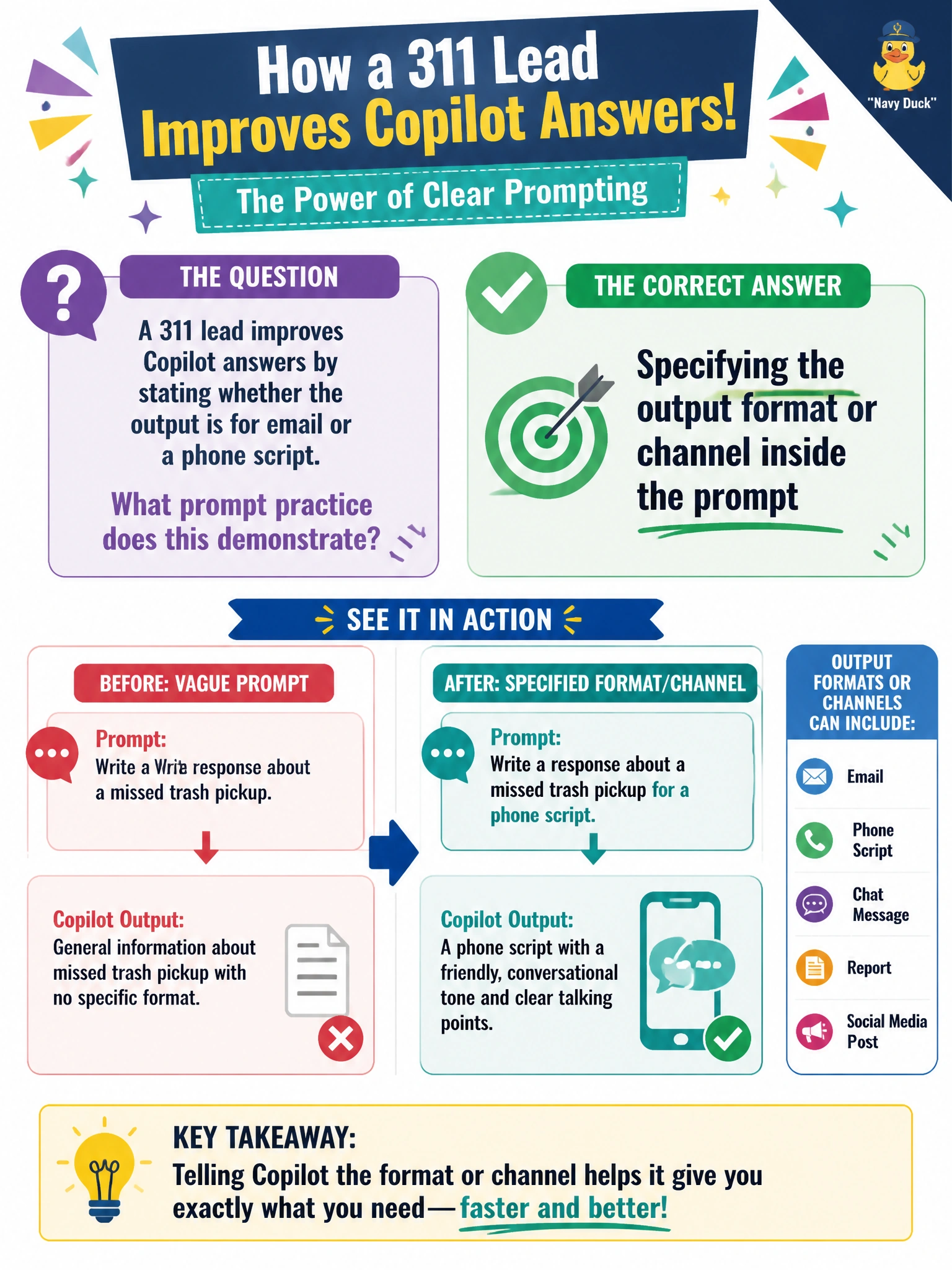
A 311 lead improves Copilot answers by stating whether the output is for email or a phone script. What prompt practice does this demonstrate?
Select an answer to reveal the explanation.
Short Explanation
Tell Copilot if it’s an email or a phone script—same facts, different jacket. Channel and format in the prompt make the answer fit how residents will actually hear it.
Full Explanation
Specifying the output format or channel inside the prompt is the practice demonstrated when a 311 lead states whether Copilot should draft email language or a phone script. Channel constraints change sentence length, greetings, spoken cadence, and how much detail a resident can absorb in one pass. The correct practice works because the same complaint facts should be packaged differently for inbox reading versus live phone delivery, and stating the channel prevents mismatched drafts.
Hiding the resident channel so Copilot invents both email and radio scripts fails because withholding the channel forces speculative formatting and may produce the wrong modality entirely. Using Agent Store only when the channel is unknown fails conceptually: Agent Store selection is about reusable agents, not a substitute for stating format in a prompt. Deleting conversations whenever email is mentioned fails because channel words are normal prompt content and do not require destroying chat history.
Exam caveat: format specification improves fit but does not guarantee policy-correct triage guidance—311 leads still verify procedural accuracy against the service desk knowledge base. Operational check: include an explicit line such as “draft as a phone script under 90 seconds” or “draft as a resident email with subject line,” generate both variants from the same facts when needed, and pick the one that matches the actual outreach channel before sending.