
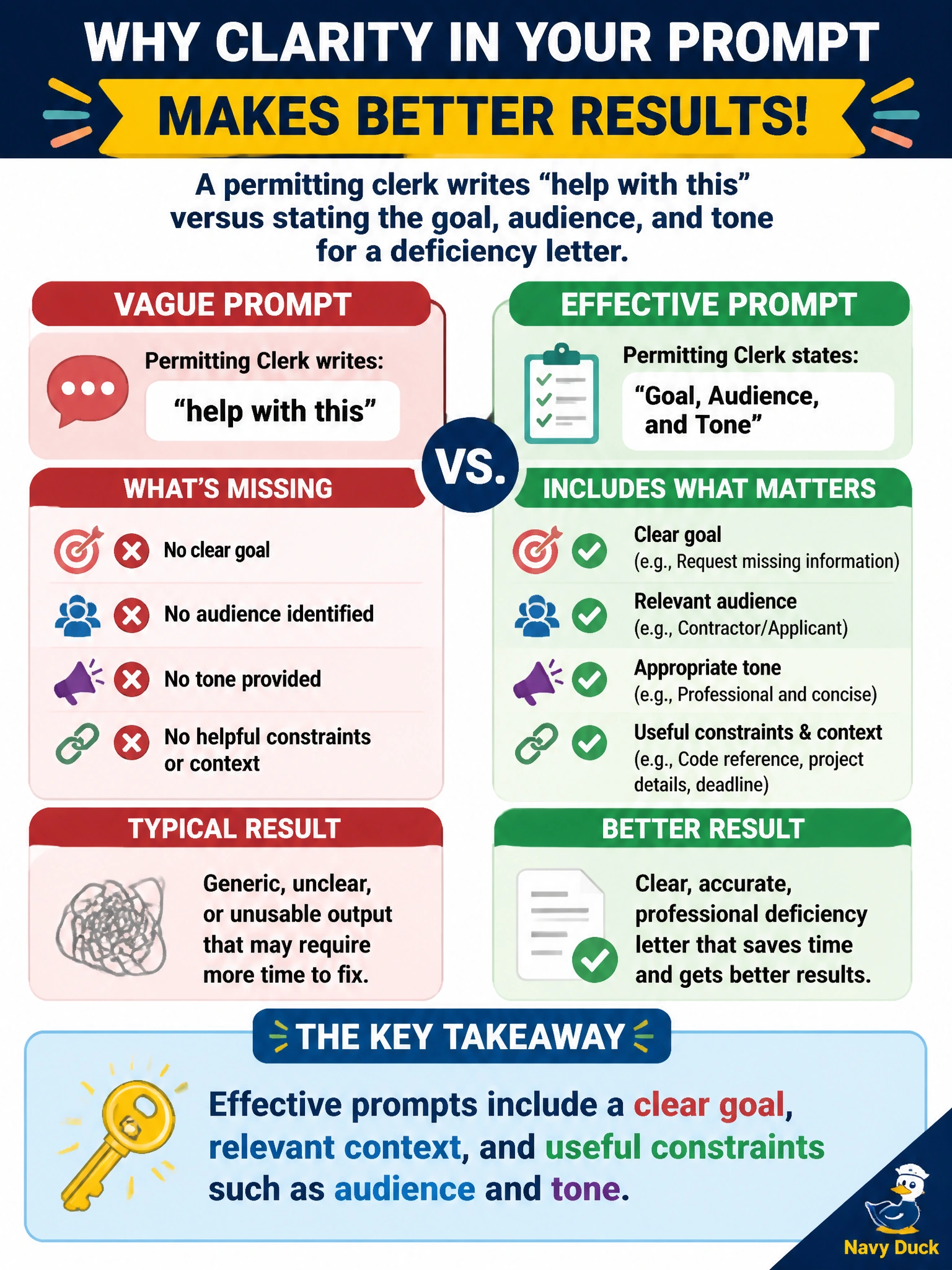
A permitting clerk writes “help with this” versus stating the goal, audience, and tone for a deficiency letter. What makes the second approach more effective?
Select an answer to reveal the explanation.
Short Explanation
“Help with this” is a shrug; “write a plain-language deficiency letter for a homeowner, firm but fair” is a map. Goal, audience, and tone turn a vague ask into an effective prompt.
Full Explanation
The second approach is more effective because effective prompts include a clear goal, relevant context, and useful constraints such as audience and tone. A permitting clerk who states the goal (draft a deficiency letter), the audience (homeowner or contractor), and tone (firm but fair, plain language) gives Copilot actionable steering that a shrug like “help with this” never provides. The correct practice works by reducing ambiguity: generative models fill underspecified gaps with guesses, while municipal deficiency letters need controlled voice and purpose.
Believing shorter one-word prompts always outperform detailed municipal instructions fails because brevity without intent produces generic or off-tone drafts that clerks must heavily rewrite. Claiming deficiency letters require disabling all grounding to attached fee schedules fails conceptually: fee schedules are often essential authoritative context, and disabling grounding increases fabrication risk on amounts and codes. Asserting agents cannot use tone guidance so only chat supports audience constraints fails because tone and audience constraints belong in effective prompting across Copilot experiences, not only in one surface.
Exam caveat: adding goal, audience, and tone does not remove the need for human review of legal or fee-bearing language before the letter is sent. Operational check: rewrite the prompt to name the deliverable, audience, and tone; attach or reference the relevant deficiency checklist or fee schedule; compare the draft against a prior approved letter; and only then route for supervisor sign-off.