
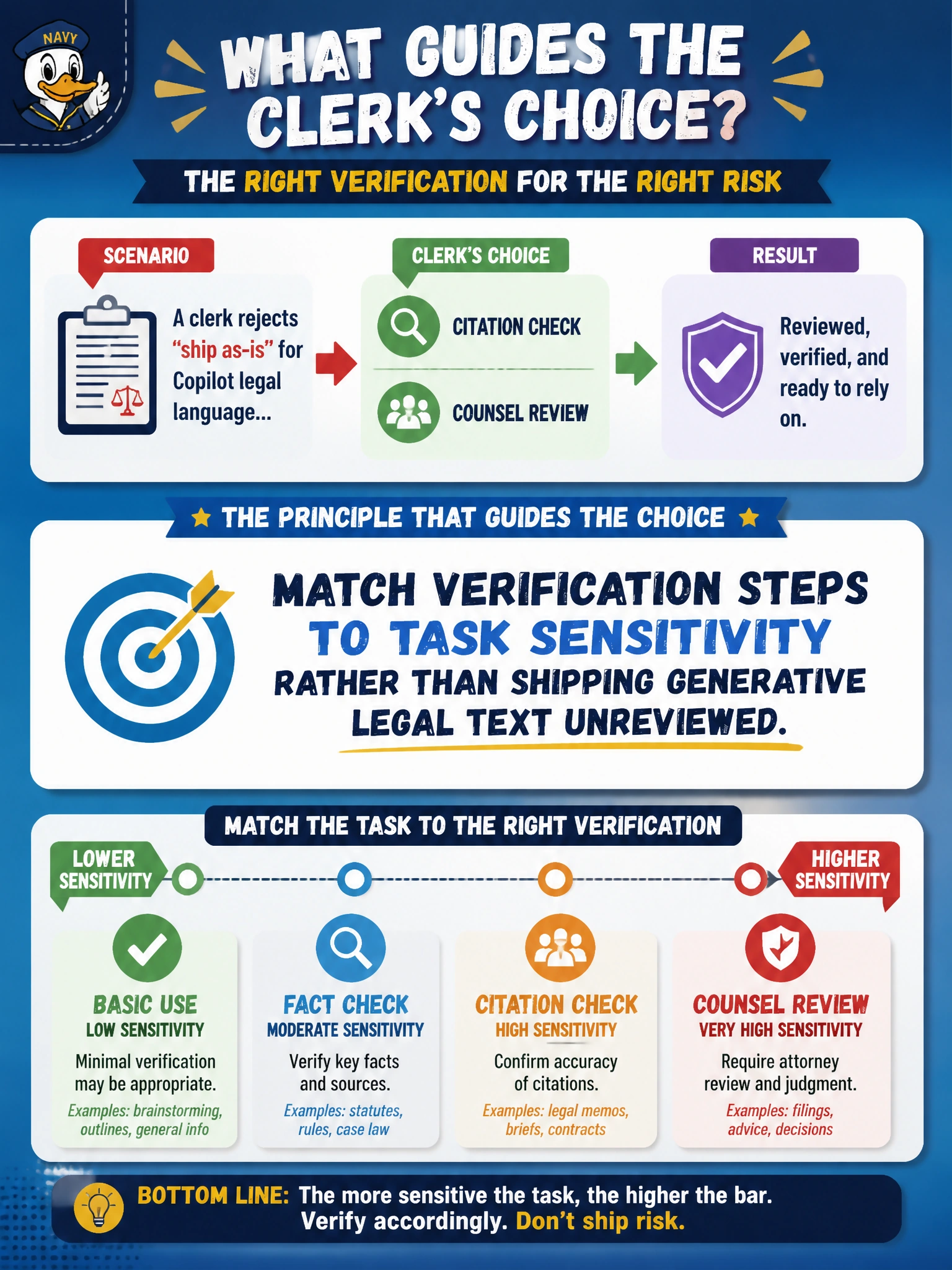
A clerk rejects “ship as-is” for Copilot legal language and chooses citation check plus counsel review. What principle guides that choice?
Select an answer to reveal the explanation.
Short Explanation
Legal-sounding isn’t legal-reviewed. When the stakes are counsel-level, add citation checks and a lawyer’s eyes — not a shrug and send. Sensitivity of the task sets the verification bar.
Full Explanation
Rejecting “ship as-is” for Copilot legal language and choosing citation check plus counsel review follows the principle of matching verification steps to task sensitivity rather than shipping generative legal text unreviewed. Clerk correspondence with legal effect needs heavier controls than low-stakes rewriting. Citation checks catch fabricated authorities; counsel review addresses legal sufficiency for municipal practice.
Always skipping counsel review when Copilot produces formal-sounding municipal language confuses polish with correctness and under-protects sensitive legal text.
Using only image generation to validate legal citations invents a non-method: images do not verify legal authorities.
Treating Agent Store ratings as a substitute for citation checks on legal drafts replaces source validation with marketplace popularity signals, which do not prove legal accuracy.
Exam caveat: sensitivity-matched verification is a recurring AB-730 responsible-AI theme—higher stakes require citation checks and human/legal review, not ship-as-is.
Operational check: for Copilot legal drafts, verify each citation against authoritative sources, route to counsel for review, incorporate edits, and only then release the clerk correspondence.