
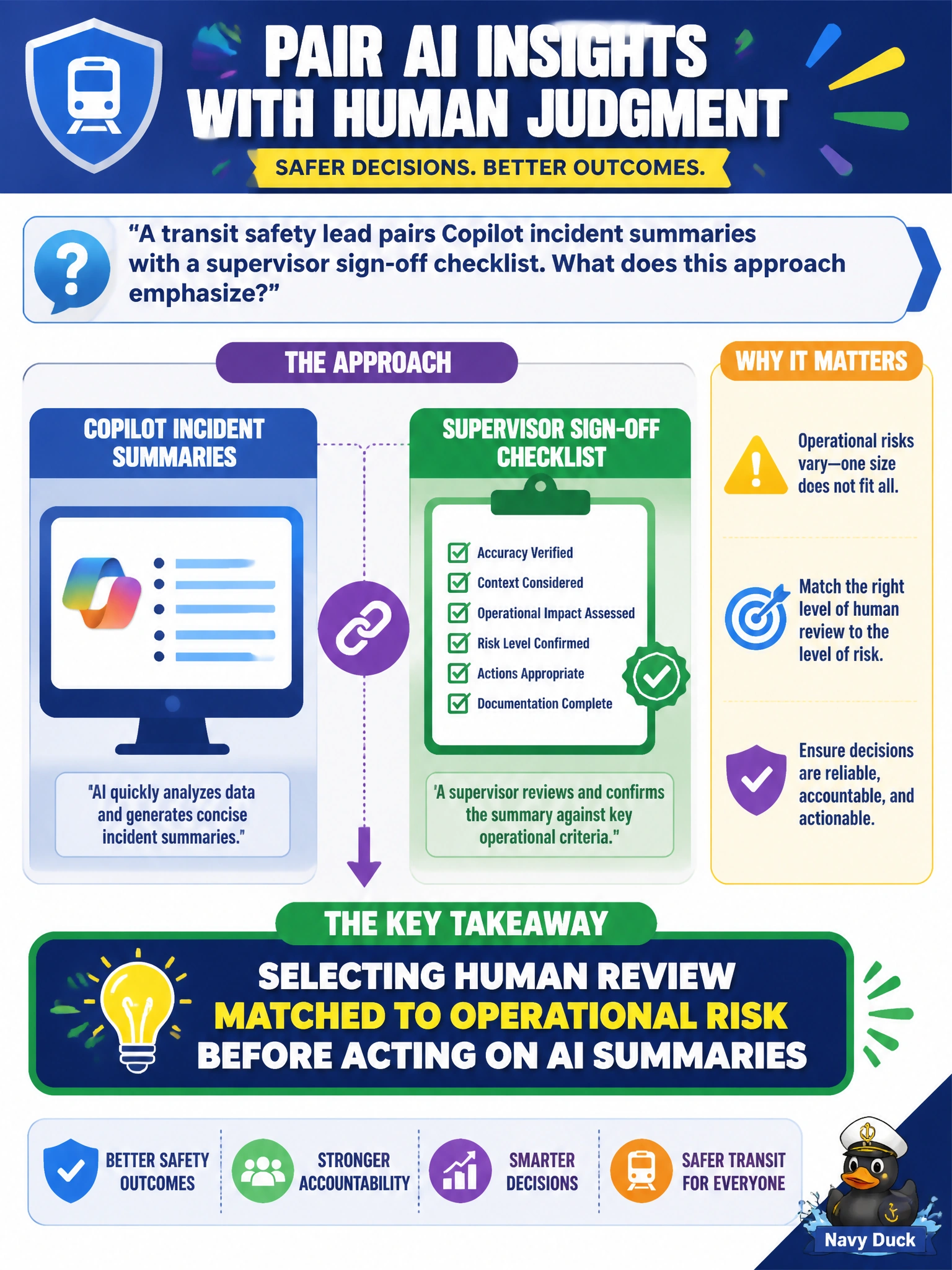
A transit safety lead pairs Copilot incident summaries with a supervisor sign-off checklist. What does this approach emphasize?
Select an answer to reveal the explanation.
Short Explanation
Copilot can draft the incident story fast; the supervisor checklist is the safety net. Pairing the two matches review strength to operational risk — smart transit practice, not red tape for its own sake.
Full Explanation
Pairing Copilot incident summaries with a supervisor sign-off checklist emphasizes selecting human review matched to operational risk before acting on AI summaries. Transit safety incidents can affect riders, operators, and regulatory reporting. The checklist ensures a qualified human accepts, corrects, or rejects the generative summary before operational action.
Removing supervisors from incident workflows because Copilot summaries are self-certifying invents self-certification and removes the control the stem correctly adds.
Using only web grounding so supervisor review of transit incidents is never required confuses grounding features with human operational review; web grounding does not eliminate supervisor accountability.
Converting every incident summary into an Agent Store listing without safety review misuses Agent Store and skips the safety review the scenario requires.
Exam caveat: when stems add supervisor sign-off to AI summaries, the principle is risk-matched human review—not removing humans, web-grounding-as-substitute, or Agent Store publication.
Operational check: after Copilot drafts an incident summary, complete the supervisor checklist (facts, times, injuries, notifications), sign off only when verified, then proceed with transit safety follow-up actions.