
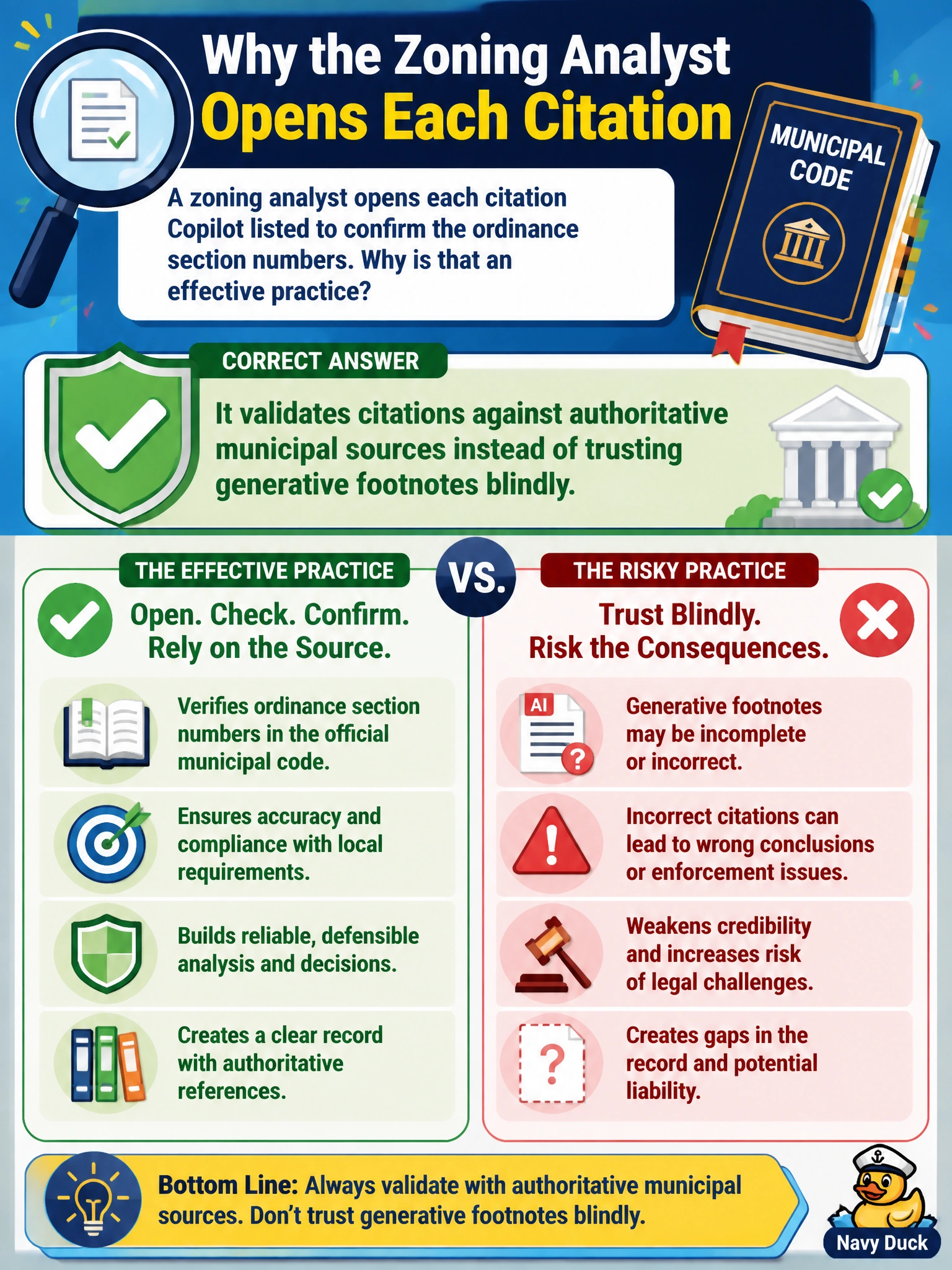
A zoning analyst opens each citation Copilot listed to confirm the ordinance section numbers. Why is that an effective practice?
Select an answer to reveal the explanation.
Short Explanation
Tap every citation like you’d tap every link in a resident complaint — make sure it goes somewhere real. Opening the ordinance sections keeps zoning briefs grounded in the actual code.
Full Explanation
A zoning analyst who opens each citation Copilot listed to confirm ordinance section numbers practices validating citations against authoritative municipal sources instead of trusting generative footnotes blindly. Section numbers, titles, and effective language must match the municipal code. Opening the citations catches fabrications and mis-pointers before they enter staff reports or public hearings.
Permanently disabling Copilot citations so zoning staff never see section numbers again removes a useful lead-generation feature rather than verifying sources.
Proving that fabricated ordinance numbers become binding once opened in Word invents legal effect for fabricated numbers; opening a citation for verification does not enact false law.
Replacing the municipal code with Copilot chat history as the legal source of truth inverts authority: chat history is not the code.
Exam caveat: “open each citation to confirm” equals citation validation against authoritative sources—reject options that disable citations, invent binding fabrications, or demote the code.
Operational check: for every Copilot-listed ordinance cite, open the municipal code viewer, confirm section number and substance, correct the staff report if needed, and keep the code—not the chat—as the source of truth.