
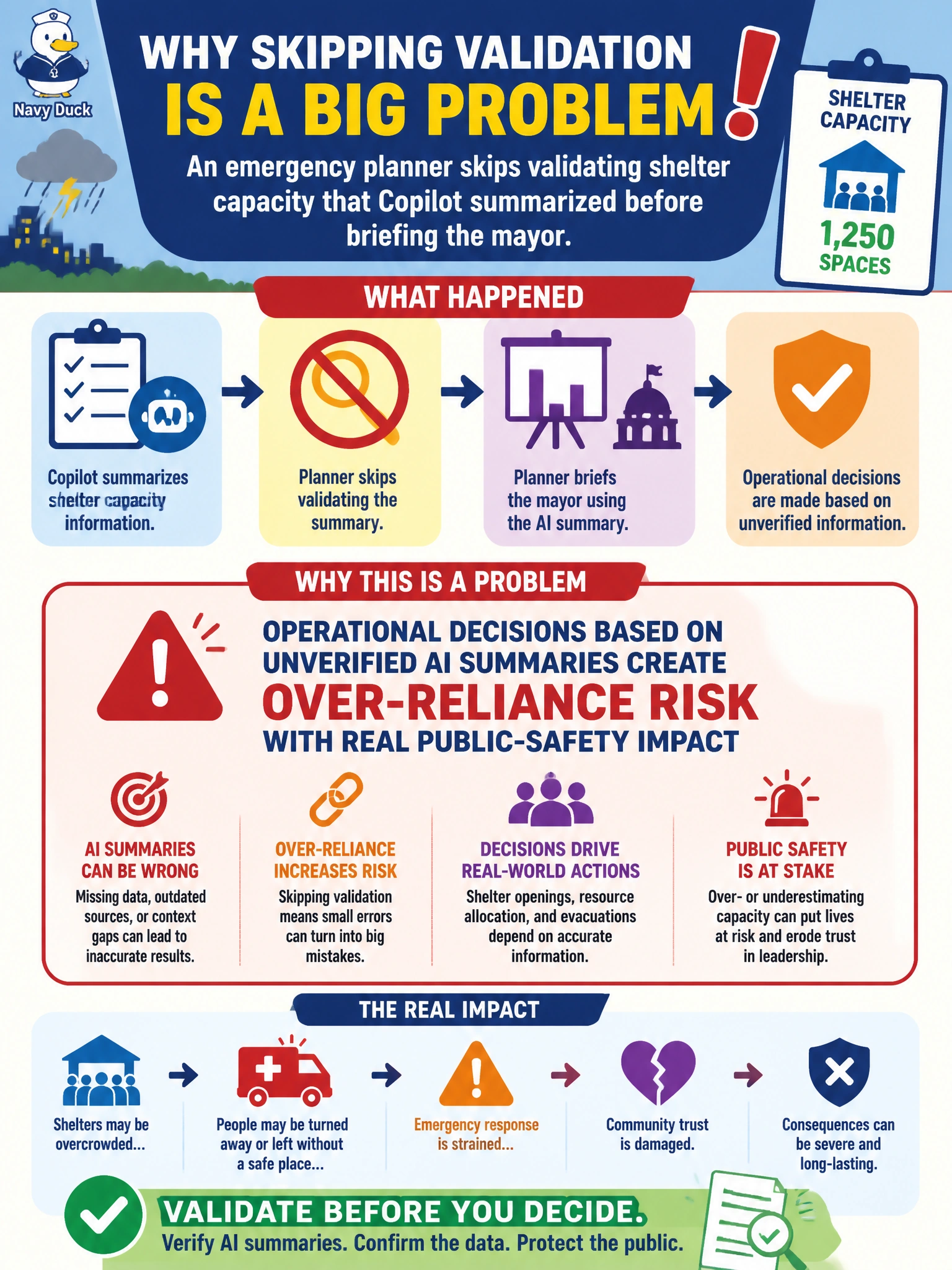
An emergency planner skips validating shelter capacity that Copilot summarized before briefing the mayor. Why is that a problem?
Select an answer to reveal the explanation.
Short Explanation
When the mayor asks how many beds you’ve got, “Copilot said so” isn’t a plan. Skipping a capacity check is over-reliance with sirens in the background. Verify the sheet, then brief.
Full Explanation
Skipping validation of shelter capacity that Copilot summarized before briefing the mayor is a problem because operational decisions based on unverified AI summaries create over-reliance risk with real public-safety impact. Emergency planning numbers drive resource allocation and public messaging; an unverified summary can misstate beds, locations, or availability at the worst time.
Mayor briefings are exempt from verification because Copilot summaries are always operationally certified is false: there is no automatic operational certification that removes human validation for shelter capacity.
Shelter capacity summaries are only risky when created in Outlook instead of Excel invents an irrelevant host-app boundary. The risk is unverified operational use, not which Copilot surface drafted the summary.
Skipping validation proves prompt injection was successfully mitigated by emergency management confuses concepts: skipping validation demonstrates over-reliance, not successful injection mitigation.
Exam caveat: public-safety and emergency stems that skip checks almost always test over-reliance with operational impact.
Operational check: validate shelter capacity against the live emergency-management roster or facility system before any mayoral briefing; document the human confirmer and timestamp on the summary used in the brief.