
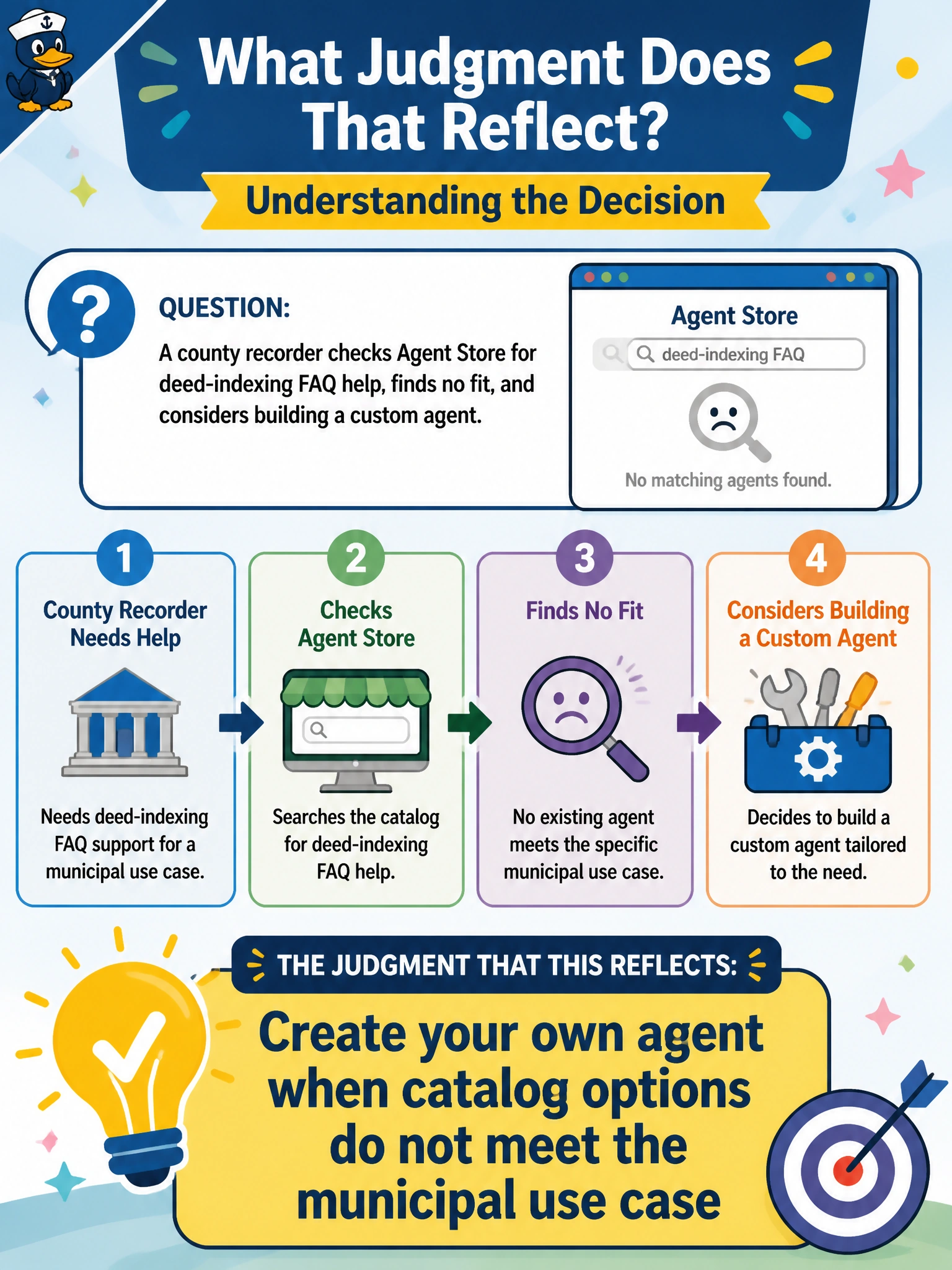
A county recorder checks Agent Store for deed-indexing FAQ help, finds no fit, and considers building a custom agent. What judgment does that reflect?
Select an answer to reveal the explanation.
Short Explanation
Check the ready-made catalog first—like browsing the supply closet. If nothing fits deed-indexing FAQs, then it's fair to build your own agent for the county recorder's desk.
Full Explanation
Business users should evaluate Agent Store options before investing in a custom agent, then create their own when no catalog agent meets the need. A county recorder who checks Agent Store for deed-indexing FAQ help, finds no fit, and considers building a custom agent is applying that judgment correctly: catalog first, custom when the municipal use case is unmet. That sequence avoids duplicate effort while still allowing specialized recorder workflows.
Always inventing a custom agent before looking at Agent Store fails by skipping reuse of ready-made options and wasting configuration time. Custom agents being illegal in county recorder offices fails as a false legal absolute; the scenario is about fit, not prohibition. Agent Store automatically rewriting deed statutes without any agent configuration fails because the store does not magically reauthor statutes—agents still need appropriate configuration and authoritative legal sources.
Exam caveat: "No fit in the store" does not mean "no governance." Custom agents for deed indexing still need records accuracy review, limited sharing, and clear non-substitution disclaimers where legal advice is implicated.
Operational check: Search Agent Store for indexing or FAQ helpers first; if none match deed workflows, draft a custom agent grounded on approved recorder FAQs and fee/indexing guides; have a senior recorder validate answers before publishing to staff.