
A developer team at Fabrikam has built an orchestrator agent and three specialist agents in a Copilot Studio multi-agent solution. Before testing the full multi-agent flow, they want to validate that the Billing specialist agent handles all its scenarios correctly in isolation. What is the recommended testing approach?
Select an answer to reveal the explanation.
Short Explanation and Infographic
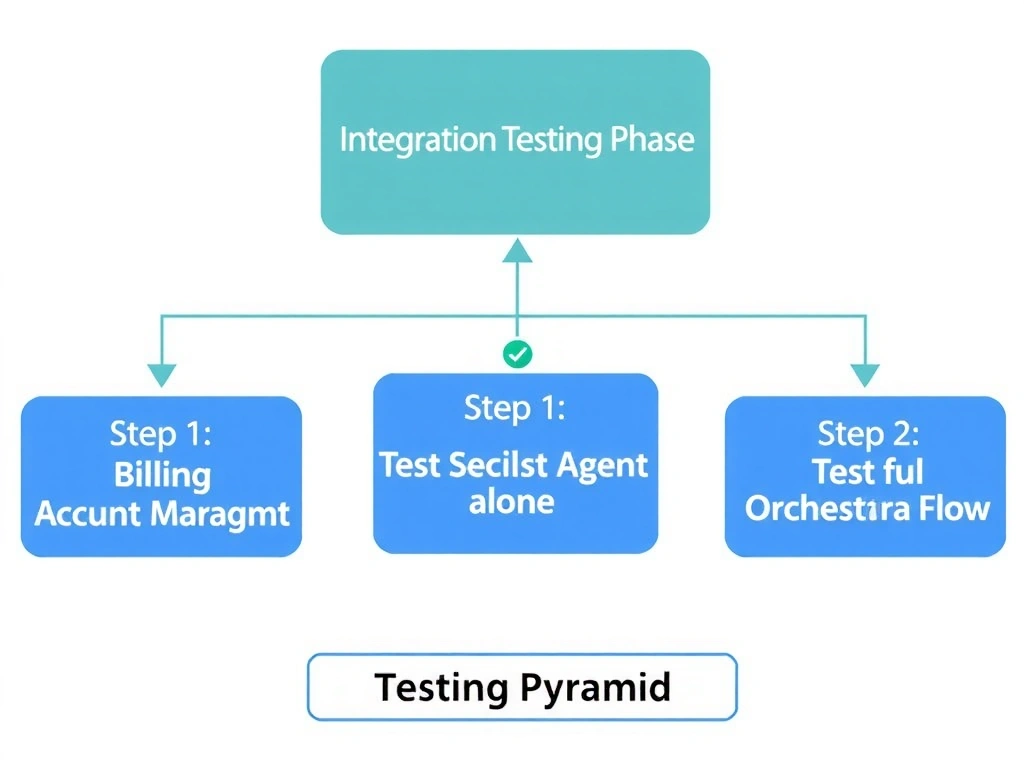
Testing specialist agents in isolation is like testing a car's engine on a test bench before installing it — you validate each component independently before system-level integration tests. Copilot Studio's Test pane lets you do exactly that. The correct answer is B.
Full explanation below image
Full Explanation
## Why B is Correct Each Copilot Studio agent — whether an orchestrator or a specialist — is an independently deployable and testable entity. The Test pane in Copilot Studio lets developers interact with any agent in isolation, simulating user inputs and observing topic flow, variable values, and action results. Testing the Billing agent independently ensures that its own logic is correct before integration issues (from the orchestrator) are introduced.
## Why the Distractors Are Wrong A (Test through orchestrator): Testing only through the orchestrator makes it difficult to isolate whether failures are in the orchestrator's routing logic or the specialist's response logic. Isolation testing is essential for debugging multi-agent systems.
C (Deploy to production for testing): Testing in production exposes real customers to broken functionality. This is never an acceptable testing approach.
D (Multi-agent testing not supported): This is false. Both isolated agent testing (via Test pane) and end-to-end multi-agent testing are supported in Copilot Studio.
## Exam Tip Multi-agent testing strategy: Unit test each specialist in isolation first (Test pane), then integration test the full orchestrator-to-specialist flow. This mirrors standard software testing practices.