
Proseware Inc. is establishing a governance framework for Copilot Studio agents used in customer-facing financial decisions. The legal team requires that every AI-influenced decision have a named human responsible for reviewing edge cases and appeals. Which responsible AI principle does this requirement reflect?
Select an answer to reveal the explanation.
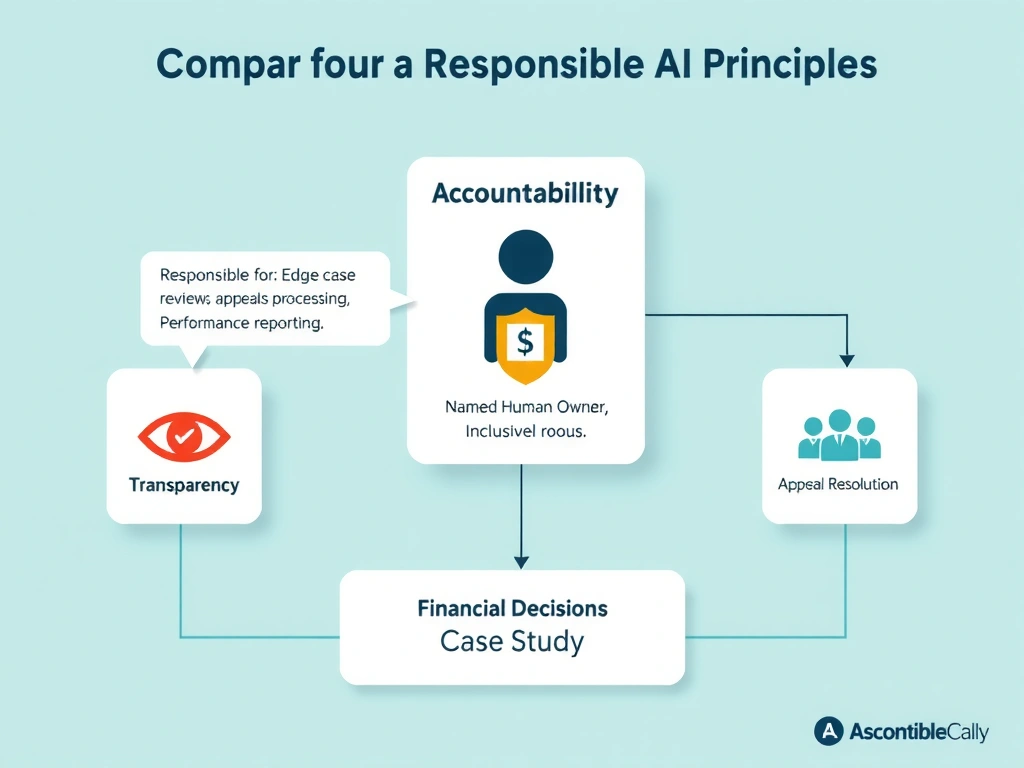
Short Explanation and Infographic
Naming a human owner for AI decisions is like assigning an editor to every published article — someone must own the outcome and be reachable for corrections. That's Accountability. The correct answer is C.
Full explanation below image
Full Explanation
## Why C is Correct Microsoft's Accountability principle states that people and organizations building AI systems must be answerable for how those systems operate, especially when decisions affect others. Requiring a named human reviewer for financial decisions — someone who can be contacted for appeals and who owns the process — is a direct accountability control.
## Why the Distractors Are Wrong A (Inclusiveness): Inclusiveness is about designing for all users, regardless of ability, language, or background. It does not address human ownership of AI decisions.
B (Transparency): Transparency covers disclosure that AI was involved. The legal team's requirement goes further — they want an accountable human, not just a disclosure label.
D (Reliability): Reliability is about consistent, safe operation. A named owner does not directly improve system consistency — it creates a human backstop when the system's outputs are disputed.
## Exam Tip Distinguish: Transparency = 'you know AI was involved.' Accountability = 'someone is answerable for what AI decided.' These are frequently confused on the exam.