
The enterprise architecture team at Woodgrove Bank is defining governance for their Copilot Studio Center of Excellence. They want to ensure that when a shared topic in the component library is updated, all dependent agents are notified so they can test and validate before the change goes live in production. Which approach best supports this governance requirement?
Select an answer to reveal the explanation.
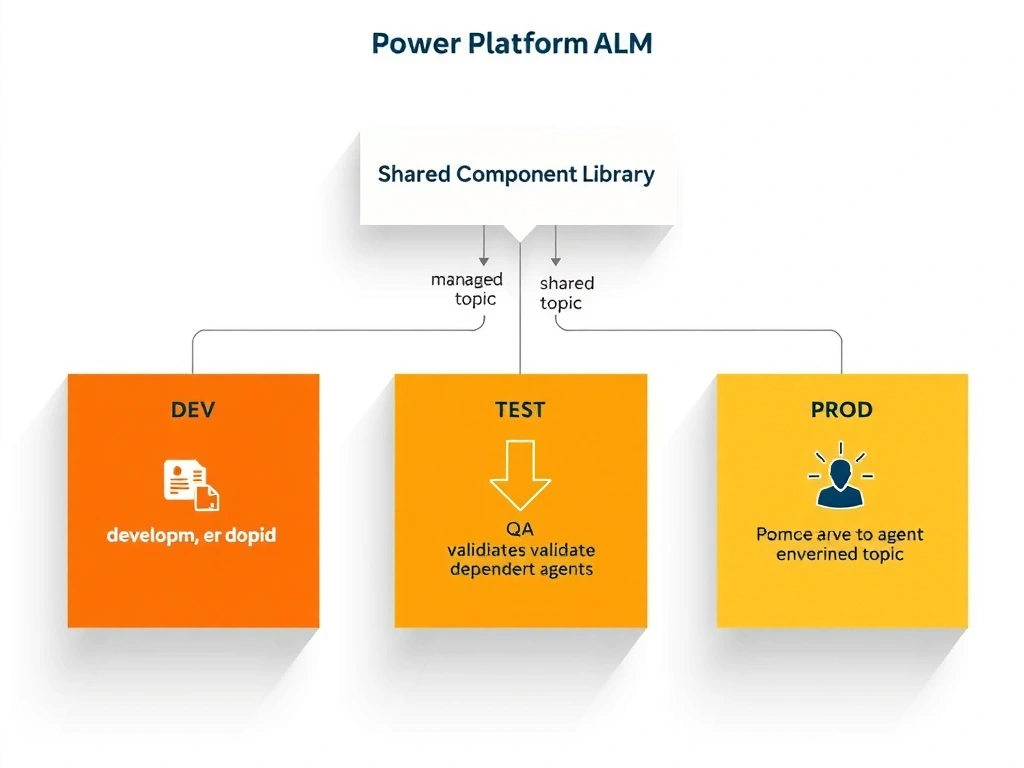
Short Explanation and Infographic
Managing shared components in enterprise Copilot Studio works like software release management — changes flow through Dev → Test → Prod in separate environment layers, giving teams time to validate before updates hit production. The correct answer is A.
Full explanation below image
Full Explanation
## Why A is Correct Copilot Studio integrates with Power Platform's solution and environment strategy. Shared topics live in a managed solution in the library environment. When updated, the new version is exported and imported into test environments first. Dependent agent teams can validate behavior before the update is promoted to production. Solution layers allow organizations to see which layer is overriding a component and manage rollbacks.
## Why the Distractors Are Wrong B (Manual email): Email is an informal, error-prone process with no enforcement. Teams may miss notifications, and there's no guarantee testing happens before the change reaches production.
C (Lock topics): Locking prevents any updates at all, which defeats the purpose of a living shared library. Governance should enable controlled updates, not freeze them.
D (SharePoint YAML files): Manual file exchange is error-prone and not integrated with Copilot Studio's deployment pipeline. There's no dependency tracking or import automation.
## Exam Tip The Power Platform ALM (Application Lifecycle Management) pattern — Dev → Test → Prod with managed solutions — applies to Copilot Studio agents and component libraries. Expect questions that test whether you know this is the platform-native approach.