
A parent Copilot Studio agent collects the user's name and department in its opening topic, then routes the conversation to a child HR agent. The child agent needs to know the user's department to personalize its responses. How is this context passed from parent to child agent?
Select an answer to reveal the explanation.
Short Explanation
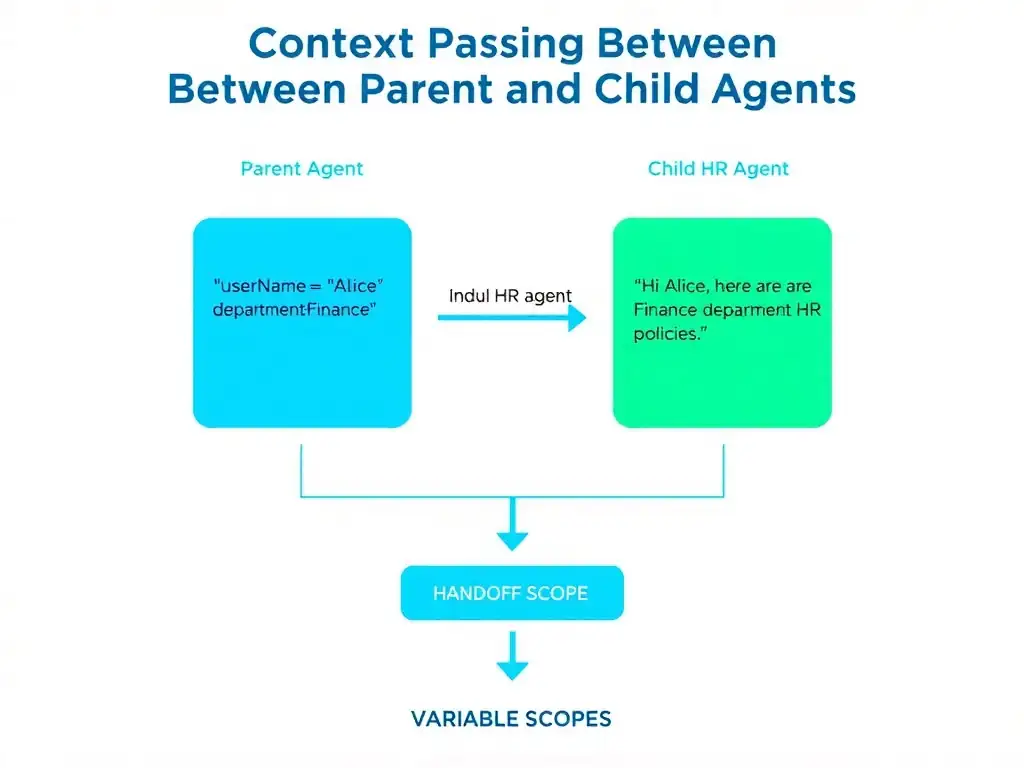
You don’t rely on magic shared memory—you explicitly pass the department as an input parameter during the handoff. That lets the child agent personalize its answers without asking the user to repeat anything.
Full Explanation
When a Copilot Studio parent agent routes to a child agent, the handoff can include input parameters — named values that the parent sends to the child at invocation time. The child agent must define what input parameters it accepts, in its agent settings or topic configuration, and the parent maps conversation variables to those parameters when invoking the child. This enables a seamless user experience: the user provides information once to the parent, and the parent carries that context forward when invoking a child specialist. The claim that the child agent automatically has access to all parent agent topic variables through shared memory is incorrect. Parent and child agents are separate agents with isolated variable scopes. There is no shared variable memory by default — context must be explicitly passed. The claim that the user must re-enter their department when the child agent's opening topic starts represents the bad experience that input parameter passing is designed to prevent. The claim that context is passed automatically through the user's Microsoft 365 profile via Graph API is incorrect; while Graph API can retrieve user profile data, it requires a separate API call action and doesn't automatically share parent-collected conversational context. Exam note: parent to child context equals explicit input parameter mapping during handoff configuration. The child agent defines its expected inputs; the parent passes matching topic variables. This is similar to function arguments in programming — deliberate, typed handoff.