
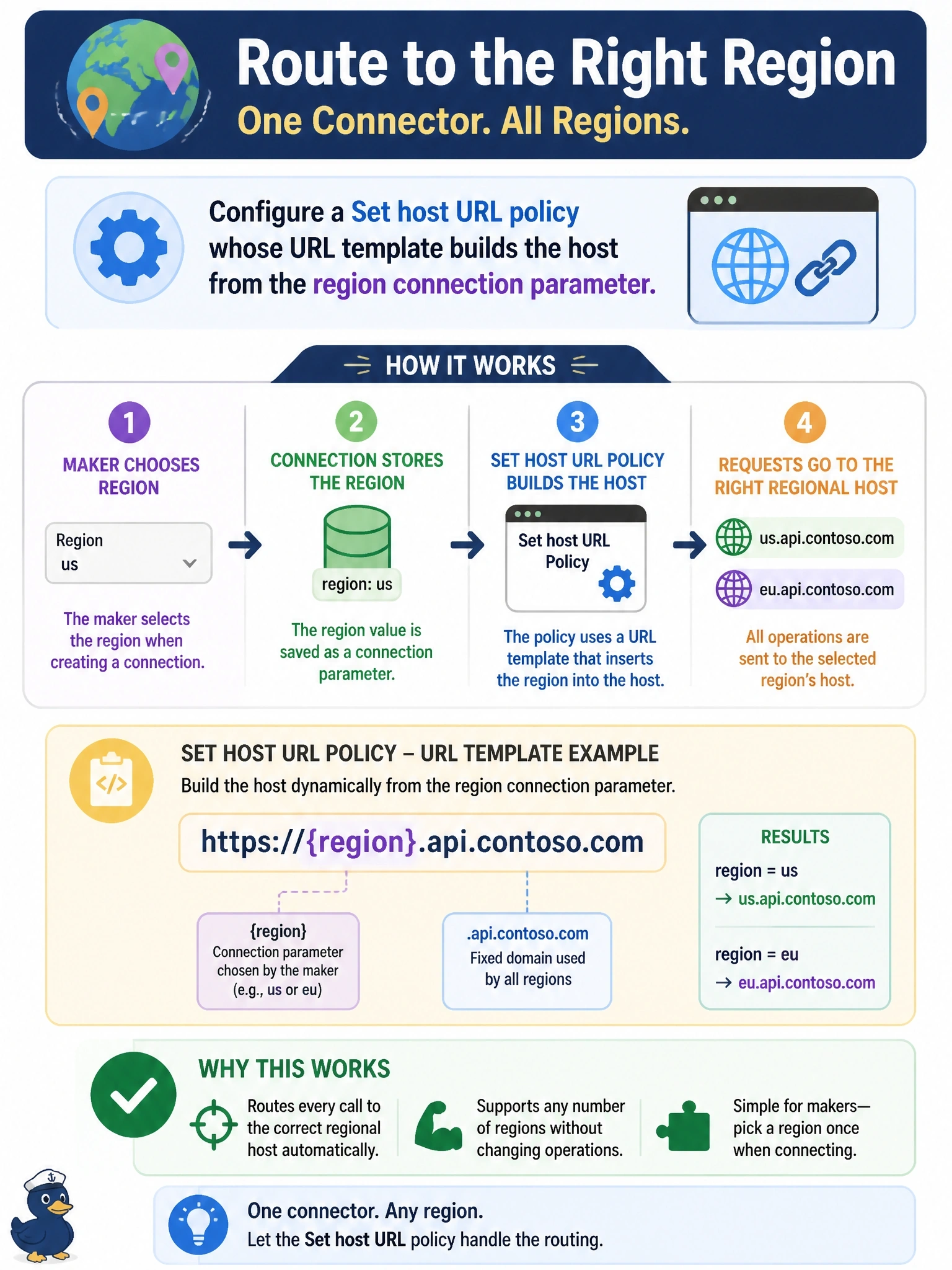
A SaaS vendor hosts each customer on a regional host such as eu.api.contoso.com or us.api.contoso.com. One custom connector must serve all regions: the maker picks the region as a connection parameter when creating a connection, and every operation must be sent to that region's host. What should the developer configure?
Select an answer to reveal the explanation.
Short Explanation
The Set host URL policy is your connector's GPS: it rewrites where each request goes based on values like a connection parameter. One connector, many hosts, and the maker's region choice drives it. Cloning a connector per region works until you're maintaining five copies of every change.
Full Explanation
The Set host URL policy template replaces the connector's host for the selected operations with a URL generated from a template. The template supports expressions, including connection parameters, query parameters and headers, so a template that inserts the region connection parameter into the host name sends every call to the host the maker chose when creating the connection. If no operations are selected, the policy applies to all of them. Route requests to specified endpoint changes the path a request is sent to rather than building the host from a connection value, so it cannot express a per-connection regional host on its own. Separate connectors per region work, but they multiply maintenance, confuse makers about which connector to use, and every definition change must be repeated. A header that names the region only helps if the default host forwards traffic between regions, which the vendor's design does not offer, and the request would still reach the wrong host. Exam caveat: once the policy applies, the Host field in the connector definition is ignored for those operations, and the policy does not support on-premises data gateway URLs. Operational check: create one connection per region, call the same operation through each, and confirm the vendor logs show requests arriving at the matching regional host.