
A developer is extending a Microsoft Foundry agent that helps account managers. The architect proposes Work IQ so the agent can draw on the user's emails, meetings and business records, including Dataverse data, without the team building its own indexing pipeline. What does Work IQ provide to the agent?
Select an answer to reveal the explanation.
Short Explanation
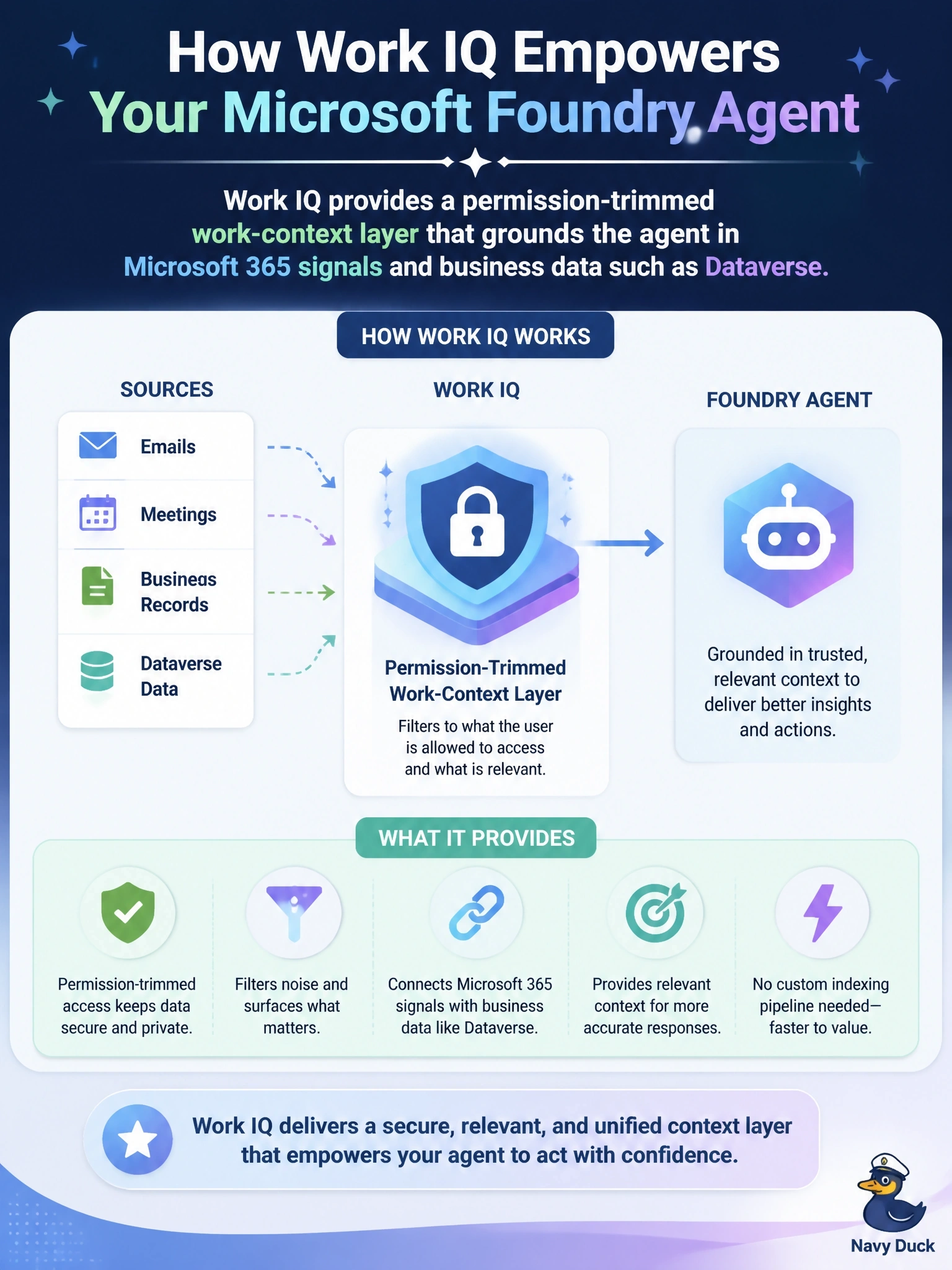
Work IQ is like a well-briefed assistant who already knows your inbox, your calendar and your customer records, and only tells you what you're allowed to see. You don't build the index or the sync jobs yourself. The trap is picturing it as storage you fill or a back door around security.
Full Explanation
Work IQ is the intelligence layer that grounds Microsoft Copilot and custom agents in shared work context. It combines signals from email, meetings, files and chats with business systems, and its tool catalog includes Dataverse and Dynamics 365 tools, so an agent can reason over the records an account manager works with. Microsoft positions it as removing the need for teams to manage vector stores, data sync jobs or custom compliance enforcement, and every request runs with delegated identity so results are trimmed to the signed-in user's permissions. A self-provisioned vector database filled with nightly exports is exactly the pipeline Work IQ is meant to replace, and it would serve stale data stripped of row-level security. Work IQ does not bypass Dataverse security; it enforces the user's existing access, so writing without role checks is the opposite of how it behaves. Plug-ins run server-side business logic in the Dataverse event pipeline and have nothing to do with grounding an agent's answers. Exam caveat: Work IQ capabilities are evolving and parts are in preview, so expect decision-level questions rather than configuration details. Operational check: sign in as two users with different access and confirm the agent's grounded answers differ accordingly.