
A developer is building a child flow that calculates a shipping quote. The parent flow must pass a weight and a destination to the child, and the child must return the quote amount and carrier name to the parent for use in later steps. How should the developer define these inputs and outputs?
Select an answer to reveal the explanation.
Short Explanation
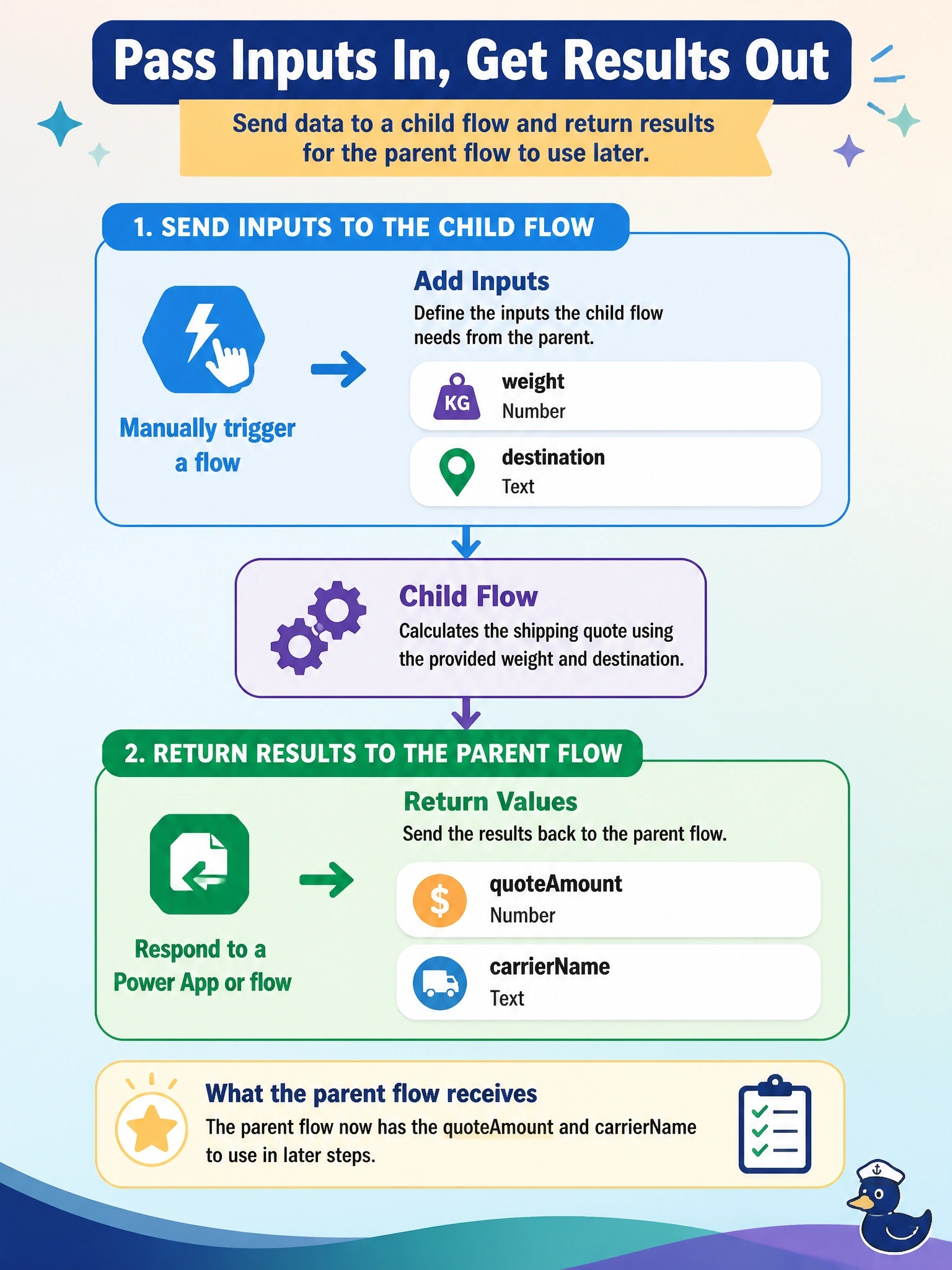
A child flow is like a function: parameters go in through the trigger, and a return statement sends results back. You define inputs on Manually trigger a flow, then end with Respond to a Power App or flow, and the parent sees those outputs on Run a Child Flow. Variables don't cross the line between flows.
Full Explanation
The child flow's Manually trigger a flow trigger defines typed inputs, such as a number for weight and text for destination. When the parent adds the Run a Child Flow action and selects the child, those inputs appear as fields to fill. Inside the child, the Respond to a Power App or flow action, or the Response action, defines the outputs, here the quote amount and carrier name, and the parent can use those outputs as dynamic content in later steps after the call completes. Variables are scoped to a single flow run; a child flow runs as a separate run and cannot read or modify the parent's variables, so the variables function in the child returns only its own variables. Terminate ends a run with a status and an optional error message; it does not return output values to a caller, so the parent receives nothing usable. Passing data through a Dataverse row works only by side effect, requires extra reads and writes, introduces concurrency problems when several parents run at once, and bypasses the defined contract that makes the child reusable. Exam caveat: the parent waits for the child's response, and the child must respond before it finishes, or the parent's call will not complete. Operational check: run the parent with a test weight and destination and confirm the Run a Child Flow action's outputs show the quote amount and carrier name.