
An HR team of business makers must build a question-and-answer agent over their policy documents, publish it to Microsoft Teams, and maintain its topics and knowledge sources themselves with minimal code. Which platform should they build the agent on?
Select an answer to reveal the explanation.
Short Explanation
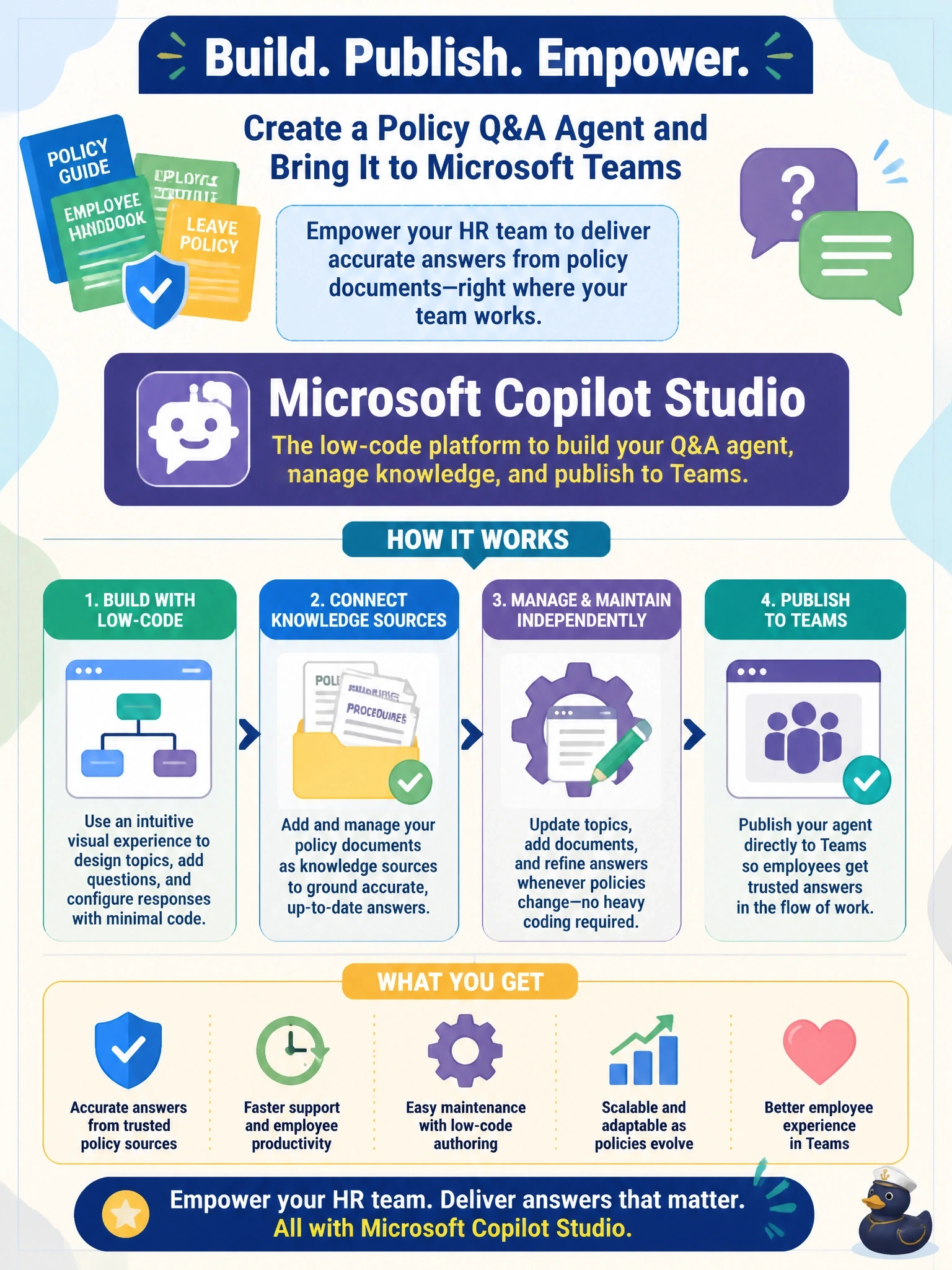
Think about who's holding the keys after launch day. If business makers are going to own and tweak the agent, you give them Copilot Studio, where knowledge, topics and Teams publishing are all point-and-click. The trap is choosing Foundry because it sounds more powerful, then handing the makers code they can't maintain.
Full Explanation
The choice between Microsoft Copilot Studio and Microsoft Foundry depends mainly on who builds and maintains the agent and how much control they need. Copilot Studio is a low-code environment where makers add knowledge sources such as SharePoint sites or uploaded documents, author topics, configure generative answers and publish to channels including Microsoft Teams without writing code, so the HR team can own the full lifecycle. Microsoft Foundry is a code-first platform for developers who need control over models, orchestration and hosting; it requires engineering skills the makers do not have, and a separate Teams bot registration adds infrastructure the team cannot maintain. A custom Azure Functions bot is a fully bespoke build, which is the opposite of minimal code, and reading files on each request does not provide retrieval over the documents. An MCP server exposes tools that agents call; it is a building block for agents rather than an agent, and it does not deliver an authoring or publishing experience. Exam caveat: the stem's emphasis on makers, minimal code and built-in channels points to Copilot Studio; emphasis on custom code, model choice and Azure hosting points to Foundry. Operational check: create the agent, add the policy library as knowledge, test answers, and publish to Teams.