
A rep opens an opportunity that predictive scoring rates as low-probability. The score explanation panel lists the top negative factors as 'no activity logged in the last 21 days' and 'only one contact engaged on the account.' The rep asks a consultant whether logging a call today and adding a second contact will guarantee the score jumps into the high-probability range by tomorrow. How should the consultant respond?
Select an answer to reveal the explanation.
Short Explanation
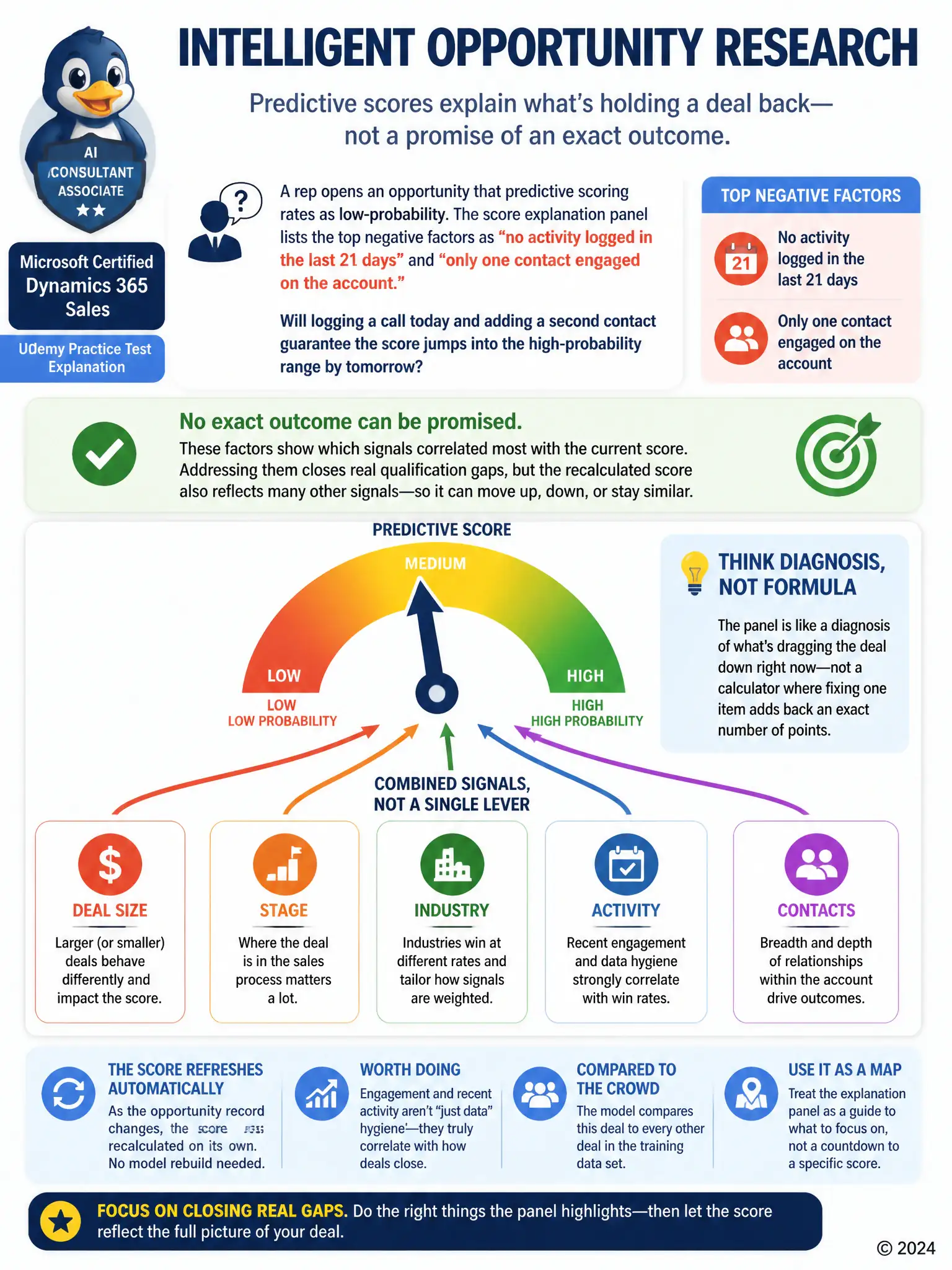
Think of the score explanation panel as a diagnosis, not a calculator. Logging a call and adding a second contact can close real qualification gaps, but the score gets recomputed from the whole deal and the training data, so you can't promise it jumps high by tomorrow.
Full Explanation
The correct response is to explain that the listed factors show which signals correlated most with the current score; addressing them closes real qualification gaps, but the recalculated score also reflects deal size, stage, industry, and how the opportunity compares with the wider training data, so no exact outcome can be promised. Logging a call today and adding a second contact are genuinely useful actions because they close real qualification gaps, but promising a specific point jump misrepresents how the model works. The response that confirms the score will jump because the explanation lists the exact factors used to calculate the current number, so reversing them reverses the score by the same margin, is incorrect because it treats the explanation panel as a literal point-value ledger, implying the model reverses factors by a fixed, predictable margin, which is not how the underlying statistical model produces a score. The response that says the panel only reflects data-entry quality, not sales behavior, so nothing done before tomorrow will change it, is incorrect because it dismisses the factors as pure data-quality noise; in fact, low engagement and stale activity are behavioral signals the model weighs, so the rep's actions are relevant even if the exact outcome is not guaranteed. The response that says the score is fixed until a consultant manually retrains the entire model, since explanation factors are locked once the model is published, is incorrect because it confuses per-opportunity score recalculation, which happens automatically as records change, with retraining the underlying model, a separate, much less frequent maintenance activity. The consultant's job is to set an accurate expectation: the factors point to real gaps worth closing, without promising a specific new number.