
A rep is preparing for a first call with a public company and pulls up the Dynamics 365 Sales AI-generated account brief the night before. The brief lists the company's Chief Operating Officer by name, but the rep separately saw a press release from three weeks ago announcing that executive's departure and a successor's appointment. What should the rep do?
Select an answer to reveal the explanation.
Short Explanation
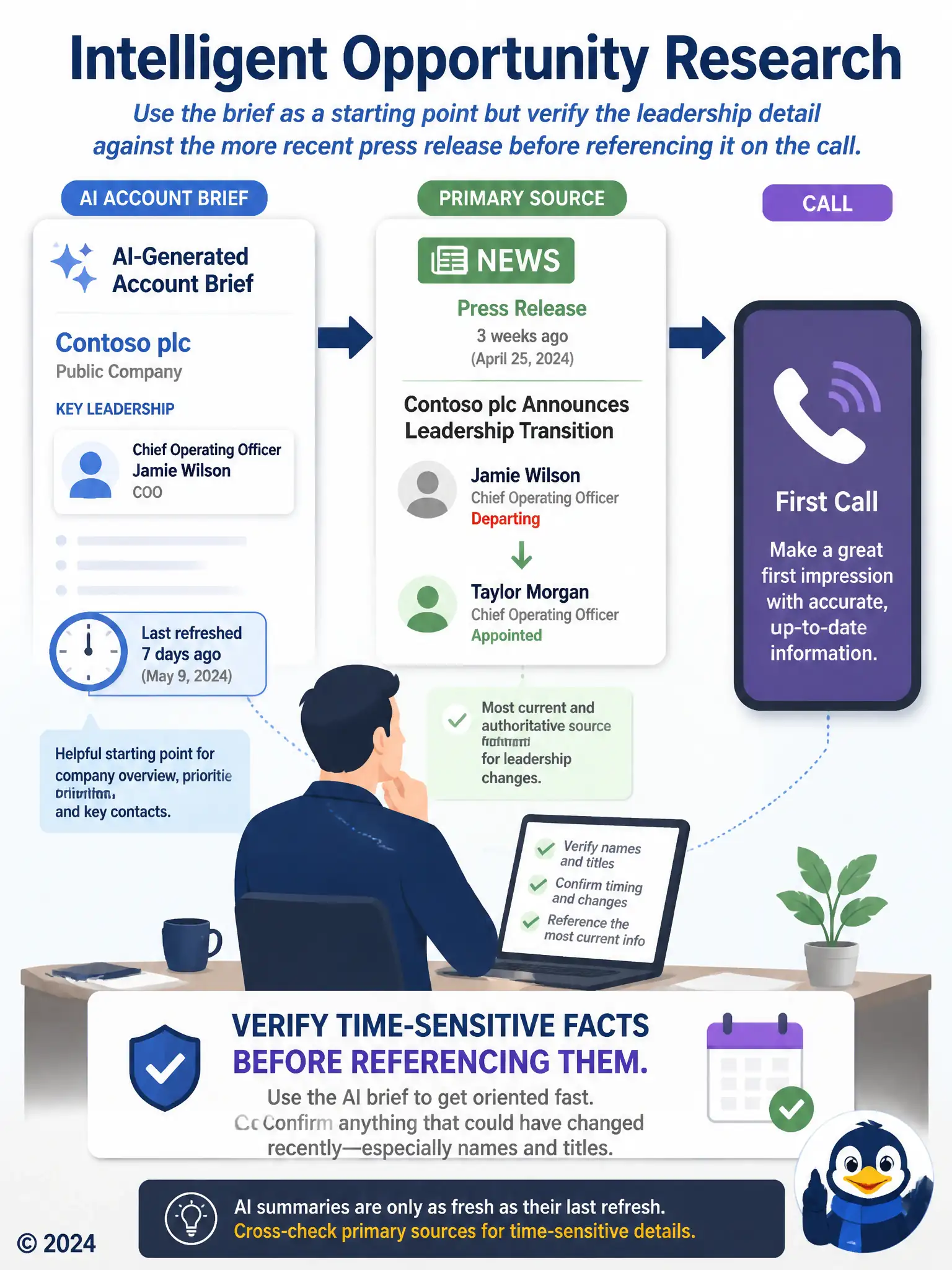
The brief is only as fresh as its last refresh, so executive changes can outrun it. Treat it like notes from a colleague who’s been out of the loop: use it to get oriented, then verify time-sensitive names and titles against the newer press release before you say them on the call.
Full Explanation
The correct choice is to use the brief as a starting point but verify the leadership detail against the more recent press release before referencing it on the call. AI-generated account briefs are compiled from external and internal sources at whatever point they were last refreshed, and that refresh is not guaranteed to be instantaneous, so a brief can lag behind a fast-moving change like an executive departure. The rep already has more current information from a primary source, the press release, so the right move is to treat the brief as a helpful starting point while correcting the outdated detail before the call rather than repeating it to the prospect. The choice to disable the account-brief feature for this account is incorrect because it discards a generally useful research aid over a single stale data point instead of simply verifying and correcting it. The choice to trust the brief as written is incorrect because it assumes the brief is always current, which contradicts the fact pattern: the rep has direct evidence, the press release, that the brief is out of date. The choice to wait for the next scheduled Dynamics 365 Sales data refresh cycle before making any calls is incorrect because there is no indication a data refresh is imminent or that refresh timing is under the rep’s control, and delaying the call is unnecessary when the rep can simply verify the one detail in question and proceed. Treating AI-generated research as a draft that benefits from a quick sanity check, especially for fast-changing facts like leadership changes, keeps the rep from citing outdated information in front of the customer.