
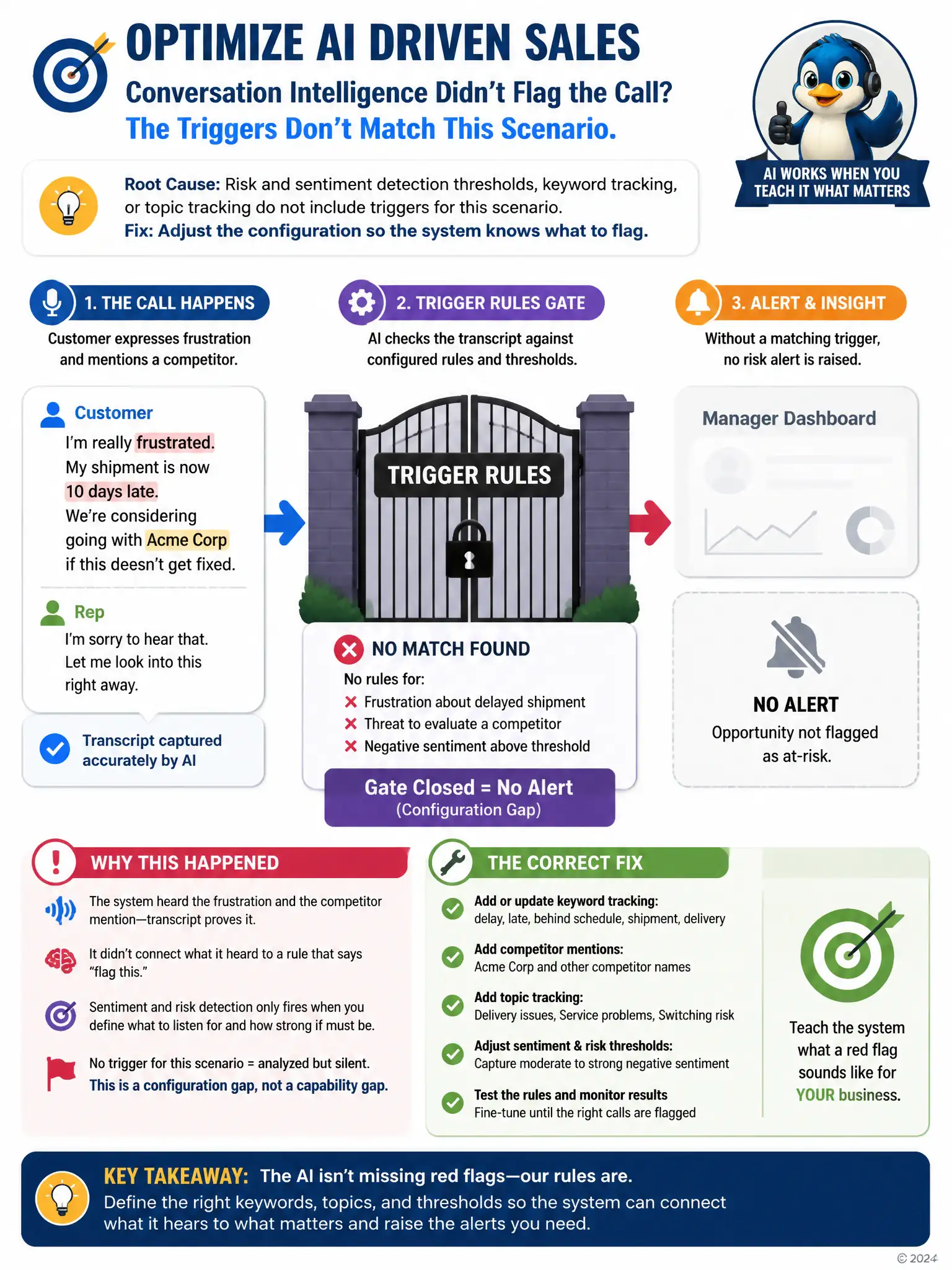
A sales manager reviews a recorded call where the customer expressed frustration about a delayed shipment and hinted at evaluating a competitor. Conversation intelligence transcribed the call accurately, but the opportunity was not flagged as at-risk and no alert appeared in the manager's dashboard. The manager asks a consultant why. What is the most likely cause and correct fix?
Select an answer to reveal the explanation.
Short Explanation
The transcript shows the system heard the frustration and the competitor mention, so the issue is not listening. It is that no configured sentiment, keyword, or topic rule told the system that this combination means risk. You fix it by adjusting the detection thresholds and triggers so this kind of red flag actually fires.
Full Explanation
The correct answer is the configuration answer: conversation intelligence relies on configured sentiment thresholds, keyword tracking, and topic detection to decide when a call's content should generate a risk flag. If the frustration and competitor mention did not trip any configured trigger, the detection rules themselves are the gap, and adjusting thresholds or adding relevant keywords and topics is the direct fix. The minimum call-duration answer is incorrect because a minimum call-duration setting governs whether a call is analyzed at all, and the scenario states the call was transcribed and analyzed accurately, so duration was not the blocking factor. The manual at-risk marking answer is incorrect because flags are meant to be generated automatically from detected signals; requiring a manager to manually mark an opportunity at-risk before any alert can appear defeats the purpose of automated conversation intelligence. The separate consent field answer is incorrect because there is no separate consent field gating whether a detected signal produces a flag; consent and recording policies govern whether a call can be captured and analyzed at all, not whether an already-analyzed transcript can trigger alerts.