
A consultant is enabling conversation intelligence for a sales team that records Teams calls with prospects in the European Union. During setup, a rep asks whether AI-generated call summaries and keyword tracking can be produced for a call where one external attendee is unaware the meeting is being recorded and analyzed. What should the consultant tell the rep?
Select an answer to reveal the explanation.
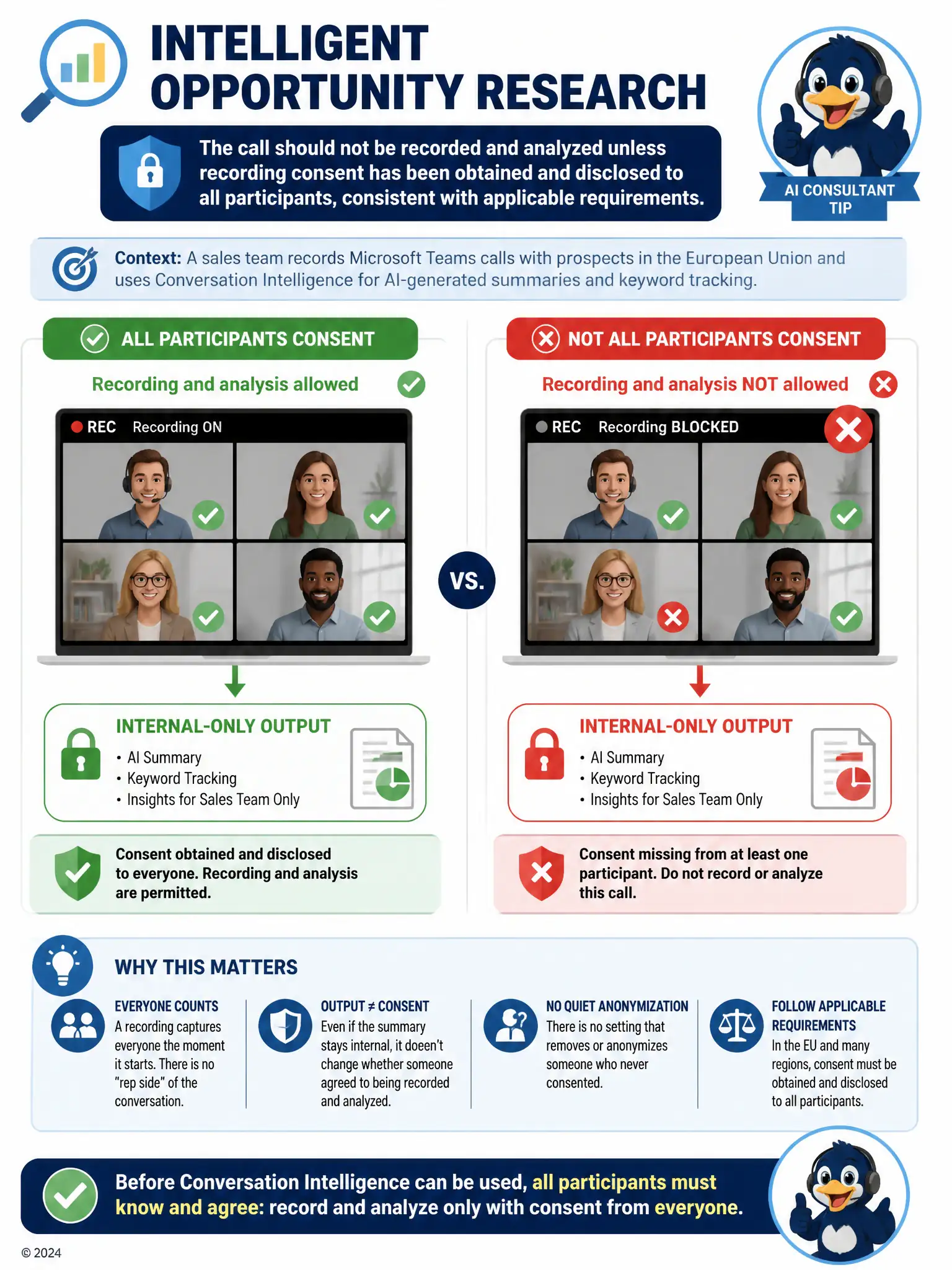
Short Explanation
You can't let conversation intelligence touch that call until every participant knows it's being recorded and analyzed and consent is obtained. Internal-only summaries don't fix a missing consent step, and there's no magic anonymization that rescues an unconsented recording.
Full Explanation
Recording and analyzing a call is subject to consent and disclosure obligations that apply to every participant on the call, consistent with applicable requirements, so the rep needs confirmation that all attendees, including the external one, know the call is being recorded and analyzed before conversation intelligence can run on it. The claim that conversation intelligence can proceed because Dynamics 365 Sales automatically anonymizes any participant who has not consented is incorrect because there is no automatic anonymization feature that exempts non-consenting participants from a recording; the platform does not selectively mask one party's audio to sidestep consent requirements. The idea that the call can be recorded as long as only the rep's own speech is analyzed is incorrect because a call recording captures the whole conversation, and consent obligations are not satisfied by narrowing analysis to one party's speech after the fact; the recording itself, not just the analysis output, is what triggers the requirement. The argument that consent is unnecessary because conversation intelligence output is visible only internally to the sales team and never leaves the organization is incorrect because internal-only visibility addresses data-sharing scope, not the separate question of whether the recording was made and analyzed with proper consent; keeping output internal does not retroactively make an unconsented recording compliant. The consultant's guidance should stop the call from being processed until consent is confirmed.