
A consultant configured the AI-driven lead scoring model for a software company with a threshold tuned to flag only the top 5 percent of leads as high-priority. Sales leadership complains that many strong, ready-to-buy leads are being scored as low-priority and going unworked, even though the few leads that are flagged do convert well. What should the consultant recommend?
Select an answer to reveal the explanation.
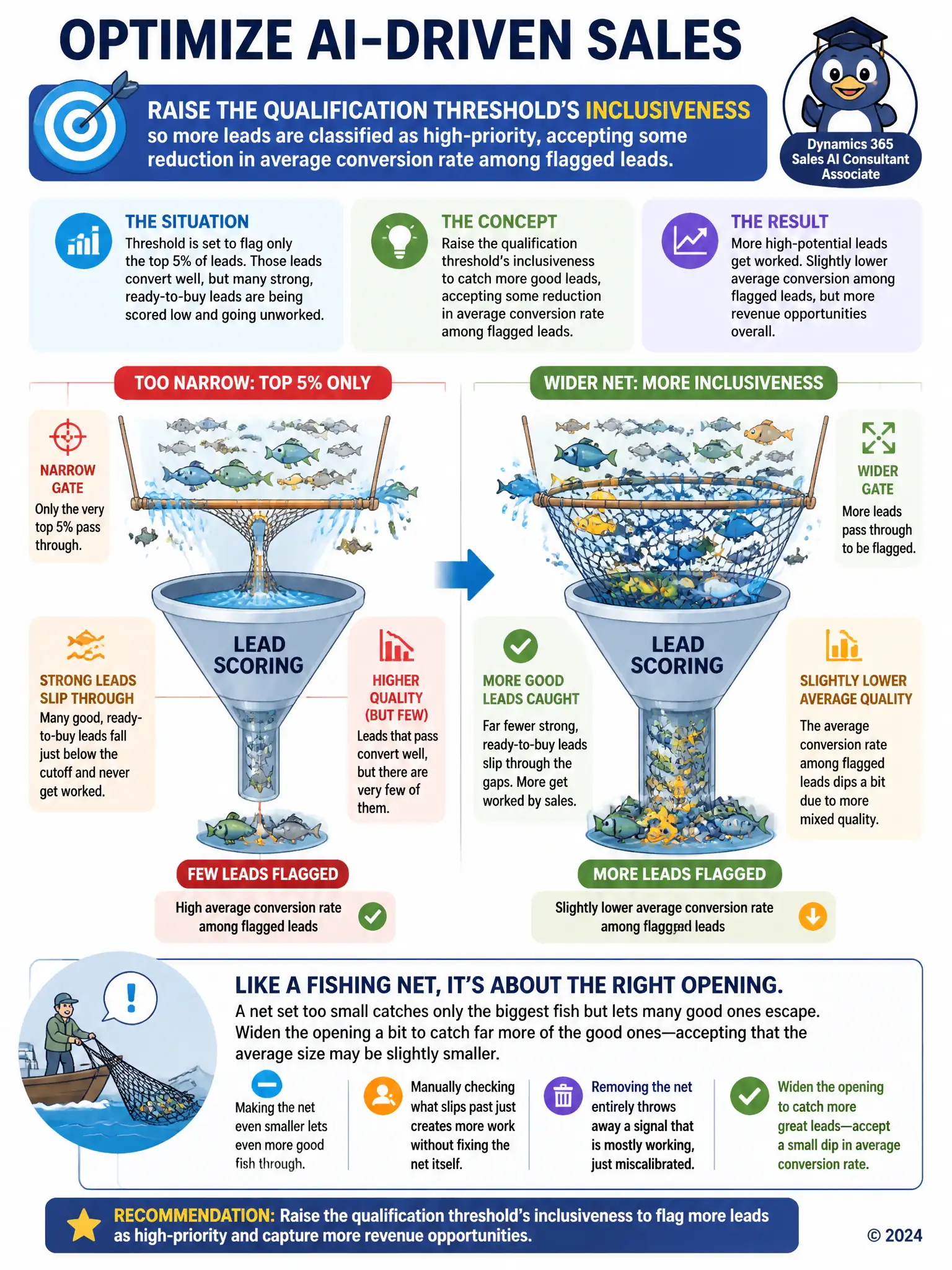
Short Explanation
You’ve got a net that’s too tight: it catches only the biggest fish, but too many good leads slip through. Widen the net by making the high-priority threshold more inclusive, even if the average conversion rate among flagged leads dips a bit. That trades a little precision for far better coverage of ready-to-buy leads.
Full Explanation
The complaint describes a qualification threshold tuned too tightly: it flags a small set of leads that convert well but misses many other strong, ready-to-buy leads that fall just outside the narrow band. The right recommendation is to make the high-priority threshold more inclusive so more leads qualify, surfacing missed opportunities even though the average conversion rate among flagged leads may dip slightly. That trade-off is appropriate because the business problem is under-coverage, not poor precision. Lowering the threshold further so an even smaller number of leads are flagged as high-priority is incorrect because it tightens the net and worsens the exact problem leadership is reporting. Keeping the threshold unchanged and instructing sellers to manually review every low-priority lead in addition to their existing workload is incorrect because it leaves the coverage gap unaddressed and adds a full manual review burden that does not scale or fix the scoring configuration. Disabling lead scoring and routing every inbound lead to sales in the order received is incorrect because it discards a working signal and reverts the team to unprioritized, first-in-first-out lead handling, which is worse than recalibrating a threshold that only needs adjustment. The fix is to recalibrate the threshold, not to abandon or manually patch around it.