
A sales operations lead must report to leadership on whether Copilot features have been successfully adopted across an 80-seat sales organization for a quarterly business review. Which metric would best support that assessment?
Select an answer to reveal the explanation.
Short Explanation
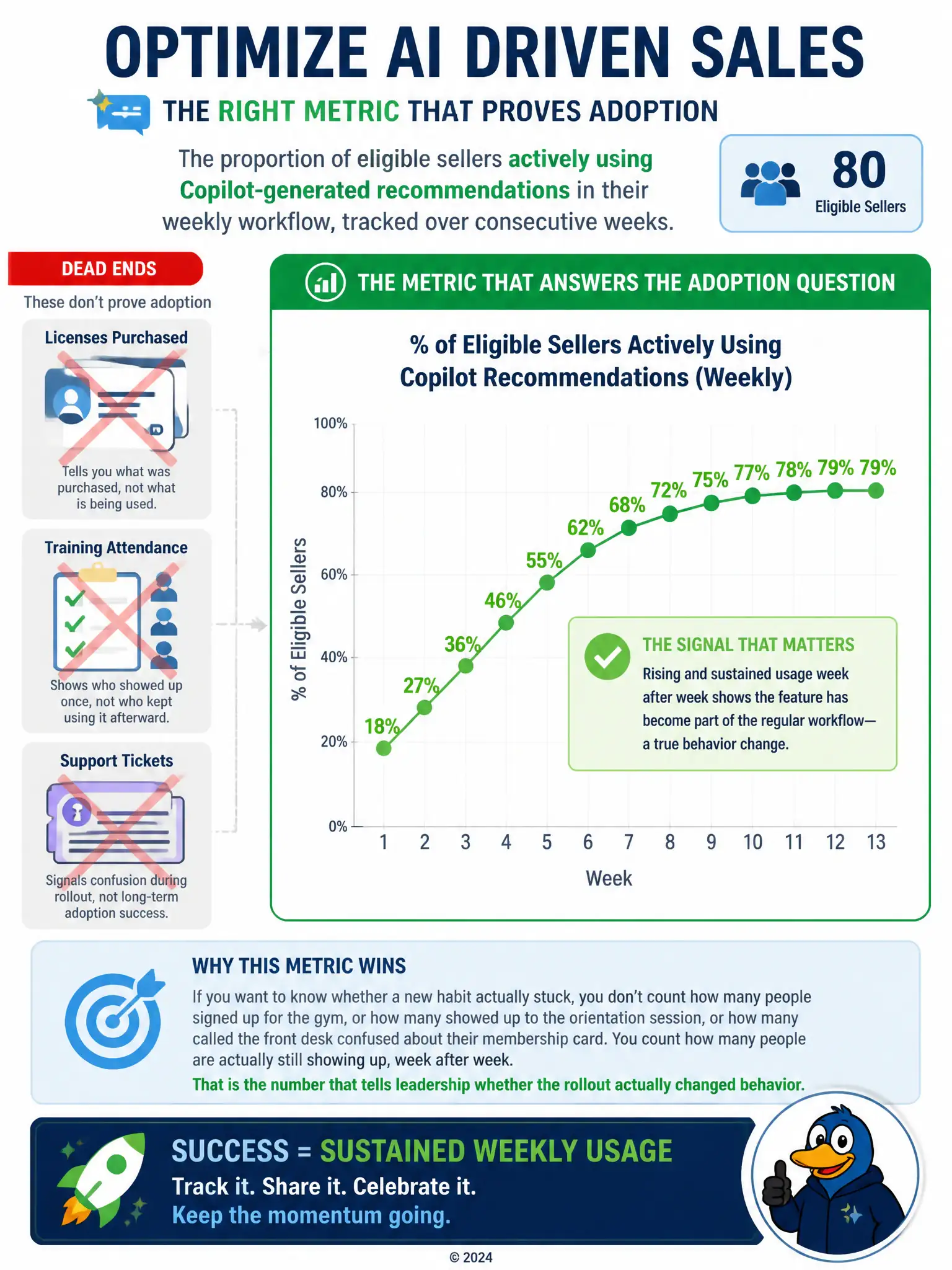
If you want to know whether Copilot adoption stuck, you count actual weekly use, not purchases, training sign-ups, or help requests. Tracking eligible sellers who keep using Copilot-generated recommendations week after week shows leadership whether behavior changed. That's the adoption metric that matters.
Full Explanation
The best metric is the proportion of eligible sellers actively using Copilot-generated recommendations in their weekly workflow, tracked over consecutive weeks, because adoption is about ongoing, actual use of a capability. This directly measures whether the feature has become part of how the team works, and sustained usage across weeks distinguishes real adoption from a short-lived spike of initial curiosity. The total number of Copilot licenses purchased is incorrect because it reflects procurement, not usage, and an organization can hold licenses that sit largely unused. The percentage of sellers who attended the initial Copilot training session is incorrect because it measures a one-time exposure to the feature, not whether sellers went on to incorporate it into their daily work afterward. The number of support tickets sellers submitted asking how to enable Copilot is incorrect because it reflects friction or confusion during onboarding, which is at best a leading indicator of a rollout problem, not a measure of successful adoption once the feature is working. A credible quarterly business review needs a metric tied to sustained behavior change, which is what ongoing usage data provides and the other three measures do not.