
A sales operations lead at a software company wants to know whether a specific competitor is coming up more often across the whole team's discovery calls this quarter compared to last quarter, not just in any single call. Reviewing individual call transcripts one at a time is not practical given the call volume. Where should the lead look to get this trend across all calls?
Select an answer to reveal the explanation.
Short Explanation
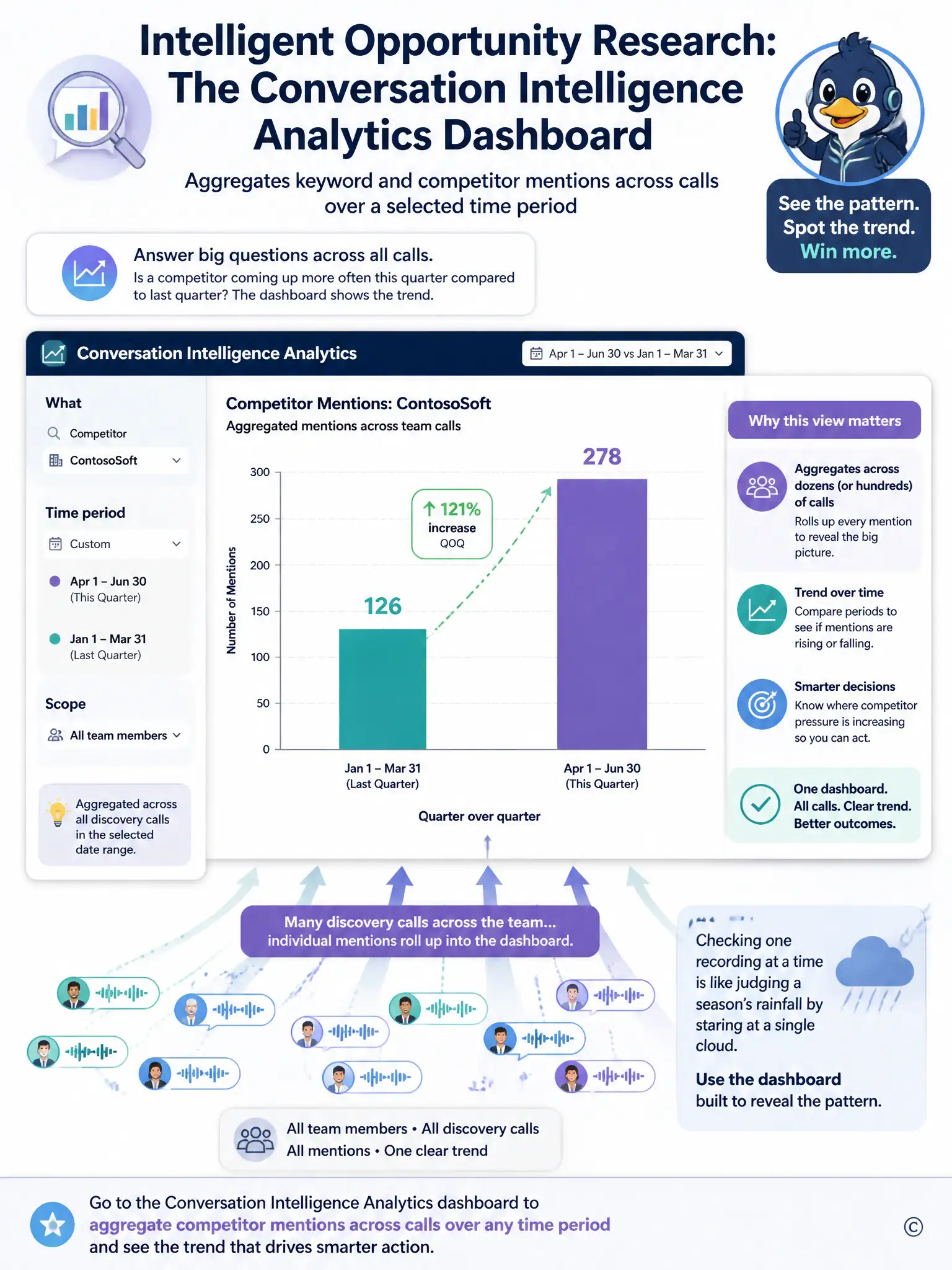
When you need to know whether a competitor is popping up more across dozens of discovery calls, don't stare at one cloud. Go to the conversation intelligence analytics dashboard, because it stacks keyword and competitor mentions across all calls over a selected date range. That's the only view that shows the quarter-over-quarter team trend you're after.
Full Explanation
The correct answer is the conversation intelligence analytics dashboard, which aggregates keyword and competitor mentions across calls over a selected time period. Conversation intelligence includes an analytics view built specifically to roll up signals like keyword and competitor mentions across many calls over a chosen date range, which is exactly the quarter-over-quarter, team-wide comparison the lead needs. The predictive opportunity score detail pane is incorrect because it reports on a single opportunity's risk factors, not a team-level trend across the whole call volume, so it cannot answer the question about overall frequency change. The Copilot opportunity summary panel on the account with the most recent call is incorrect because it is scoped to one account's activity, not the entire team's calls across a quarter, so it would only ever reflect a slice of the picture rather than an organization-wide trend. The call recording's auto-generated tags, filtered manually one recording at a time in Microsoft Teams, are incorrect because reviewing tagged recordings one at a time is precisely the impractical, call-by-call approach the lead is trying to avoid; it does not provide an aggregated view and would not scale to the volume described.