
A consultant is enabling predictive lead scoring for a software vendor that sells both a low-cost self-serve subscription and a high-touch enterprise platform through the same Dynamics 365 Sales lead queue. Self-serve leads convert in days on small deal sizes, while enterprise leads take months and involve many more touchpoints. The client wants one scoring setup that produces meaningfully accurate grades for both groups. What should the consultant recommend?
Select an answer to reveal the explanation.
Short Explanation
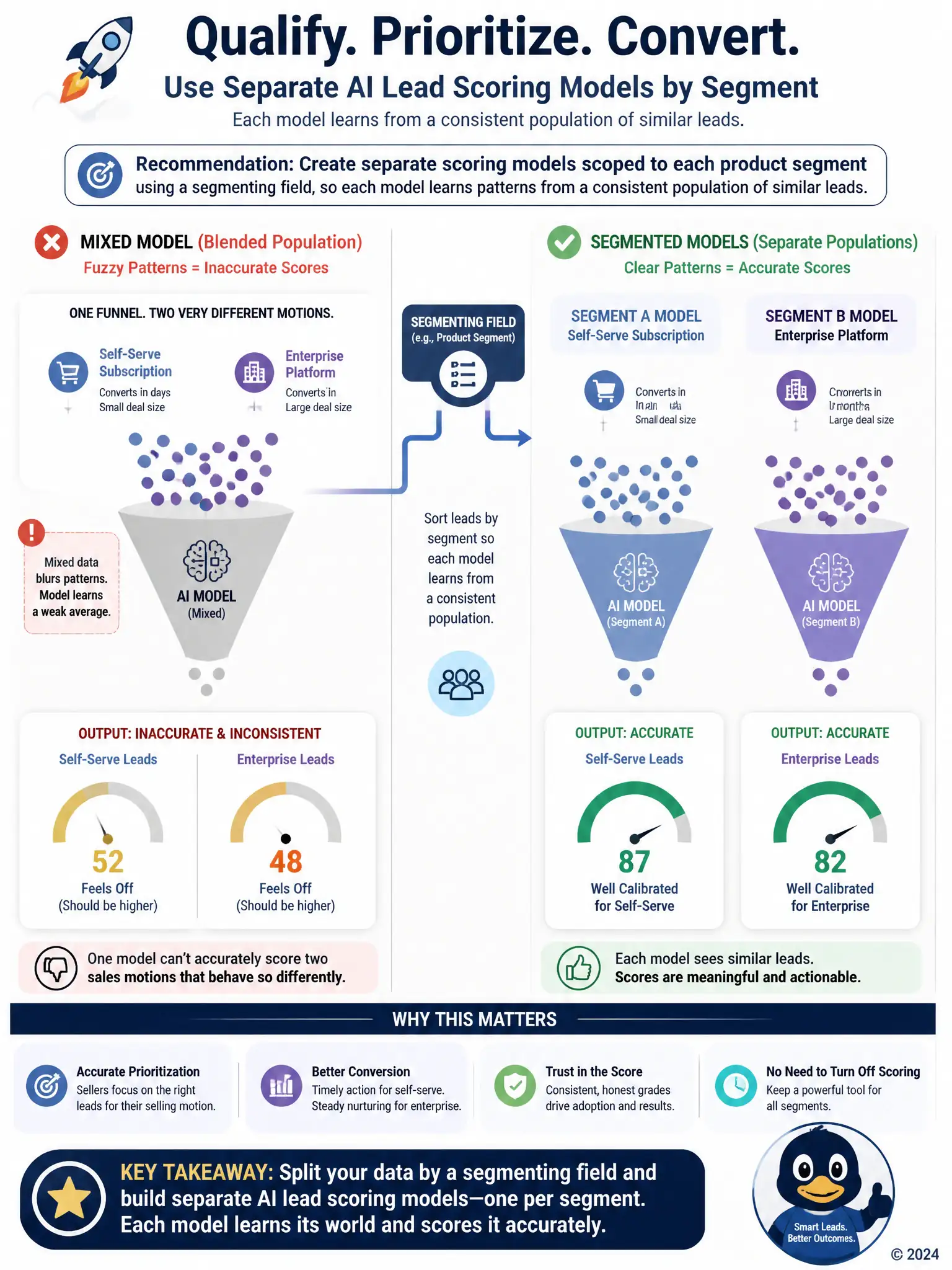
You've got two completely different sales motions sharing one lead queue, so one blended score will fit neither group. You should scope separate predictive scoring models to each product segment, using a segmenting field, so each model learns from leads that behave like each other. That gives you grades that are actually calibrated to self-serve and enterprise behavior.
Full Explanation
The correct recommendation is to create separate scoring models scoped to each product segment using a segmenting field, so each model learns patterns from a consistent population of similar leads. Predictive lead scoring builds its model from historical patterns in the population it is trained on, so mixing two groups with very different conversion timelines and deal sizes produces a blended model that fits neither group well. Scoping separate models to each segment, using a field that distinguishes self-serve from enterprise leads, lets each model learn from a coherent population and produce grades that reflect real conversion behavior for that segment. The single scoring model across all leads is incorrect because the platform does not automatically adapt a single model to serve dissimilar populations; averaging distinct patterns together degrades accuracy rather than improving it. Leaving scoring disabled for enterprise leads and enabling it only for self-serve leads is incorrect because predictive scoring is not restricted to short sales cycles; it can be configured for longer-cycle segments as long as there is enough consistent historical data, and disabling it for enterprise leads discards a workable option. Enabling one model for the whole queue but instructing sellers to mentally discount the score for enterprise leads is incorrect because asking sellers to manually discount an automated score defeats the purpose of the feature and relies on inconsistent human judgment instead of a model actually suited to the segment; the platform supports scoping models rather than requiring workaround interpretation.