
A consultant configures Copilot for Sales account summaries for a distribution company. Two sellers view the summary for the same strategic account: one seller manages the account directly and has full read access to its opportunities and case records, while a second seller only has visibility into contact and account details due to a restrictive Dataverse security role. The second seller notices the AI-generated summary omits recent opportunity and case activity that appears in the first seller's summary. What is the most likely explanation for this difference?
Select an answer to reveal the explanation.
Short Explanation
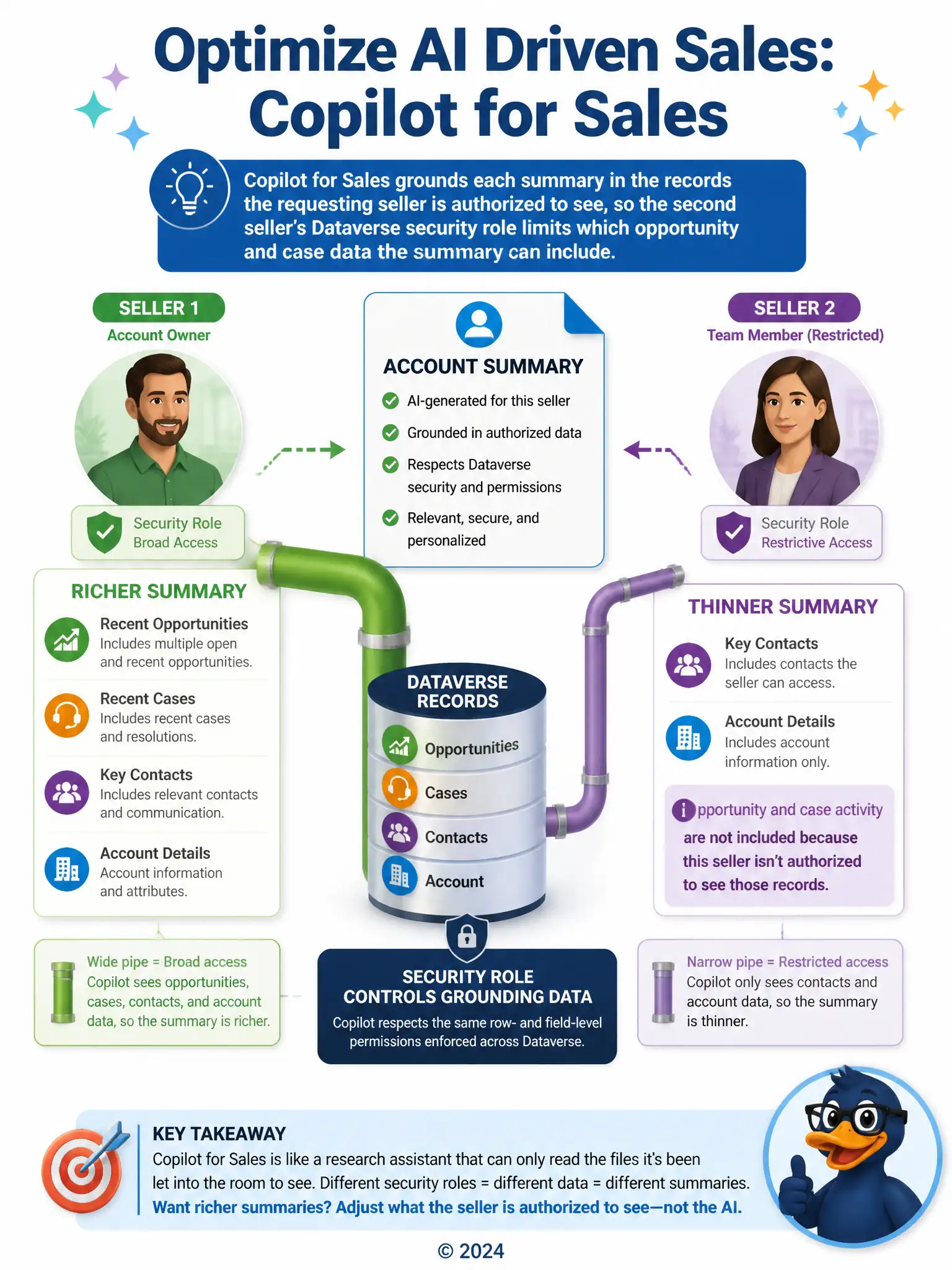
Think of Copilot as a research assistant that can only read the files it's been let into the room to see. It builds each account summary from the records the seller's Dataverse security role lets them open, so a narrower role means a thinner summary. If you want richer summaries, adjust what the seller can see, not troubleshoot the AI.
Full Explanation
The correct explanation is that Copilot for Sales generates account summaries by retrieving and grounding on records the requesting user is authorized to view in Dataverse, so a seller with a restrictive security role sees a summary limited to that role's visible opportunity and case data, while a seller with fuller access sees a richer summary drawn from the same account. The cached-snapshot explanation is incorrect because the summary difference here stems from access scope, not refresh timing; a caching explanation would produce inconsistent content for the same seller over time, not a consistent gap between two sellers' specific summaries. The shared-identical-summary explanation is incorrect because summaries are not shared verbatim across users; generating per-user, permission-aware content is expected behavior, not evidence of a misconfiguration needing a reset. The manually pinned timeline explanation is incorrect because summary content is drawn dynamically from records the seller can access rather than from content an admin manually pins to a timeline, so the gap is not explained by manual curation.