
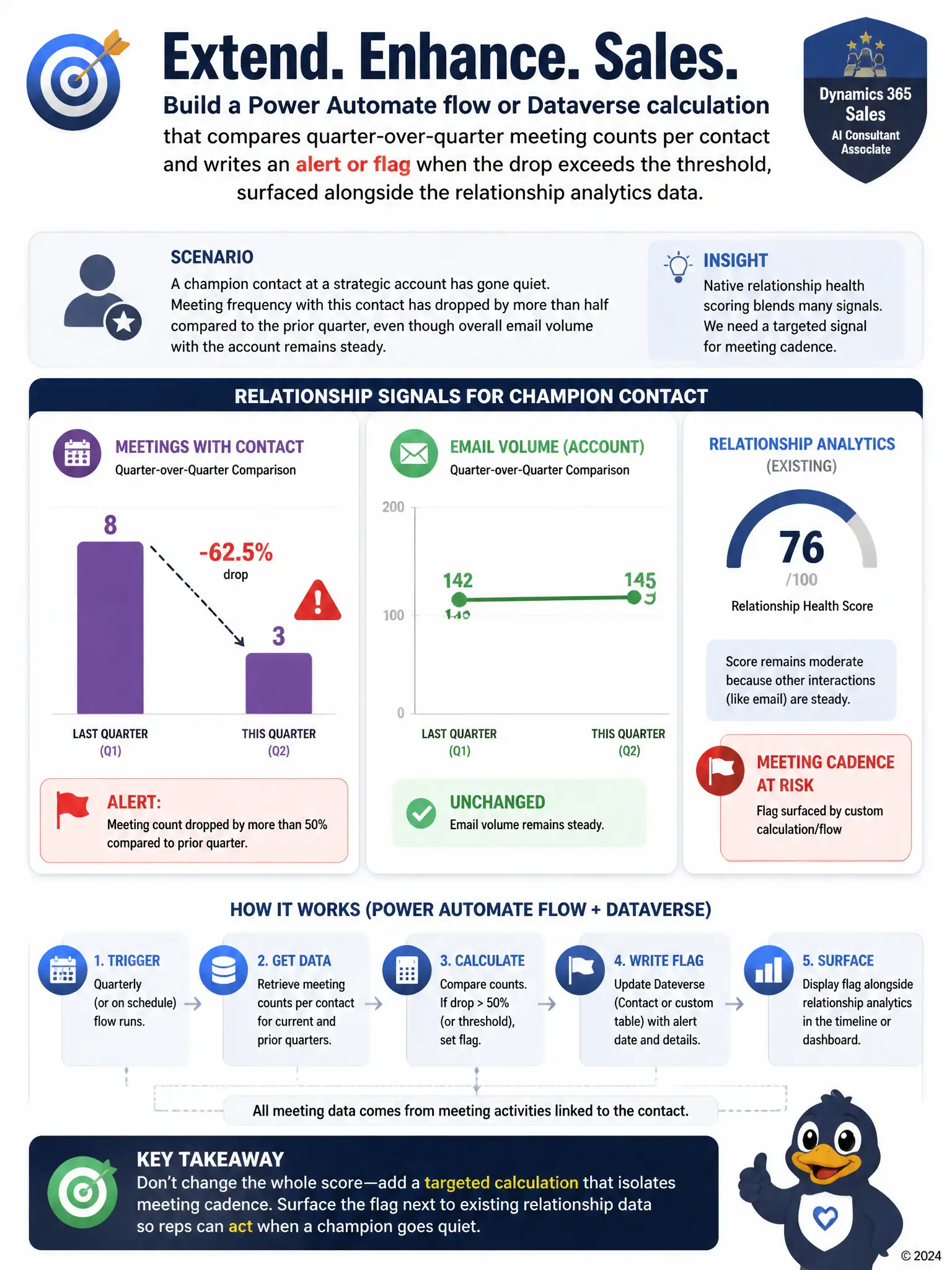
A sales operations manager wants relationship analytics to flag when a champion contact at a strategic account has gone quiet — specifically, when meeting frequency with that contact has dropped by more than half compared to the prior quarter, even though overall email volume with the account remains steady. Native relationship health scoring on the contact doesn't isolate meeting cadence from other interaction types. How should the manager enhance the scoring to catch this pattern?
Select an answer to reveal the explanation.
Short Explanation
You need custom logic that counts meetings with that champion contact quarter over quarter and flags drop past your threshold, then surfaces it next to existing relationship analytics. Lowering whole account's threshold, asking rep to self-report weekly, or disabling email signals won't isolate missing meeting-cadence comparison.
Full Explanation
The correct approach is to build custom logic using Power Automate or Dataverse calculation that compares each contact's quarter-over-quarter meeting counts and writes alert or flag when drop exceeds defined threshold, surfacing that signal alongside existing relationship data. Lowering overall relationship health score threshold for entire account is incorrect because lowering account-level threshold changes scoring for whole account rather than isolating one contact's cadence, and it would also flag or miss accounts for reasons unrelated to this specific champion. Asking sales rep to self-report weekly whether champion still seems engaged is incorrect because relationship analytics is built from actual interaction data rather than rep self-reporting, and relying on manual weekly check-ins reintroduces inconsistency and delay manager is trying to engineer around. Disabling email-based signals in relationship analytics entirely is incorrect because removing email-based signals discards information relevant to overall account health and does not itself compute or compare meeting cadence; it merely narrows existing signal set without adding calculation manager actually needs. Custom logic layered on top of existing signals is what closes specific gap described.