
A regional sales manager notices reps are spending significant time on top-scored leads that turn out to be shuttered businesses or contacts who have changed roles, while genuinely promising leads sit lower in the AI-ranked worklist. Investigation shows the scoring model is weighting firmographic fields, such as company size and industry, that have not been refreshed in over a year. What should the consultant recommend?
Select an answer to reveal the explanation.
Short Explanation
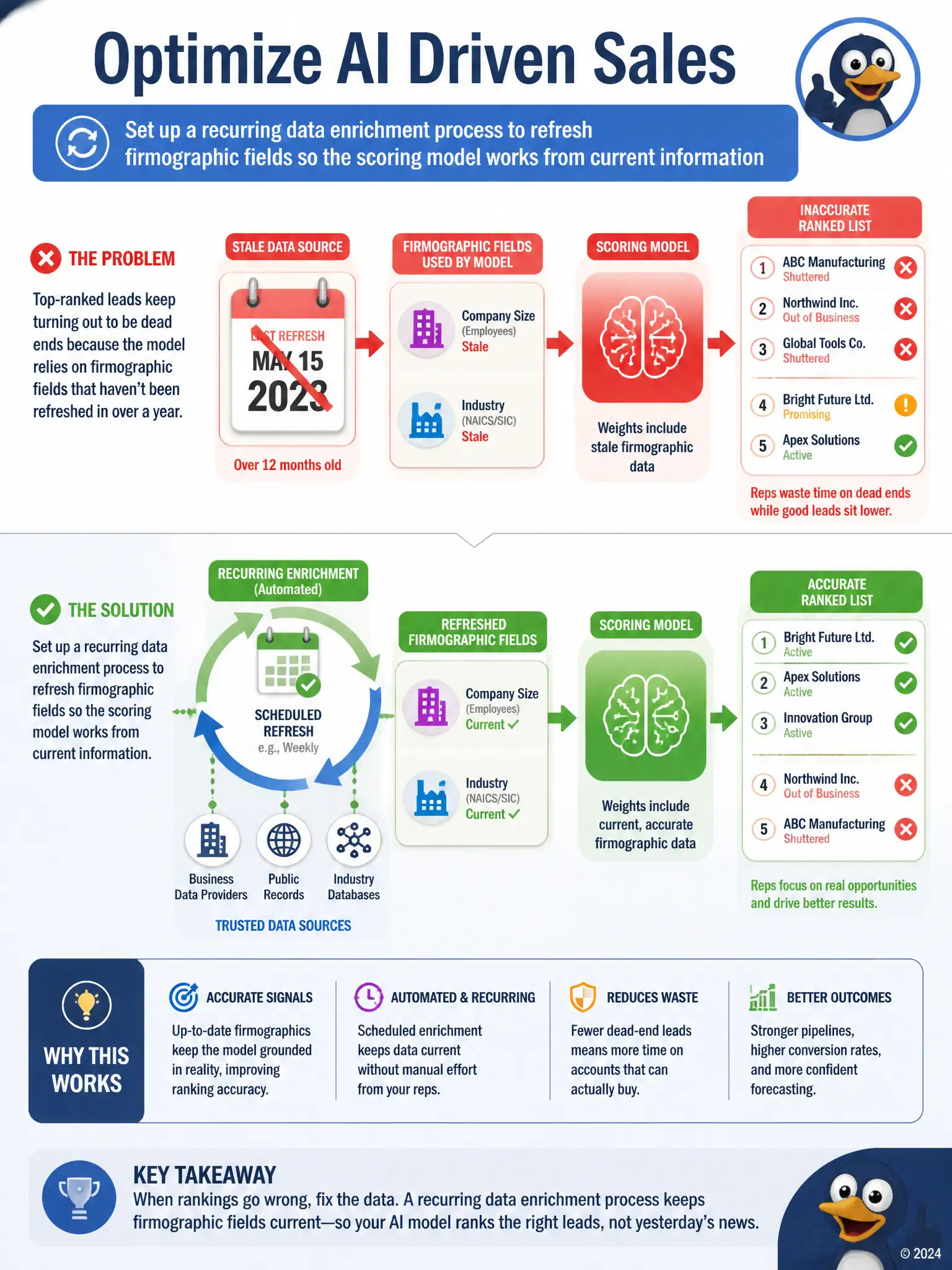
When top-ranked leads keep turning out to be dead ends, chase the data, not the ranking mechanism. You need a recurring data enrichment process to refresh firmographic fields so the scoring model works from current information. That fixes the stale company size and industry data at its source.
Full Explanation
The correct recommendation is to set up a recurring data enrichment process to refresh firmographic fields so the scoring model works from current information. Because the root cause is stale firmographic data feeding the scoring model, recurring enrichment keeps company size, industry, and related fields current, ensuring the model ranks leads based on accurate, up-to-date company and contact information. The approach of increasing the scoring model's weighting on recent activity signals while leaving firmographic data untouched is incorrect because shifting weight toward activity signals only dilutes the influence of the stale data rather than correcting it, leaving inaccurate firmographic information still baked into the score and still capable of misleading rankings in other ways. The approach of asking reps to manually re-verify every lead's firmographic data before the model scores it is incorrect because requiring reps to manually re-verify every lead before scoring defeats the purpose of automated scoring and does not scale across a full pipeline of leads, reintroducing the manual burden the automated feature was meant to remove. The approach of lowering the overall lead score threshold required for a lead to appear at the top of the worklist is incorrect because lowering the score threshold changes which leads surface at the top but does nothing to fix the underlying data driving those scores, so shuttered businesses and outdated contacts could still rank highly. Refreshing the data at its source is the fix that targets the actual cause of the misranking.