
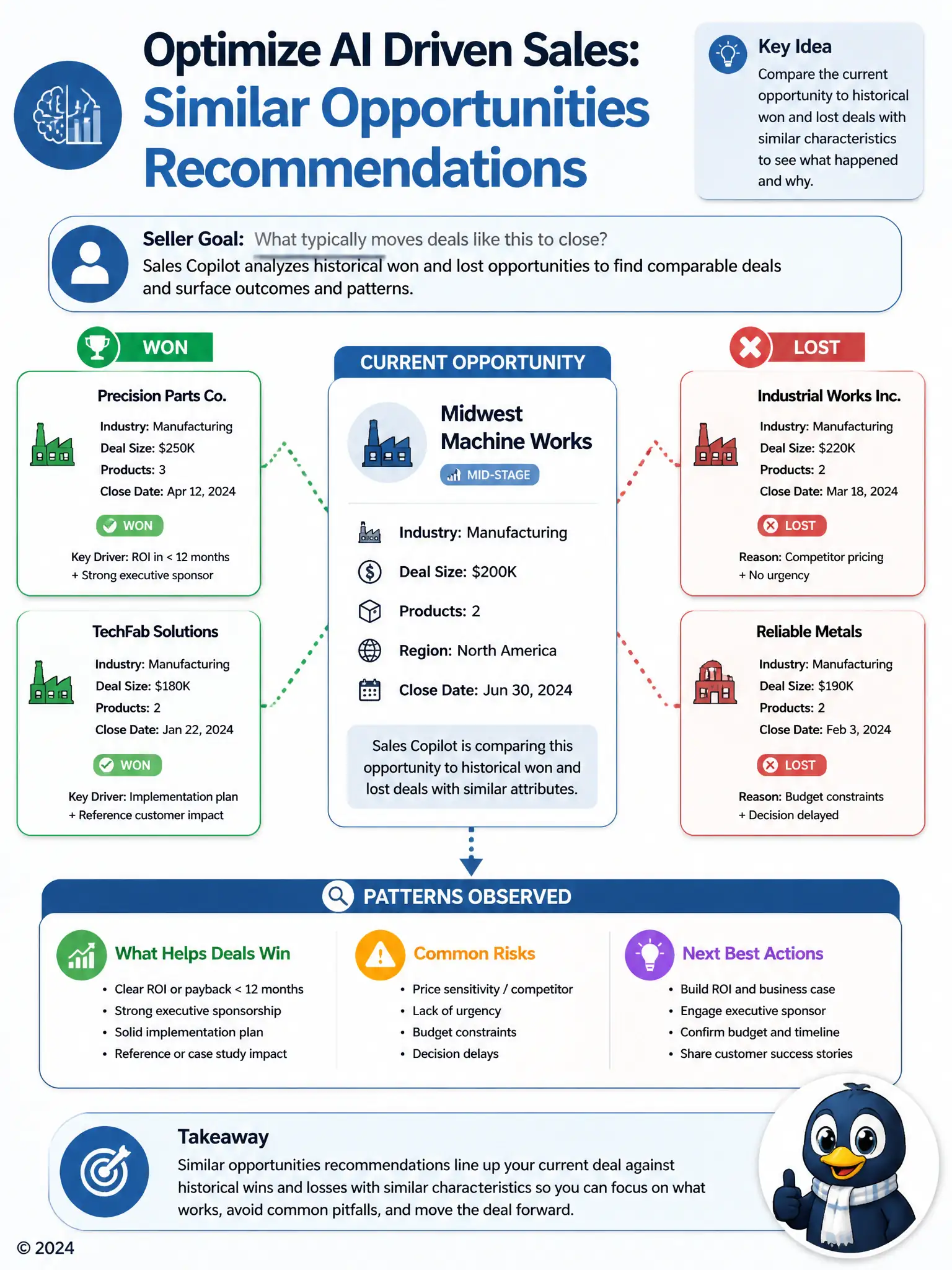
A seller is working a mid-stage opportunity for a manufacturing client and wants guidance on what typically moves similar deals to close. The consultant enables a Sales Copilot capability that compares the open opportunity's attributes against the organization's historical won and lost opportunities to surface comparable deals and their outcomes. Which capability is this?
Select an answer to reveal the explanation.
Short Explanation
You need a capability that lines up the current mid-stage deal with past wins and losses that look like it, then shows what happened. That's similar opportunities recommendations, because it compares deal attributes to historical outcomes and surfaces comparable deals. Lead scoring, relationship health scoring, and premium forecasting answer different questions.
Full Explanation
The correct capability is similar opportunities recommendations. It compares the attributes of an open deal, such as industry, deal size, and stage progression, against historical won and lost opportunities to surface comparable deals and the patterns that led to their outcomes, which is precisely the guidance the seller is asking for. Predictive lead scoring is incorrect because it evaluates leads before they become opportunities, ranking their likelihood to convert rather than comparing an in-flight opportunity to historical deal outcomes. Relationship health scoring is incorrect because it measures the strength and engagement level of a contact or account relationship, not how the current deal compares to past deals of a similar shape. Premium forecasting is incorrect because it produces aggregate revenue and close-probability projections across the pipeline, which helps with forecasting accuracy but does not surface individual comparable historical opportunities for a seller to learn from. The scenario's need for deal-to-deal comparison and pattern learning points specifically to the similar opportunities capability.