
A consultant configures conversation intelligence for a Dynamics 365 Sales team that competes frequently against two named rivals. Sales leadership wants an automatic alert whenever a rep's call transcript mentions either competitor by name, so a coach can review the recording before the next customer touchpoint. Which configuration should the consultant apply?
Select an answer to reveal the explanation.
Short Explanation
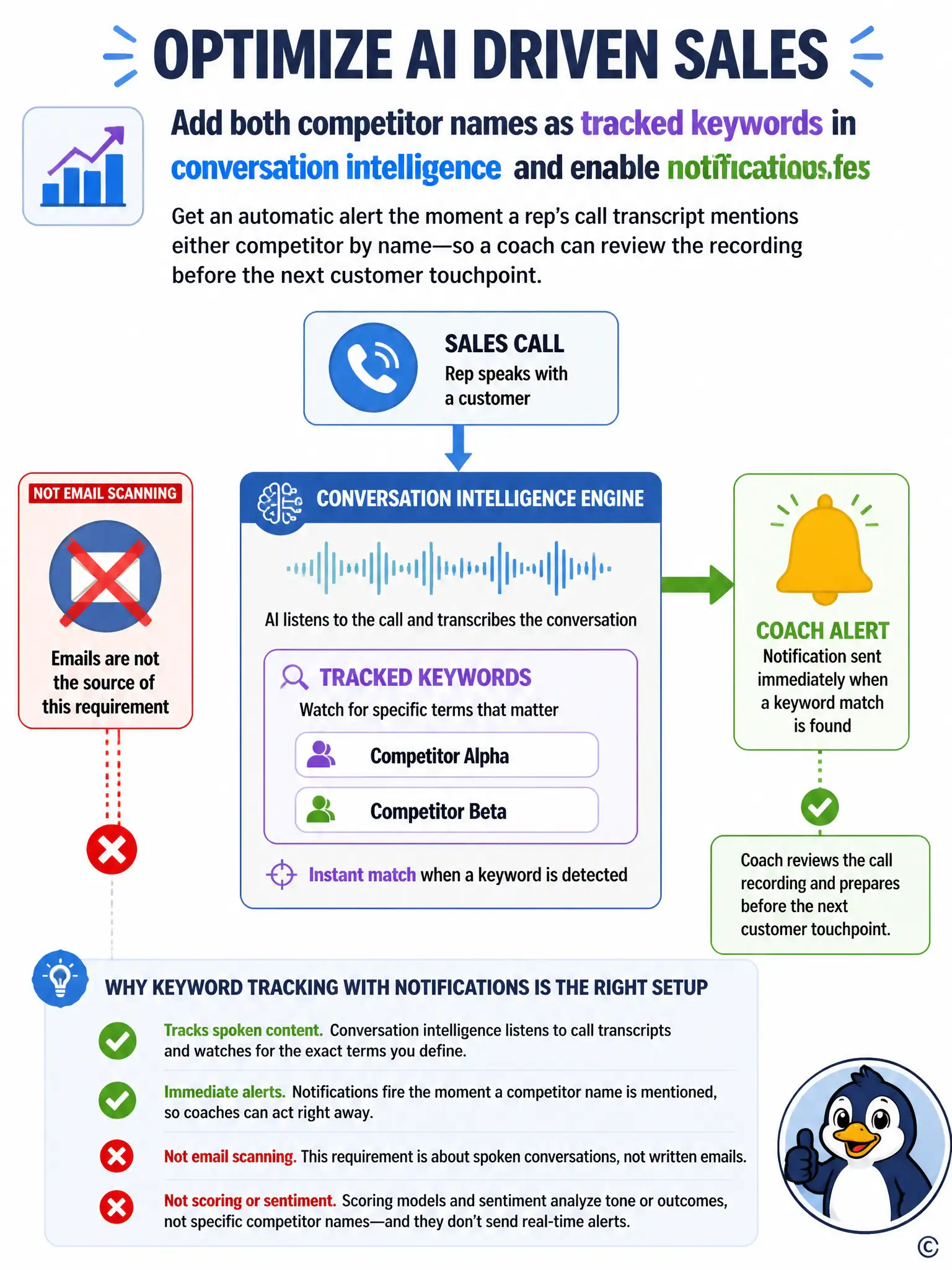
Conversation intelligence is built to listen for the exact terms you care about, so add both competitor names as tracked keywords and turn on notifications for keyword matches. That way you get alerted when a rival's name appears in a call transcript and can review the recording before the next customer touchpoint.
Full Explanation
The correct configuration is to add both competitor names as tracked keywords in conversation intelligence and enable notifications for keyword matches. Conversation intelligence analyzes call recordings and transcripts directly, and tracked keywords are the mechanism designed to flag specific terms, such as competitor names, as they occur in a call so a coach can be notified and review the recording. The configuration that creates a Power Automate flow to scan emails for the competitor names and flag the opportunity record is incorrect because it scans email content rather than call transcripts, which does not satisfy the requirement to catch mentions during live conversations. The configuration that adds the competitor names to the lead scoring model's negative signal list is incorrect because the negative signal list belongs to the lead scoring model, which influences a numeric score rather than generating a real-time alert tied to a specific mention in a call. The configuration that enables sentiment analysis and sets the alert threshold to trigger on negative sentiment scores is incorrect because sentiment analysis measures the emotional tone of a conversation, not the presence of specific competitor names; a call could mention a competitor with neutral or even positive sentiment and never trigger the alert, or trigger falsely on unrelated negative moments. Tracked keywords tied to notifications are the purpose-built feature for exactly this scenario.