
A rep is working a large opportunity in an unfamiliar industry vertical and wants to see how comparable past deals were won or lost, including which strategies tended to succeed. Which AI capability should the rep use, and why does it fit this need better than a generic pipeline report?
Select an answer to reveal the explanation.
Short Explanation
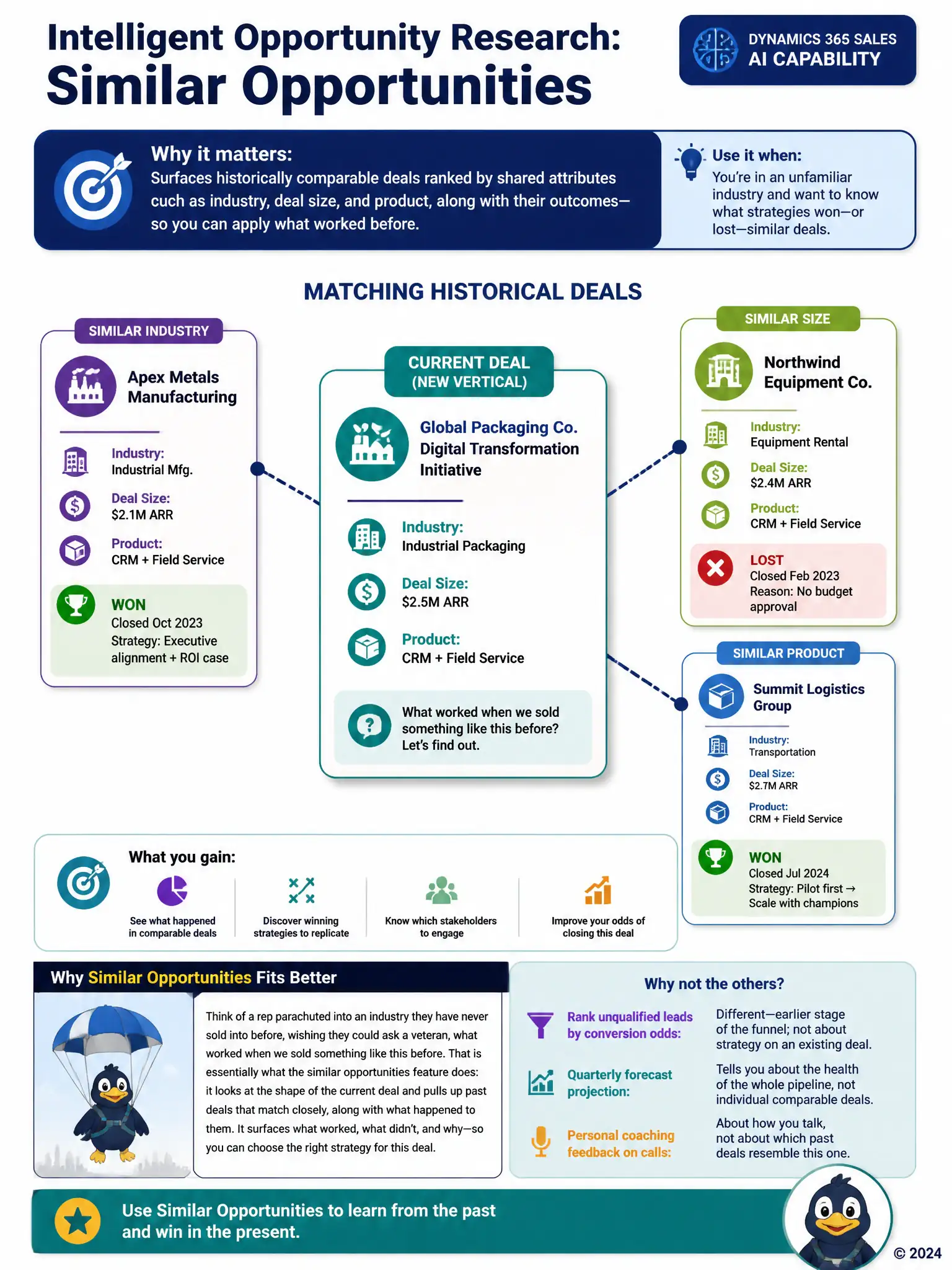
Think of a rep parachuted into an unfamiliar industry who wants to know what worked on deals like this one. Similar opportunities is the right fit because it pulls up historically comparable deals by shared attributes like industry, deal size, and product, then shows how they were won or lost. It's the lookup that answers what happened before in situations like this one, not just what's in the current pipeline.
Full Explanation
The capability that fits is similar opportunities. It's built to compare the current deal's attributes, such as industry, product line, and deal size, against the organization's historical opportunity data, surfacing the closest matches along with how those matches were ultimately won or lost, which directly answers the rep's question about comparable past strategies. Generic pipeline reports only show current deals in progress; they don't surface historical outcomes or matching logic. Predictive lead scoring is incorrect because it operates earlier in the funnel, ranking unqualified leads for conversion likelihood, and has nothing to do with comparing an existing opportunity to past deals. Forecast AI insights are incorrect because they operate at the aggregate pipeline or team level to project whether quota will be met; they don't surface individual comparable deals or the tactics used to win them. Premium conversation intelligence is incorrect because coaching feedback is about the rep's own call behavior and delivery, such as talk time or filler words, not about identifying and learning from other historical opportunities with similar characteristics. Similar opportunities is the feature purpose-built for this comparative, deal-level lookup.