
A consultant is helping a sales director configure the lead scoring model for a wholesale distribution business. The director wants Copilot to surface a short, plain-language reason alongside each lead's numeric score so sellers without analytics training can trust the recommendation without opening a model detail screen. Which capability should the consultant point to as already meeting this need?
Select an answer to reveal the explanation.
Short Explanation
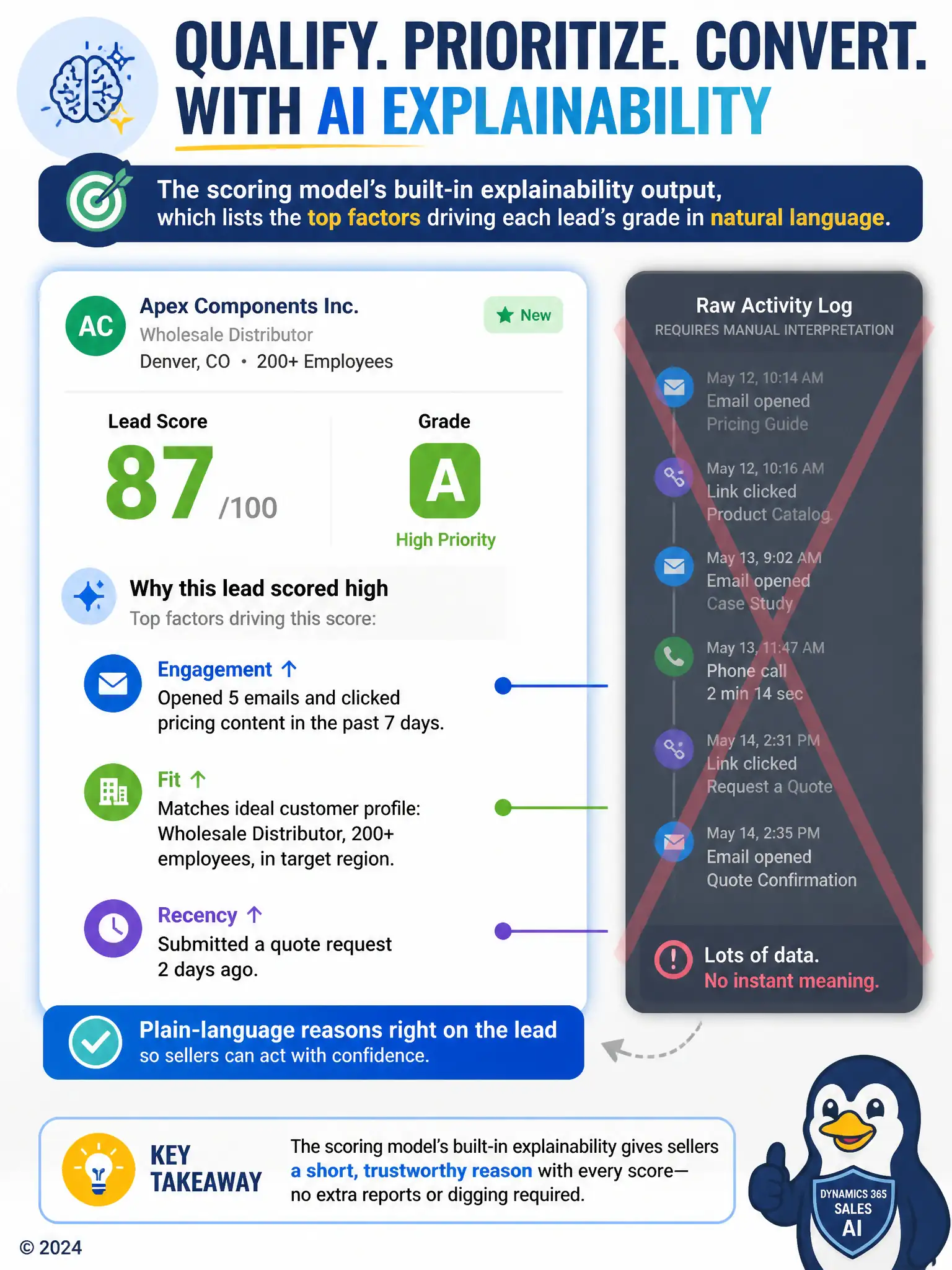
You need a quick, plain reason right on the lead, not a dashboard, weekly email, or raw activity pile. The scoring model's built-in explainability output already gives you that by listing the top factors behind each lead's grade in natural language. That lets sellers trust the score without opening a model detail screen.
Full Explanation
The correct answer is the scoring model's built-in explainability output, which lists the top factors driving each lead's grade in natural language. Predictive lead scoring in Dynamics 365 Sales is built to be explainable at the point of use: alongside the numeric grade, it generates a natural-language list of the factors that most influenced that specific lead's score, such as engagement level or firmographic fit, so a seller can see the reasoning without leaving the record or consulting a data specialist. That directly satisfies the director's requirement for plain-language trust at the point of decision. The Power BI report embedded in the sales hub that charts historical conversion rates by lead source is incorrect because it is an aggregate, backward-looking view of the whole pipeline, not a per-lead explanation a seller can act on in the moment. The custom Power Automate flow that emails the sales director a weekly summary of scoring trends is incorrect because it reaches the director on a weekly cadence, not the seller working the lead in real time, and it summarizes trends rather than explaining an individual score. The lead's activity timeline, which lists every email, call, and meeting logged against the record, is incorrect because it is raw historical data entry; it requires the seller to interpret which activities mattered, which is exactly the manual analysis the director wants to eliminate. The built-in explainability output is the only choice that delivers an immediate, per-lead, plain-language reason. Exam caveat: the trap in questions like this is reaching for a reporting or automation tool because it sounds more sophisticated, when the simplest built-in explanation feature already does the job.