
A Dynamics 365 Sales AI Consultant Associate is preparing to turn on predictive opportunity scoring for a mid-size sales organization. The organization has years of opportunity history, but many closed records are missing values for fields such as estimated revenue and actual close date. What should the consultant address first?
Select an answer to reveal the explanation.
Short Explanation
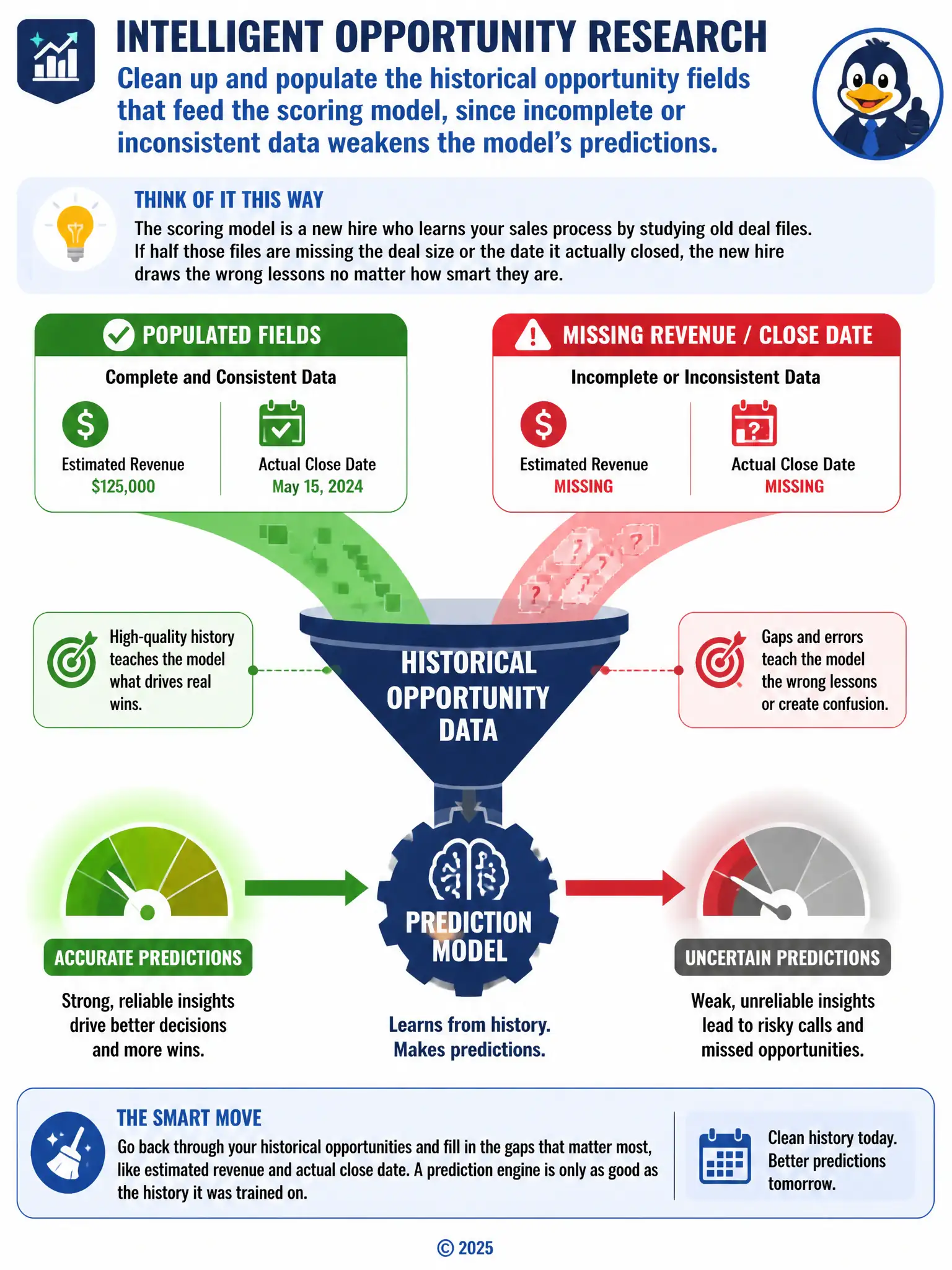
Think of predictive opportunity scoring like a new hire learning your sales process from old deal files. If those files are missing deal size or actual close date, the model learns the wrong lessons, so you should clean up and populate the historical opportunity fields before turning scoring on. Freezing new opportunities or adding more pipeline stages doesn't repair the old records the model needs to learn from.
Full Explanation
Predictive opportunity scoring learns from patterns in historical won and lost opportunities, so if key fields like estimated revenue and actual close date are blank or inconsistent across those records, the model has less signal to learn from and its predictions become less reliable. Cleaning and populating this historical data is a prerequisite the consultant should handle before enabling the feature, not an optional nice-to-have. The suggestion to disable opportunity scoring entirely and rely only on manual pipeline reviews is incorrect because the feature does not require flawless data; it requires enough usable historical data, and a small amount of missing data does not make scoring impossible. The suggestion to ask the sales team to stop creating new opportunities until the scoring model finishes an initial training pass is incorrect because pausing new opportunity creation does nothing to fix historical records and would disrupt the business without improving the model. The suggestion to increase the number of sales stages in the pipeline so the model has more categories of data to score against is incorrect because adding pipeline stages changes how future deals are tracked going forward, but it does not repair the missing values in the existing historical records that the model depends on for training, so it does not solve the actual data quality problem the consultant needs to address before enabling scoring.