
A consultancy's client already owns a copilot that can file status reports once it is configured with the client's template. The project team has opened a build estimate for a new agent. What should the architect do first?
Select an answer to reveal the explanation.
Short Explanation
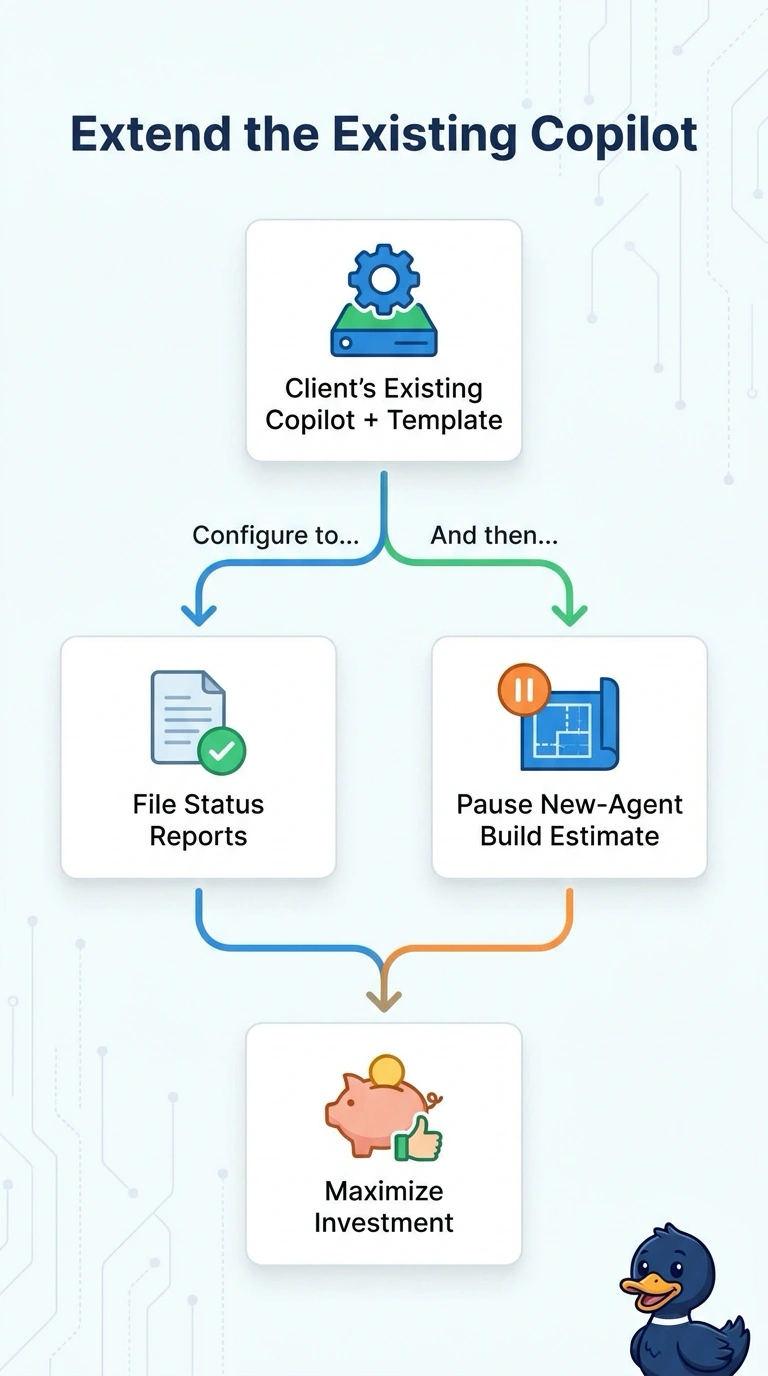
You set up the copier the office already leases before you price a second machine. You configure the copilot the client already owns and pause the build estimate. A new agent is a quote for a job the current copilot can do.
Full Explanation
The client already owns a copilot that files status reports once the client's template is configured, so the first move is to extend that copilot by configuring it and to pause the build estimate. The estimate is for a gap that configuration may close. Finishing the estimate and starting a custom agent skips the owned copilot and spends design time on a replacement that has not been shown to be necessary. Buying another status-report copilot from a fresh demo adds a license and leaves the owned one unused. Replacing the owned copilot with a small language model trained on a single sample report discards a product that can file the report and bets the format on one example. Exam caveat: if configuration cannot hold the client's template, the build estimate comes back, and pausing it is not a permanent refusal to build. Operational check: configure the owned copilot with the template in a test workspace and file one status report before any custom-agent estimate is reopened. If that filed report matches the client's template, the build estimate stays paused and the owned copilot remains the path for this job.