
An insurer changes a policy in the sales app and later handles a claim on that policy in the service app. The two copilots were built as if the work were unrelated. What should the architect change?
Select an answer to reveal the explanation.
Short Explanation
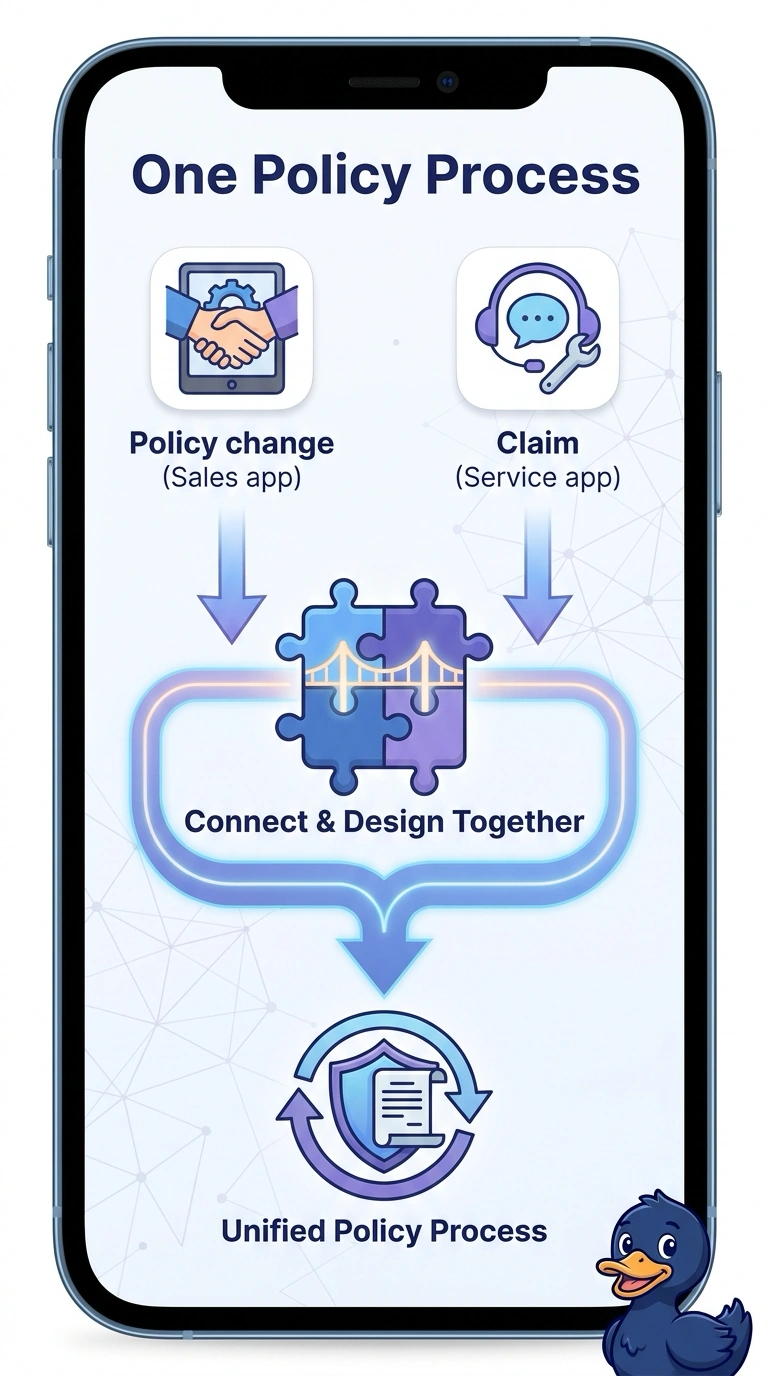
The claim is about the policy you just changed, so the two copilots are not strangers. You design the policy change and the claim as one related process. Telling each copilot to guess the other app's facts papers over the split.
Full Explanation
A claim on a policy that just changed is one customer journey across the sales app and the service app. Building the copilots as if that work were unrelated is why they contradict, so the architect should make the policy change and the claim one related process. Keeping them unrelated and telling each copilot to guess the other app's facts invents data instead of sharing the policy state. Dropping the claim copilot and making the customer retype the policy change pushes the join onto the customer and removes the service path. Publishing the copilots on different channels only hides the contradiction from a single viewer and leaves the apps disconnected. The service copilot should read the policy state after the sales change, including the coverage that applies to the claim being opened. Separating the channels only delays the moment a customer hears two answers about one policy. Exam caveat: related does not mean the claim and the policy edit are the same transaction. It means the claim design can see the policy state it depends on. Operational check: change a test policy, open a claim on it, and confirm the service copilot states the updated coverage without a second manual entry.