
A distributor's sales copilot states a quote that the finance copilot will not invoice, and each copilot can see only its own app. What should the architect design?
Select an answer to reveal the explanation.
Short Explanation
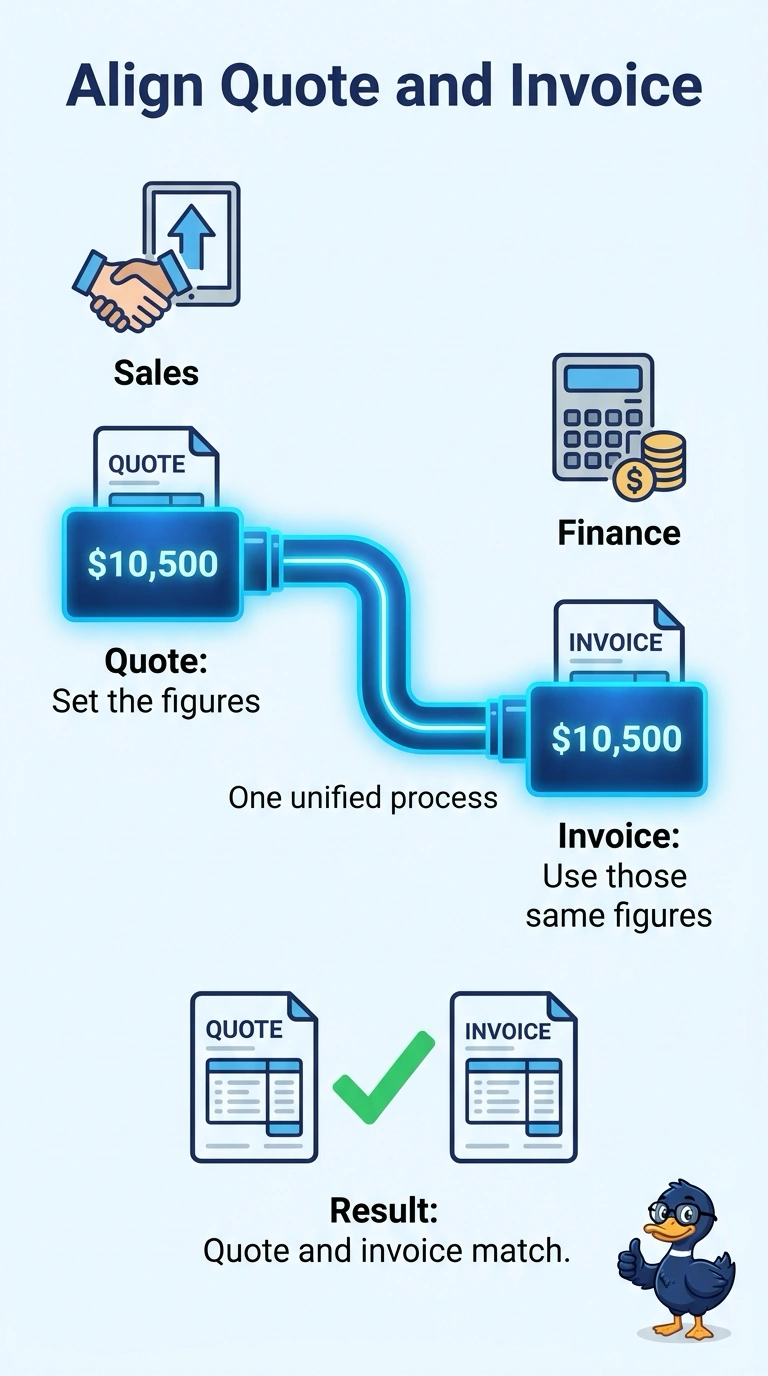
Two clerks who refuse to share one ledger will swear the price is different. You design one process across Sales and Finance so the quote and the invoice use the same figures. A third copilot that only apologizes leaves the split in place.
Full Explanation
When a business process crosses Dynamics 365 apps, the architect designs one process rather than a pair of copilots that each see half the truth. The quote lives in Sales and the invoice lives in Finance, and they disagree because neither copilot can see the other app, so the design should carry both figures on one path. A third copilot that apologizes and leaves both apps unchanged adds a narrator for the error. Separate prompt libraries make each copilot more confident in its own number and do nothing to share the data. A sales-only instruction that tells the seller to disregard Finance teaches the quote to override the invoice, which widens the disagreement. The shared figures are the price, the quantity, and the customer on that quote, and both copilots should read them from the same process. A seller who still reconciles the invoice by hand is evidence the path is split. Exam caveat: one process still leaves Sales and Finance in place. A third copilot that only apologizes, or an instruction to disregard Finance, does not put the same figures on the quote and the invoice. Operational check: take one quote through to invoice in a test company and confirm both copilots state the same price, quantity, and customer.