
An insurer's coverage prompts say only to be helpful, and the agent states benefits the policy text does not contain. What should the prompt guidelines require?
Select an answer to reveal the explanation.
Short Explanation
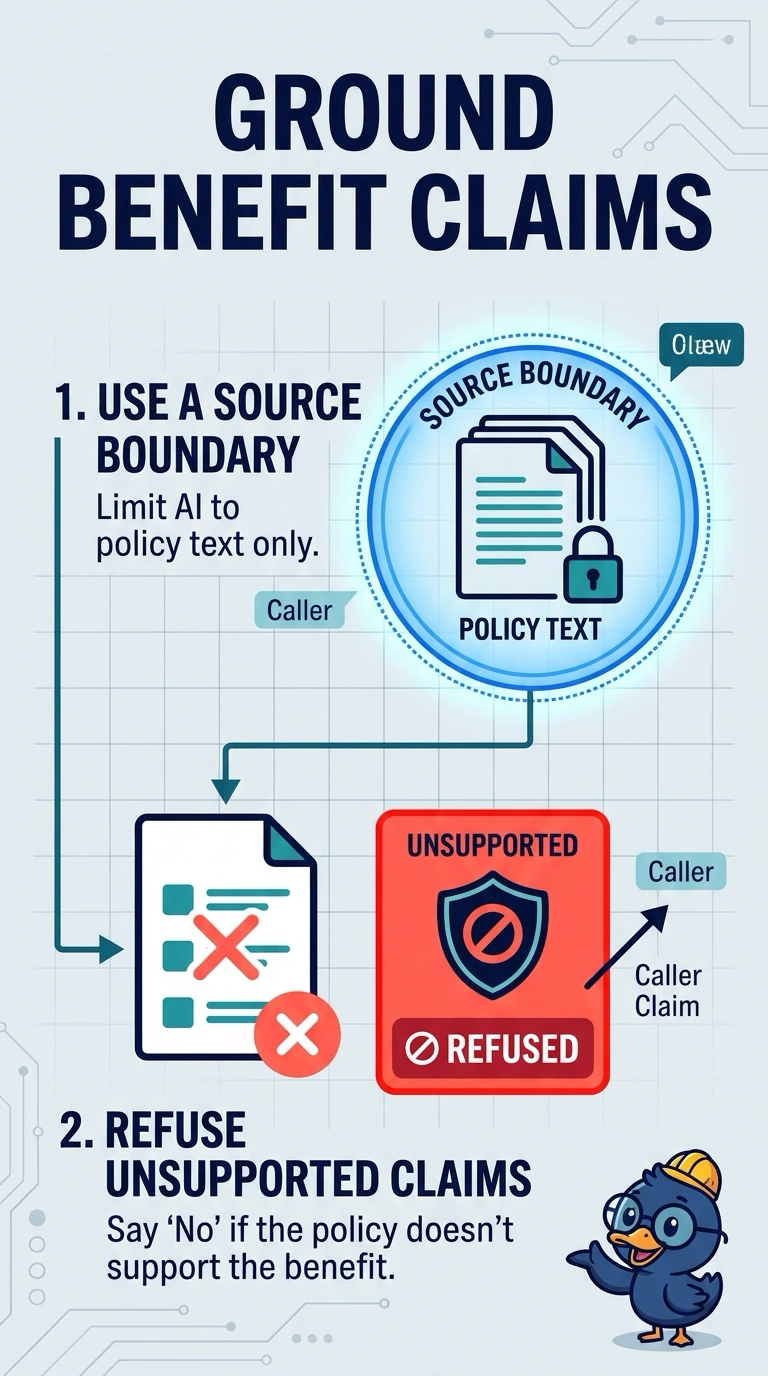
A clerk told only to be nice will promise a refund the policy book does not contain. You require a source boundary and a refusal when the policy text does not support the benefit. A longer reminder to be helpful just makes the invention sound friendlier.
Full Explanation
Prompt guidance has to fence the answer, not only set the tone. Telling the coverage agent to be helpful, with no source boundary, is why it states benefits the policy text does not contain. The guidelines should require the agent to stay inside that policy text and to refuse when the text does not support the benefit. Helpfulness is a tone, and a tone with no boundary treats a missing policy line as a gap the agent is free to fill. A longer instruction to be helpful pushes the same unbounded behavior harder and gives the caller a more confident invention. Permission to state a benefit the policy omits when the caller sounds upset makes the caller's emotion a reason to leave the source. A second copy of the helpfulness line in a warmer tone changes the manners and leaves the missing boundary where it was. Exam caveat: a refusal can still offer a handoff to a person; what it cannot do is fill a gap in the policy with a plausible benefit. Operational check: ask for a benefit that is absent from the test policy and confirm the agent declines and names the gap, rather than stating the benefit in helpful language.