
City clerks answer residents on a public website. Extending each clerk's Microsoft 365 Copilot would use that clerk's own files. Which build strategy fits?
Select an answer to reveal the explanation.
Short Explanation
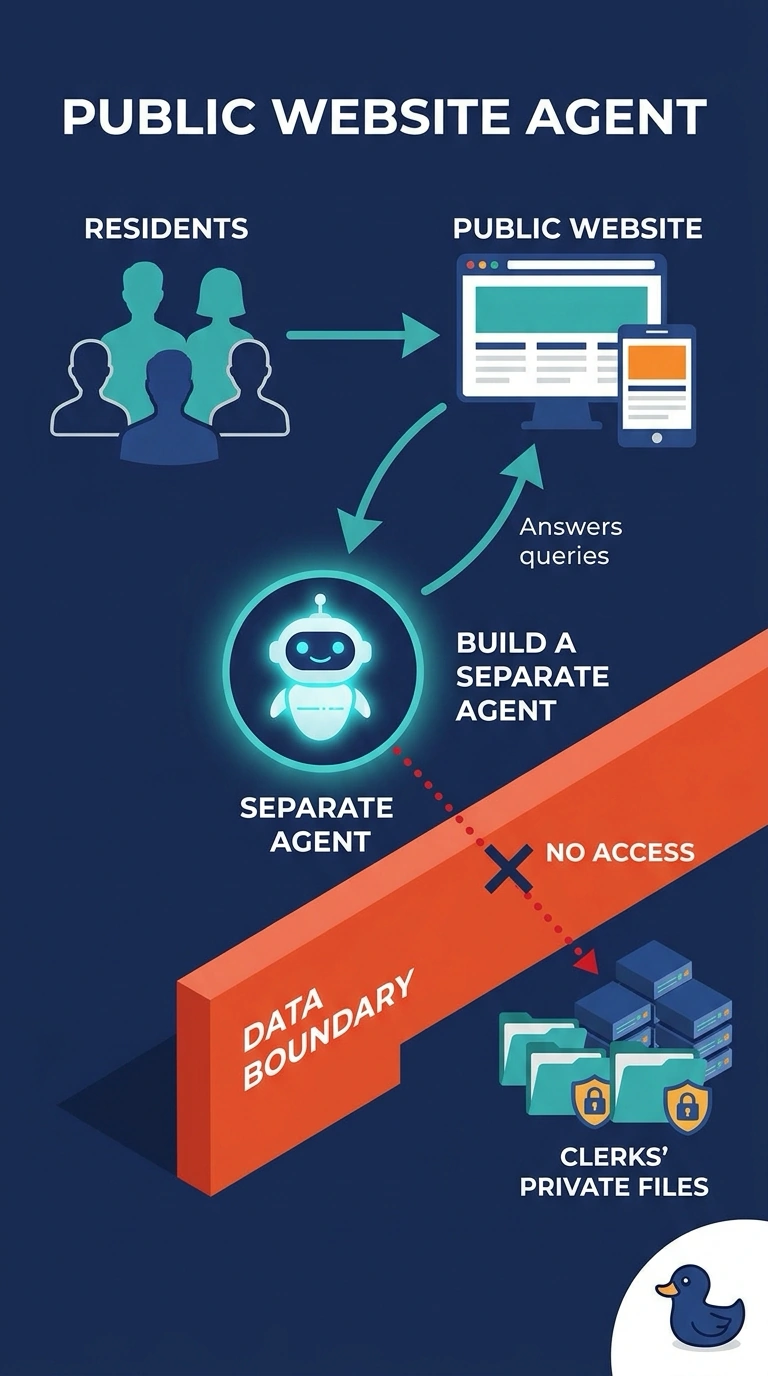
The counter that faces the street is not the clerk's private desk. You build a separate agent for the public website so a resident's answer does not come from a clerk's own files. Extending the clerk's Copilot would open that desk to the sidewalk.
Full Explanation
Extend Microsoft 365 Copilot only when the signed-in person should use their own mail and files. A resident on a public website is a different identity, on a channel outside Microsoft 365, and an extension would answer with the clerk's own files. The fit is a separate agent whose knowledge is the city's approved public material. Extending Microsoft 365 Copilot and publishing the clerk's work files to the public website is the exposure the scenario is trying to avoid. Extending it in Outlook and pasting resident questions into the clerk's mailbox keeps the clerk's identity in the path and mixes resident traffic into private mail. Extending it and sharing each clerk's files with whoever opens the public site hands the work graph to anonymous visitors. Exam caveat: the separate agent can still be staffed by clerks who review escalations. Their review queue is not the same thing as grounding on their personal files. Operational check: ask the public agent a question that exists only in a clerk's private files and confirm it does not answer from those files.