
A university agent may answer course-catalog questions with generative knowledge. Degree-audit exceptions must not be answered that way. Which plan fits?
Select an answer to reveal the explanation.
Short Explanation
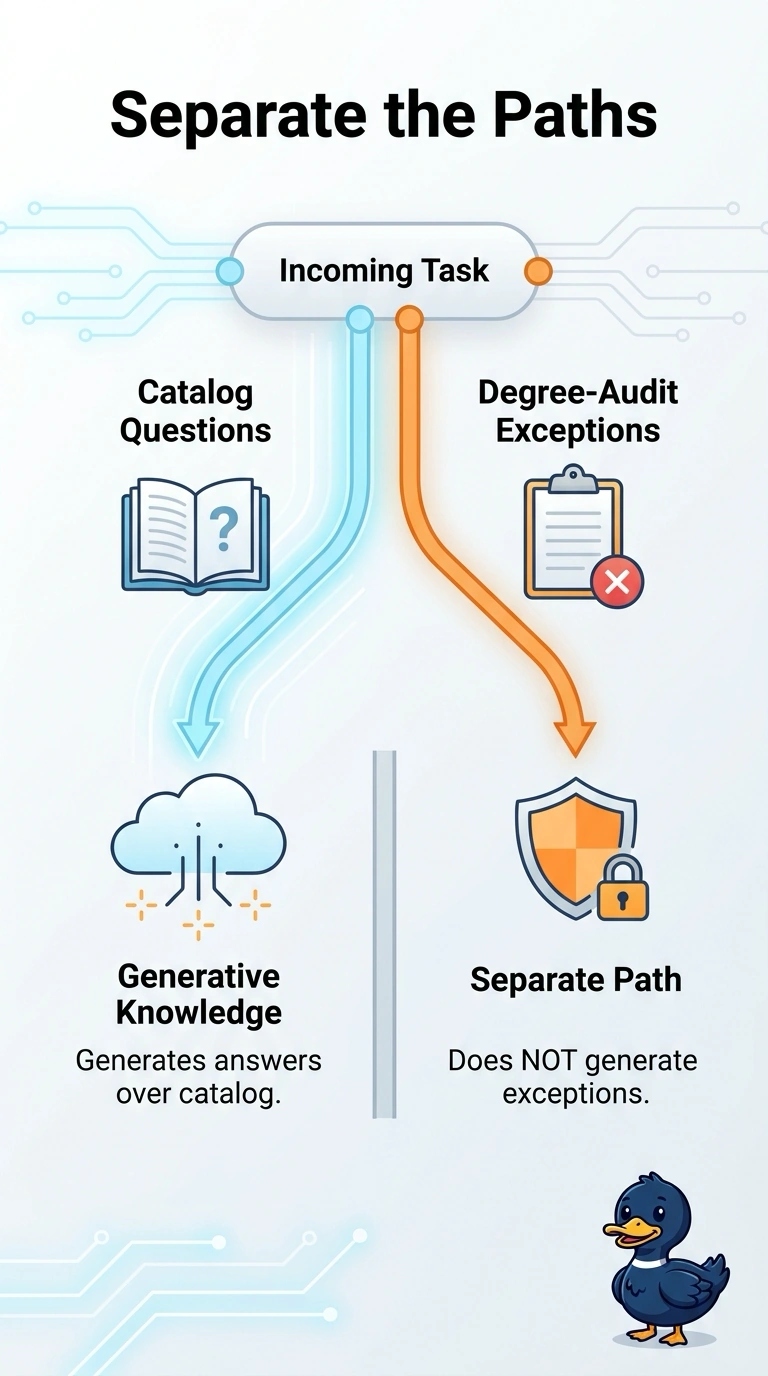
A course description can be told in the caller's own words, while a degree exception is a decision you do not let the model write. You split the two: generative knowledge for the catalog, and a separate path that does not generate an exception. One shared generative path will eventually invent a waiver.
Full Explanation
Generative knowledge fits when the source may be phrased in the caller's words and the cost of a paraphrase is low. A course-catalog answer is that kind of reply. A degree-audit exception changes what the university will count, so it must not be generated. The plan splits the work: catalog questions may use generative knowledge over the catalog, and exceptions go down a separate path that does not generate one. One generative path for both will apply the catalog style of answer to an exception and can invent a waiver the audit rules do not grant. Turning generative knowledge off for the catalog as well rejects a use the university allowed, just to avoid building the split. Generating the exception and asking the registrar to fix it later makes the bad write the default and the correction a cleanup. Exam caveat: the separate path can still show the audit rule from an approved source. The ban is on generating the exception, not on refusing to discuss the audit. Operational check: ask a catalog question and confirm a generative answer grounded on the catalog, then ask for an exception and confirm the agent does not create one and instead follows the controlled path.