
A public agency wants an agent grounded on case files, but the data owners will not name who is allowed to use those files for grounding. The sponsor asks for a larger model instead. What should the architect treat as the blocker?
Select an answer to reveal the explanation.
Short Explanation
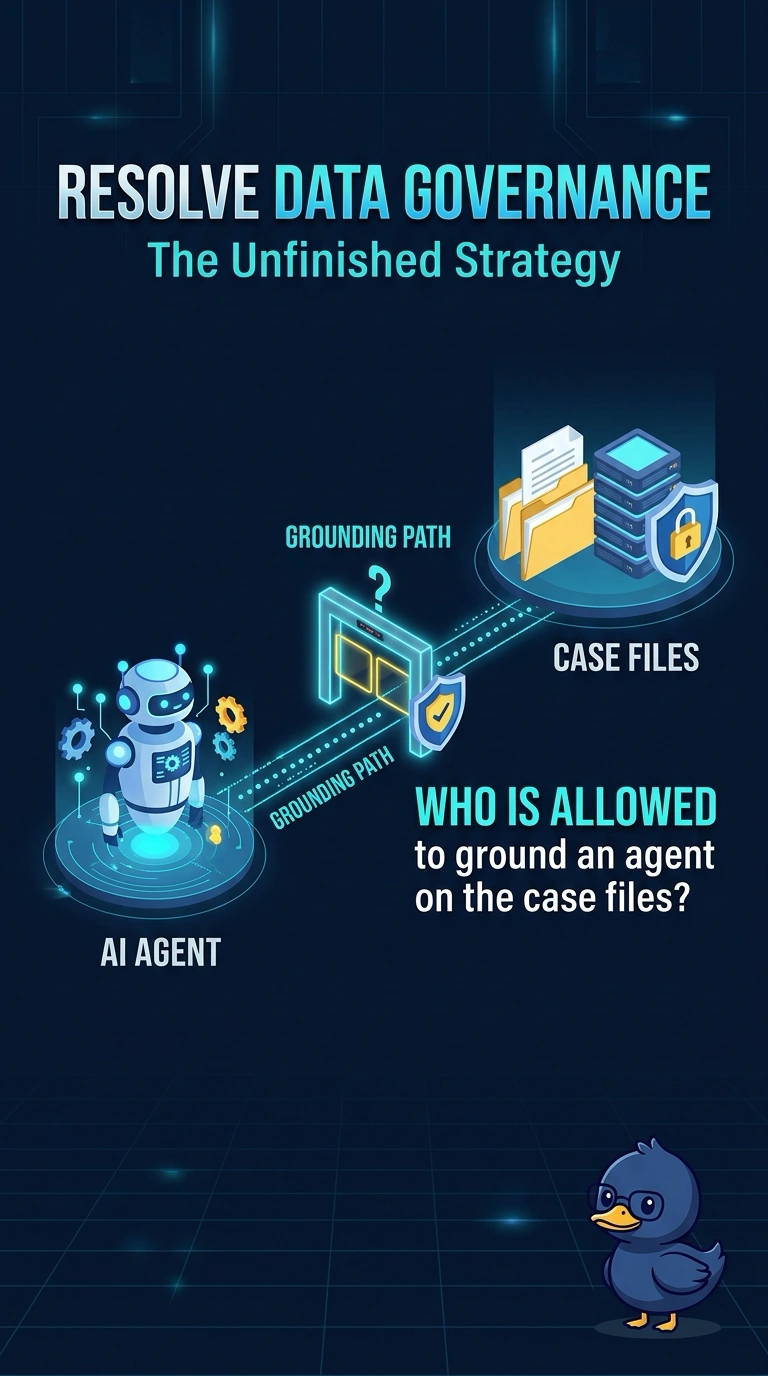
A bigger engine does not decide who may open the filing cabinet. You treat the unfinished data-governance decision—who may ground an agent on the case files—as the blocker. A larger model leaves that decision unanswered.
Full Explanation
Strategy’s data-governance work includes deciding who may use which data to ground an agent. The data owners have not named that audience, so you treat the missing decision as the blocker; a larger model does not answer it. Treating the absence of a larger model as the blocker would make model size seem like the prerequisite and leave the audience unnamed. A second landing zone does not determine who may use the case files, and it cannot stand in for the data owners’ decision. Publishing the agent on the case files now and writing the access decision later would put those files into an agent before the permitted audience has been named. Exam caveat: this is an adoption and data-governance decision about grounding, not a request for a larger model. Practical check: keep case-file grounding disconnected until the owners name who may use it, confirm that a model upgrade is not being used as a substitute for that decision, and record the missing audience as the release blocker.