
A city transit agency pasted its fare table into the instructions of three fare agents. When a fare changes, only one of those instructions is updated. What should the architect do?
Select an answer to reveal the explanation.
Short Explanation
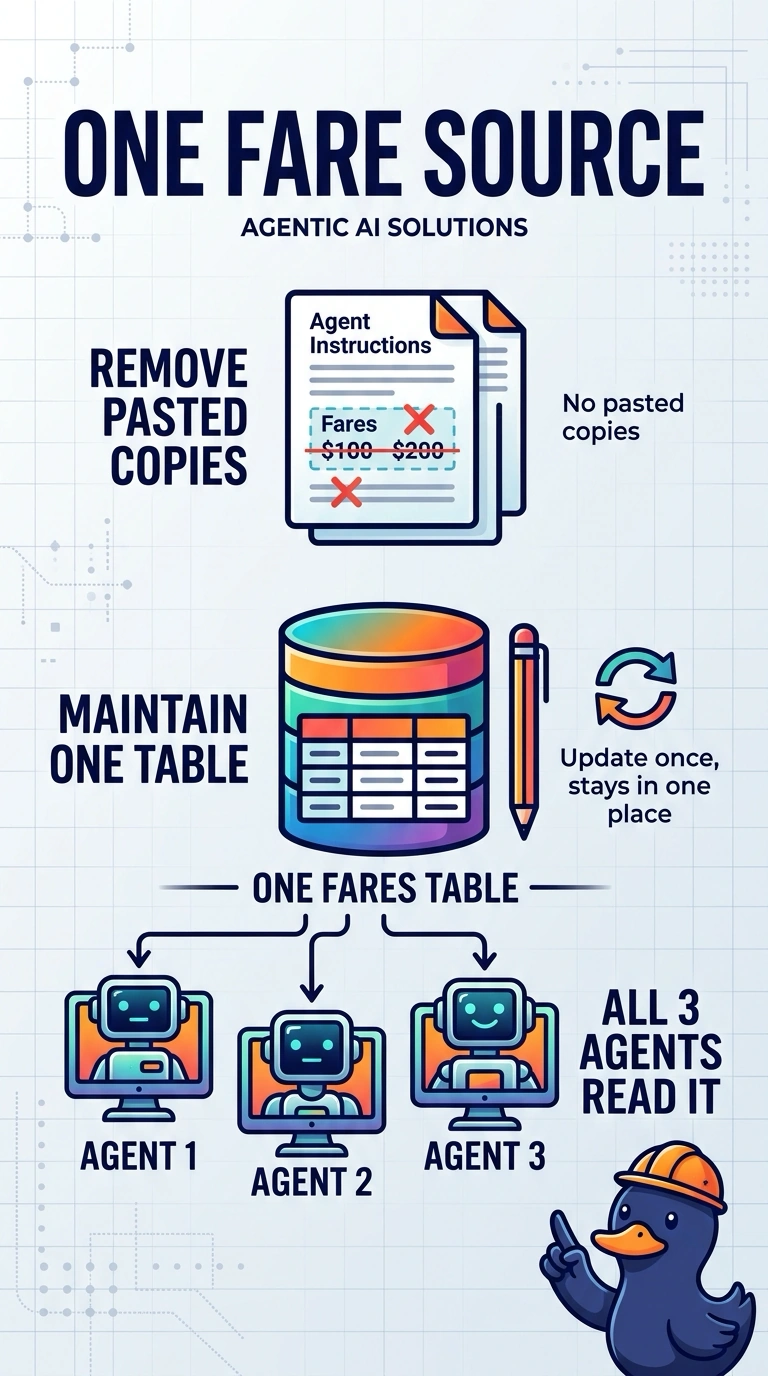
Three handwritten fare cards will disagree the morning the fare changes. You move the fare table to one maintained source that every fare agent reads, and you take the pasted copies out of the instructions. A reminder to edit all three copies is how the drift continues.
Full Explanation
Fare data that several agents quote has to live in one maintained table, not in three instruction boxes. The agency already sees the failure mode: a fare change lands in one paste and not the others. Moving the fares to one table that every fare agent reads, and taking the pasted copies out of the instructions, makes the next change a data edit instead of a prompt hunt. Leaving the three pastes and reminding each owner to edit on the same day keeps the defect and adds a manual step people already miss. Deleting two agents so one instruction holds the only copy throws away channels or jobs to solve a data problem, and the remaining paste is still an instruction rather than a maintained table. Fine-tuning on last year's fares freezes the old prices into the model and then stops the agents from reading a table when the city changes a fare again. Exam caveat: instructions can cite the table. They should not be the table. Operational check: change one fare in the maintained table and confirm all three agents quote it, and search the instructions to confirm the pasted grids are gone.