
An airline keeps its crew-legality rules in a PDF on one planner's laptop. The crew-scheduling agent and the payroll agent both need those same rules. What should the architect do?
Select an answer to reveal the explanation.
Short Explanation
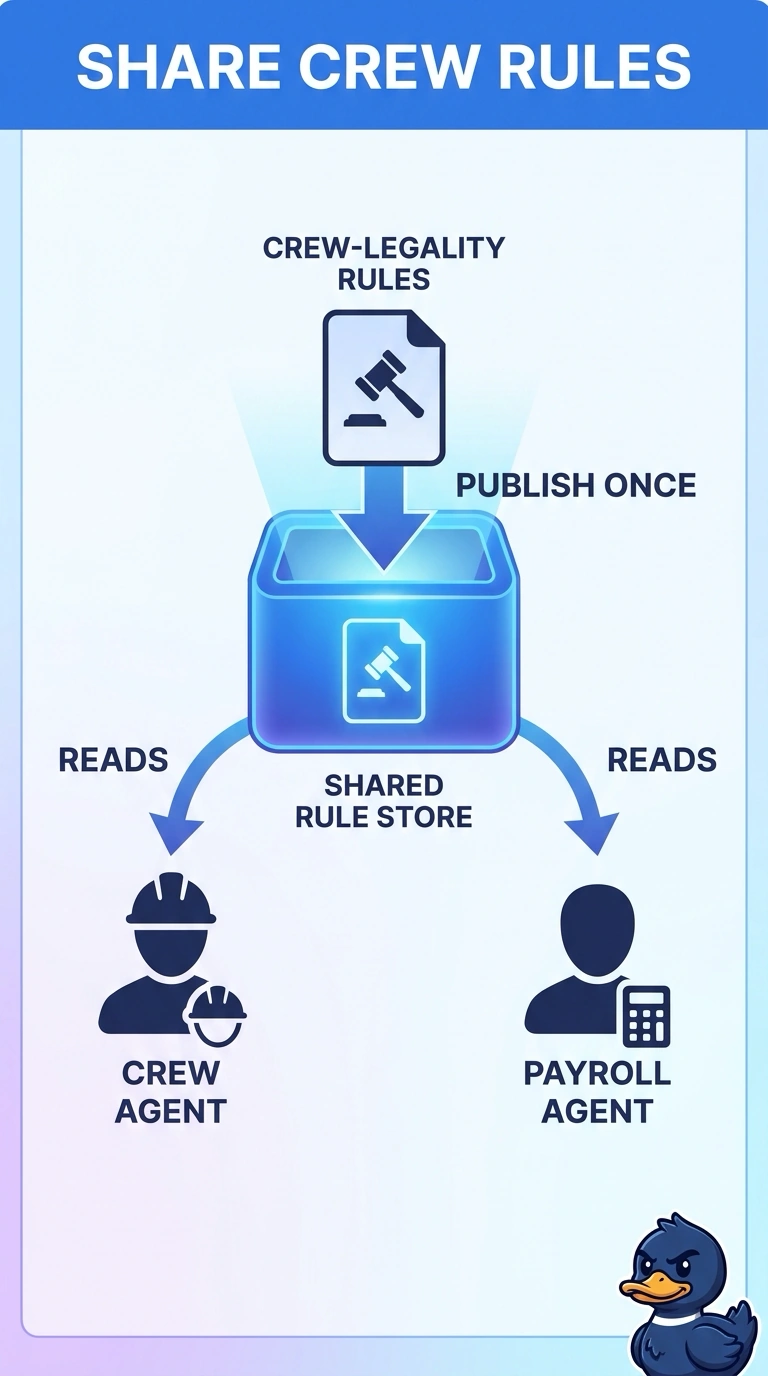
A rule book on one planner's laptop is a personal copy, not a source two teams can share. You publish the crew-legality rules once, where the crew agent and the payroll agent both read them. Pasting the file into a single prompt leaves the other agent out.
Full Explanation
Authoritative rules that two agents need belong in one published place, with an owner, not on a single laptop. The crew-scheduling agent and the payroll agent should both read that published copy of the crew-legality rules, so a rule change reaches both jobs. Leaving the PDF on the laptop and pasting it into the crew agent's instructions keeps payroll dependent on a person and lets the prompt copy drift from the file. Separate copies for each agent invite the crew desk and payroll to edit different rules for the same duty. A custom model trained from a photograph of the screen freezes whatever was on the display that day and still gives each agent a private copy. The laptop can remain the planner's working draft, but it is not the source the agents call. Exam caveat: publishing once still needs an owner and access for the two agents. A shared file nobody is allowed to update is only a new place for the rules to go stale. Operational check: change one legality rule in the published store and confirm both agents cite the new wording, with the laptop file absent from both grounding sets.