
A bank sends every request, from a one-line FAQ rewrite to a multi-step credit-memo argument, to its largest model deployment. Cost is climbing and simple requests are no faster. What should the architect introduce?
Select an answer to reveal the explanation.
Short Explanation
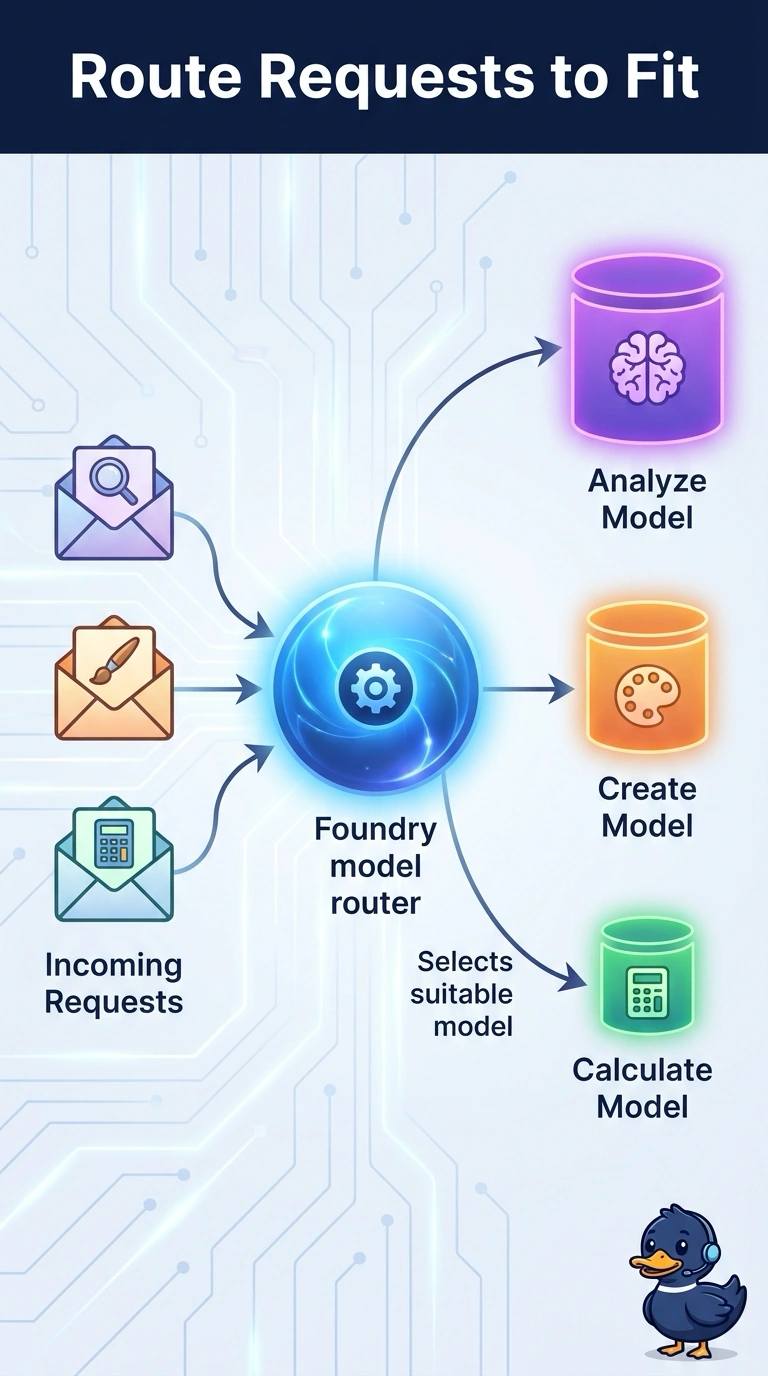
You would not hire a specialist to sharpen every pencil. You put a model router in front of the work so each request lands on a suitable model. Copying the largest model again does not make a one-line rewrite any cheaper.
Full Explanation
A model router in Microsoft Foundry is a deployment that chooses a suitable model for each request, so a simple rewrite and a hard credit-memo argument do not have to share the most expensive model. That is the lever this bank is missing. The router looks at the request in front of it, which is why one deployment can serve both kinds of work. Replacing the large model with a small one for the credit-memo work throws away capacity on the requests that need it, which is the opposite of the split the team needs. A daily block stops work without regard to difficulty and does not route anything. A second deployment of the same largest model adds spend and still sends pencil-sharpening rewrites to the expensive model. Exam caveat: the router is still something you evaluate. Compare quality, cost, and latency with the current single-model baseline before you cut the large deployment over. Operational check: send one FAQ rewrite and one credit-memo case through the router deployment and confirm the response identifies different underlying models for the two calls.