
An airline's Copilot Studio agent already books seats and answers fare questions. Catering wants that same agent to book a special meal, and a teammate proposes a separate copy of the agent for each meal type. What should the architect do?
Select an answer to reveal the explanation.
Short Explanation
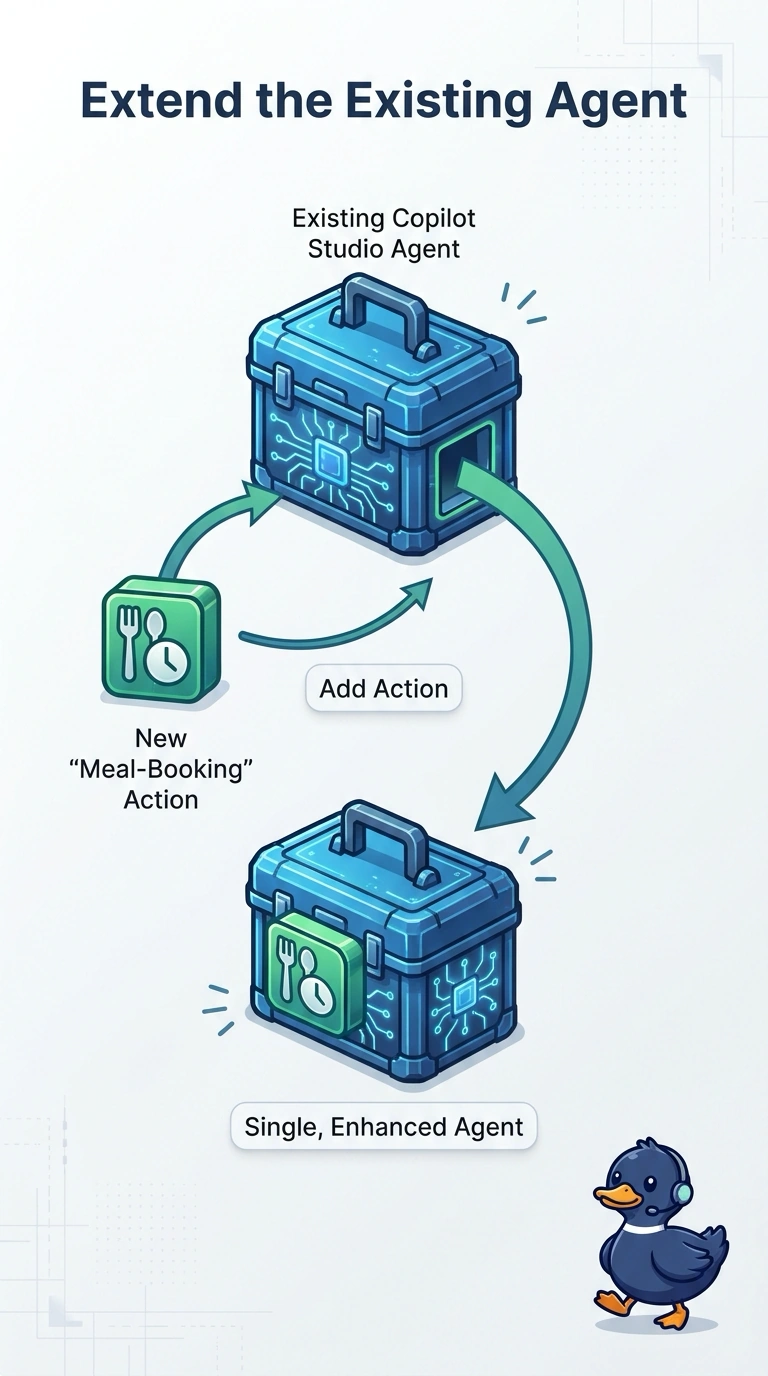
You do not open a second kitchen because the menu added one dish. You add a meal-booking action to the agent that already books seats, and you leave the seat and fare topics in that one agent. A cloned agent for every meal type copies the topics and then drifts.
Full Explanation
Extensibility on a Copilot Studio agent means giving that agent a new action it can call, not copying the agent each time the business adds a request. Meal booking is one action against catering. The seat and fare topics stay on the agent travelers already use, and another meal type is another value that same action can submit. Cloning the full agent once for each meal type duplicates the seat and fare topics, so a fare-rule change has to be edited in every copy and the copies will disagree. Pasting each cabin's meal menu into a brand-new agent's instructions abandons the booking agent and stores a menu in text that cannot place an order. A nightly export of meal counts may help a planner look backward, and it places no meal order, which is the action catering asked for. Exam caveat: adding an action is the extension even when the menu later grows. Another meal type does not justify another agent. Operational check: in a test conversation, book a special meal from the existing agent and confirm the seat and fare topics still answer from that same agent, with no second copy published for a single meal.