
A bank's agent writes the full account number into the run log so analysts can read it later. Which Well-Architected pillar is missed, and what should change?
Select an answer to reveal the explanation.
Short Explanation
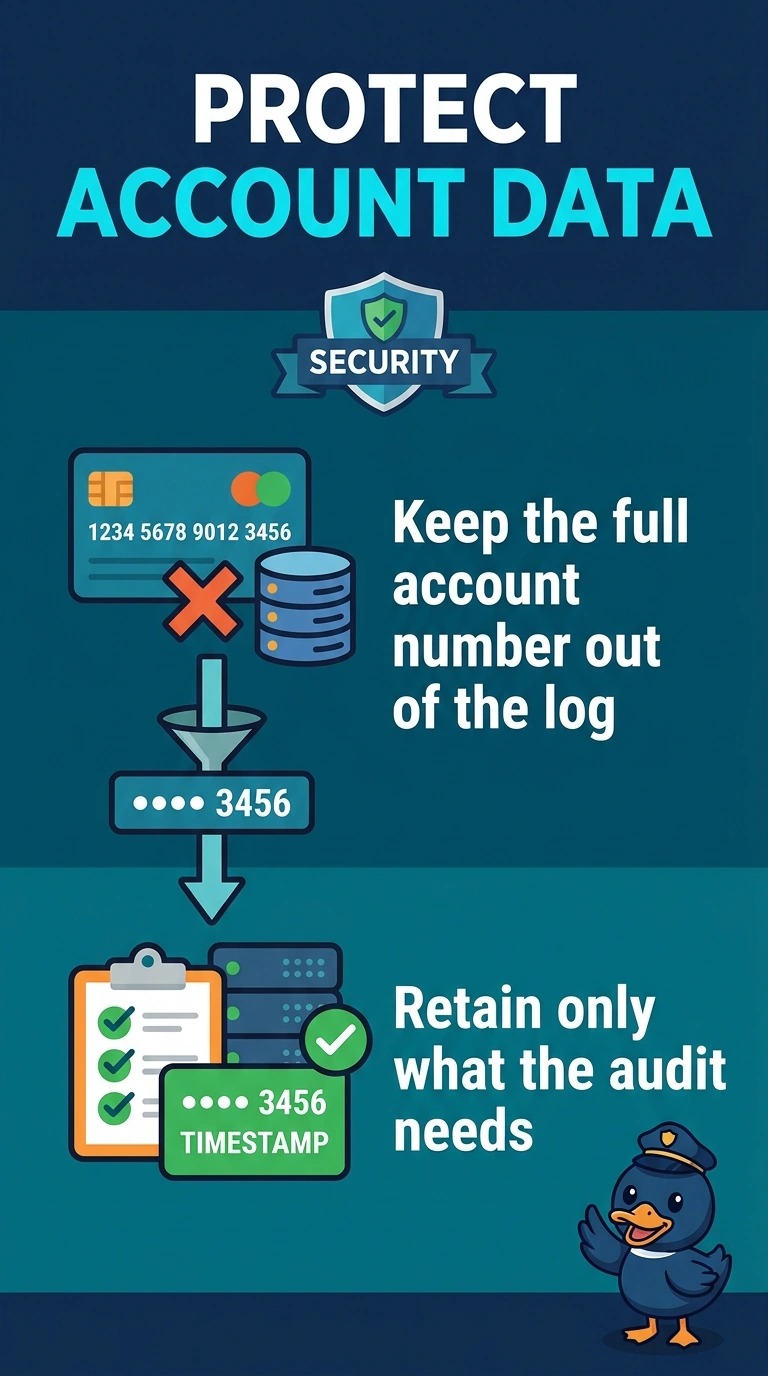
Writing the full account number in the log is like taping the account slip to the outside of the folder. You treat this as a security gap and keep that number out of the log. Compressing the file stores the same exposure in a smaller package.
Full Explanation
The security pillar of Power Platform Well-Architected covers how sensitive data is protected, including what an operations log is allowed to hold. Writing the full account number into the run log exposes it to anyone who can read that log, so the change is to keep the full number out and retain only what an audit needs. Compressing the log is a performance tweak that preserves the exposure and only changes the file size. Showing the full number in a larger typeface makes the same data easier to read and mislabels the gap as experience optimization. Writing the number a second time so a damaged log can be rebuilt copies the secret and does not justify storing it. An investigator can follow an internal record id or a masked reference into the core system they are already allowed to open. The full number in the log creates a second, weaker copy of the same secret. Exam caveat: an audit trail can still record that an account was used, with a masked or internal identifier, without the full number. Operational check: run one action on a test account and confirm the log line has no full account number, while the audit still shows which action ran.