
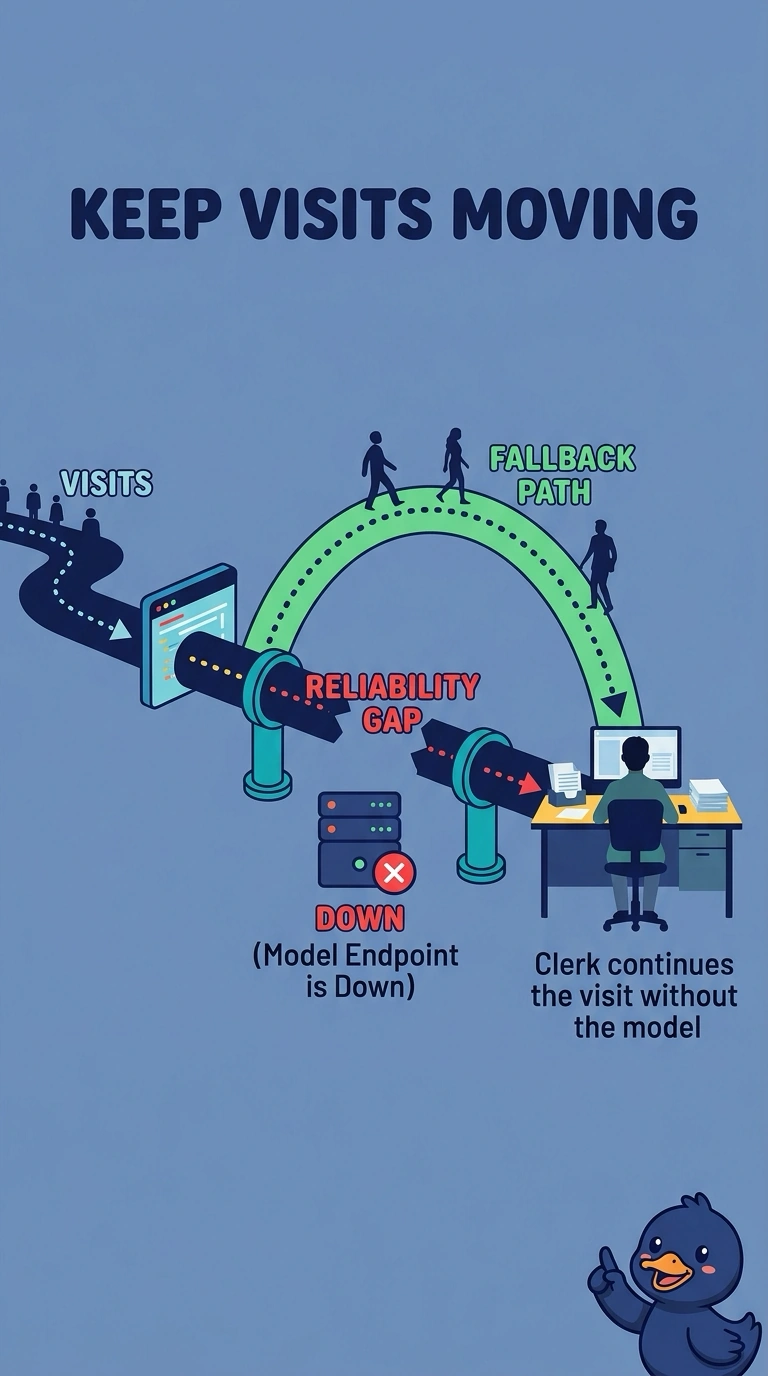
A hospital intake agent stops when the model endpoint is unavailable, and the clerk has no other path to continue the visit. Which gap is this, and what should the design add?
Select an answer to reveal the explanation.
Short Explanation
A spare key at the desk is what keeps the door open when the main lock fails. You treat the missing path as a reliability gap and add a fallback the clerk can use when the endpoint is down. Rewording the prompt does not keep the visit moving.
Full Explanation
Power Platform Well-Architected treats a workload that stops when a dependency is unavailable as a reliability gap. The intake agent has no path for the clerk when the model endpoint is down, so the design should add a fallback that lets the visit continue, rather than a new sentence in the prompt. Shortening the prompt so the same endpoint might answer faster is a performance idea, and it does nothing on a call that cannot be completed. A longer, more colorful failure message changes how the outage looks and still leaves the clerk unable to finish the visit. Editing the instructions to state that the endpoint will stay available is a claim in prose, and wording does not create availability. The fallback should be designed with the clerks who run intake, including which fields they complete by hand and how the visit is marked when the model path was skipped. Restoring the endpoint should bring the agent path back without making the clerk start the visit over. Exam caveat: the fallback can be a manual checklist or a saved prior step. It does not have to be a second model. Operational check: take the endpoint down in a test environment and confirm the clerk can complete intake on the fallback, then restore the endpoint and confirm the agent path returns.