
Hospital clerks need a custom bed-board page inside the model-driven app they already use, built as code against Dataverse, without rebuilding the rest of that app. Which design fits?
Select an answer to reveal the explanation.
Short Explanation
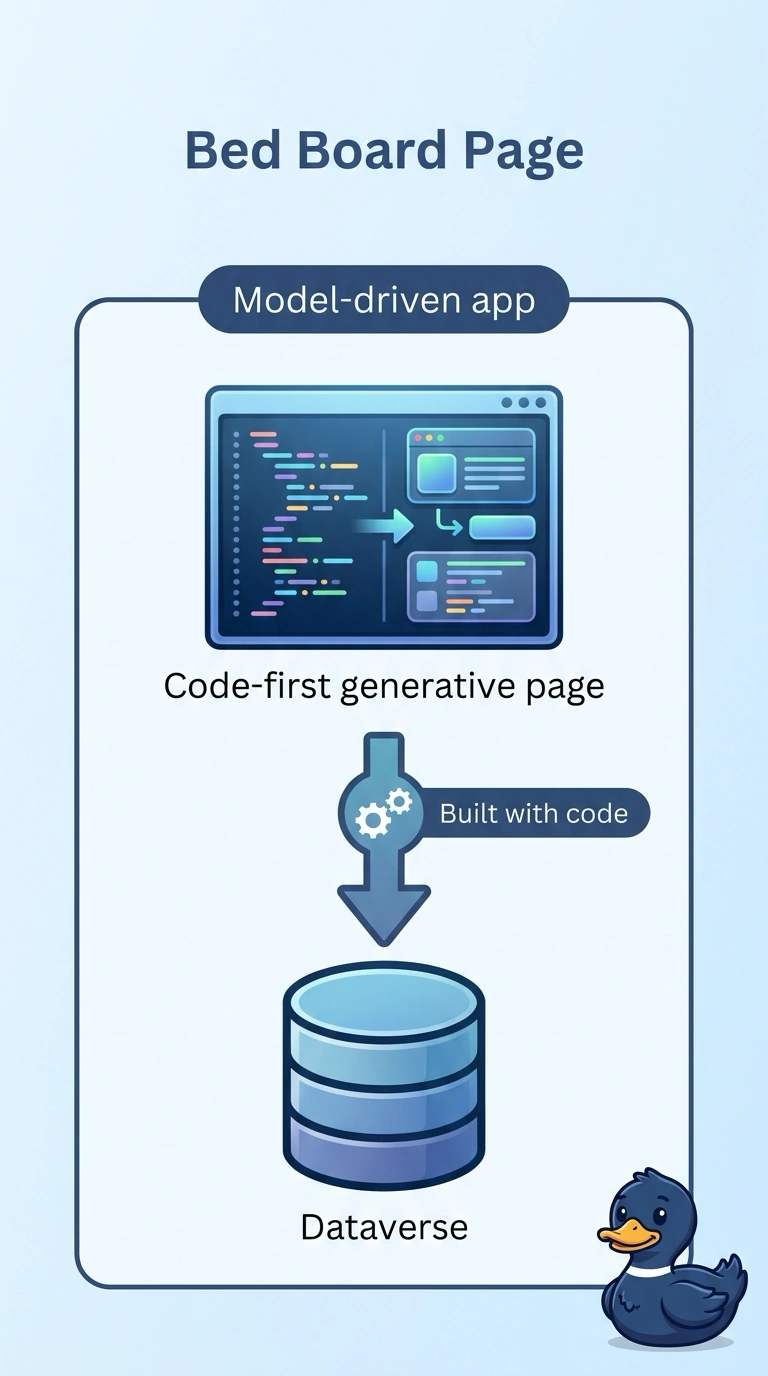
Hang a new board on the wall of the office the clerks already walk into. You add a code-first generative page, built as code against Dataverse, inside the model-driven app. Replacing the whole app with a canvas app rebuilds the building for one board.
Full Explanation
The clerks need one custom page, the bed board, inside the model-driven app, and they need it built as code against Dataverse. That is a code-first generative page, and it leaves the rest of the app where it is. The page is code bound to the Dataverse rows the clerks already use, so the bed board stays inside the security and the forms of that app. A canvas app that replaces the model-driven app, including the forms the ward clerks already use, rewrites the whole application for a single page. A personal dashboard of bed counts outside the model-driven app puts the board on a separate screen, so the clerks leave the app they work in. A knowledge topic that explains bed status when someone asks in chat answers a question and does not present a working board bound to Dataverse. Exam caveat: a generative page is still part of the model-driven app, so the bed board stays on Dataverse with the forms the clerks already use, rather than moving to a personal dashboard outside that app. Operational check: open the model-driven app as a clerk, confirm the bed board is a page in that app, and confirm an existing form elsewhere in the app was not replaced.