
An insurer's claim calls arrive as audio, and adjusters retype each call before an existing text agent can read it. What should the design propose?
Select an answer to reveal the explanation.
Short Explanation
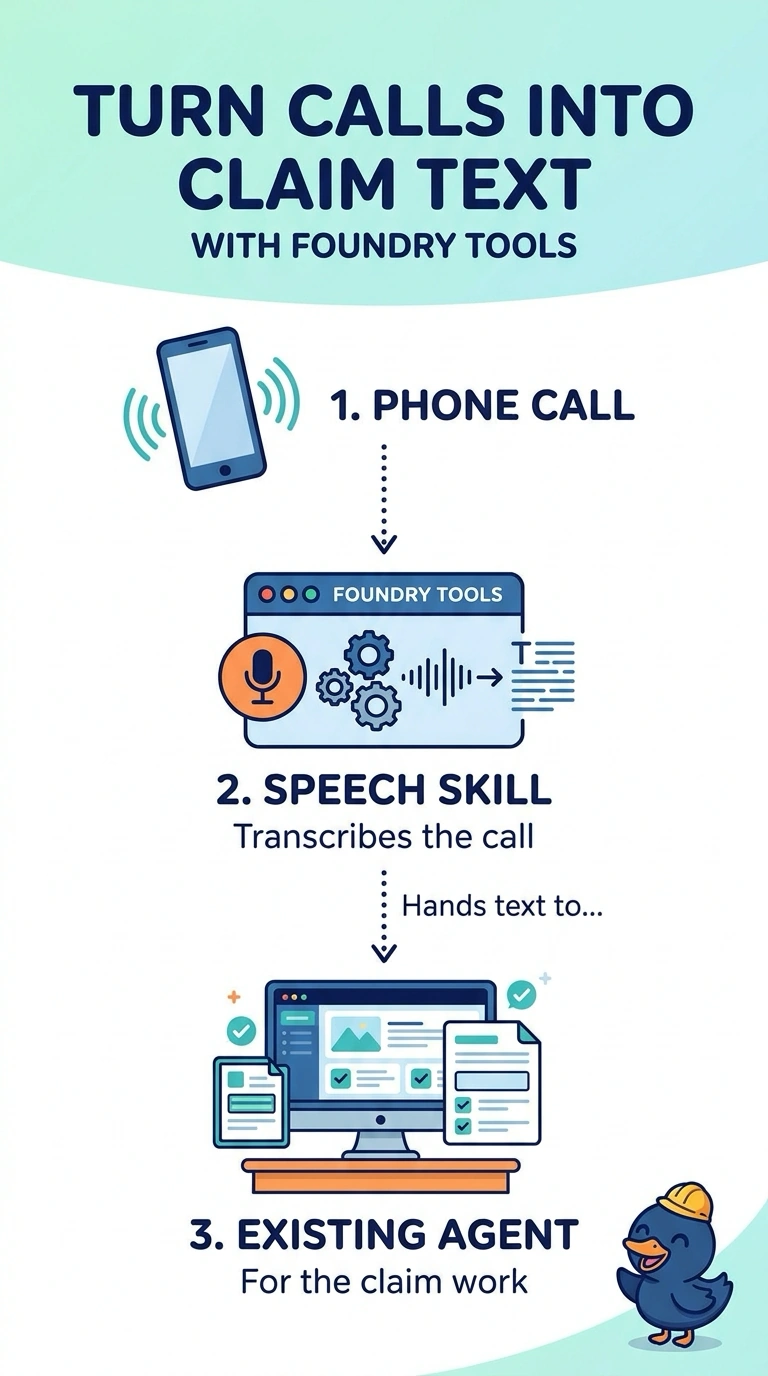
Put a transcriptionist beside the reader you already trust, instead of making the adjuster retype the tape. You use a Foundry Tools speech skill to transcribe the call, then hand that text to the existing agent. A topic of trigger phrases cannot hear an audio file.
Full Explanation
The calls are audio and the agent that already works expects text, so the missing piece is a speech skill that produces that text. A Foundry Tools speech skill transcribes the call and hands the text to the existing agent, which removes the adjuster retype. A topic of trigger phrases expects a conversational match, and an audio file does not speak those phrases back during review, so the topic does not receive the claim. Transcription is the bridge from the recording to the agent that already knows the claim work. More adjuster retyping keeps the slow manual step the design was asked to retire and still depends on what a person chose to type. A vision skill aimed at a photograph of the handset is the wrong sense: a picture of a phone does not contain the spoken words. Exam caveat: the speech skill is the intake; the existing text agent remains the place where the claim reasoning stays, unless that agent itself is the thing that fails. Operational check: play one recorded call through the speech skill and confirm the text agent receives the transcript without an adjuster typing it.