
A university registrar forbids a casual tone, but the customer-service copilot's suggested reply still sounds casual. A teammate wants that copilot switched off. What should the architect change?
Select an answer to reveal the explanation.
Short Explanation
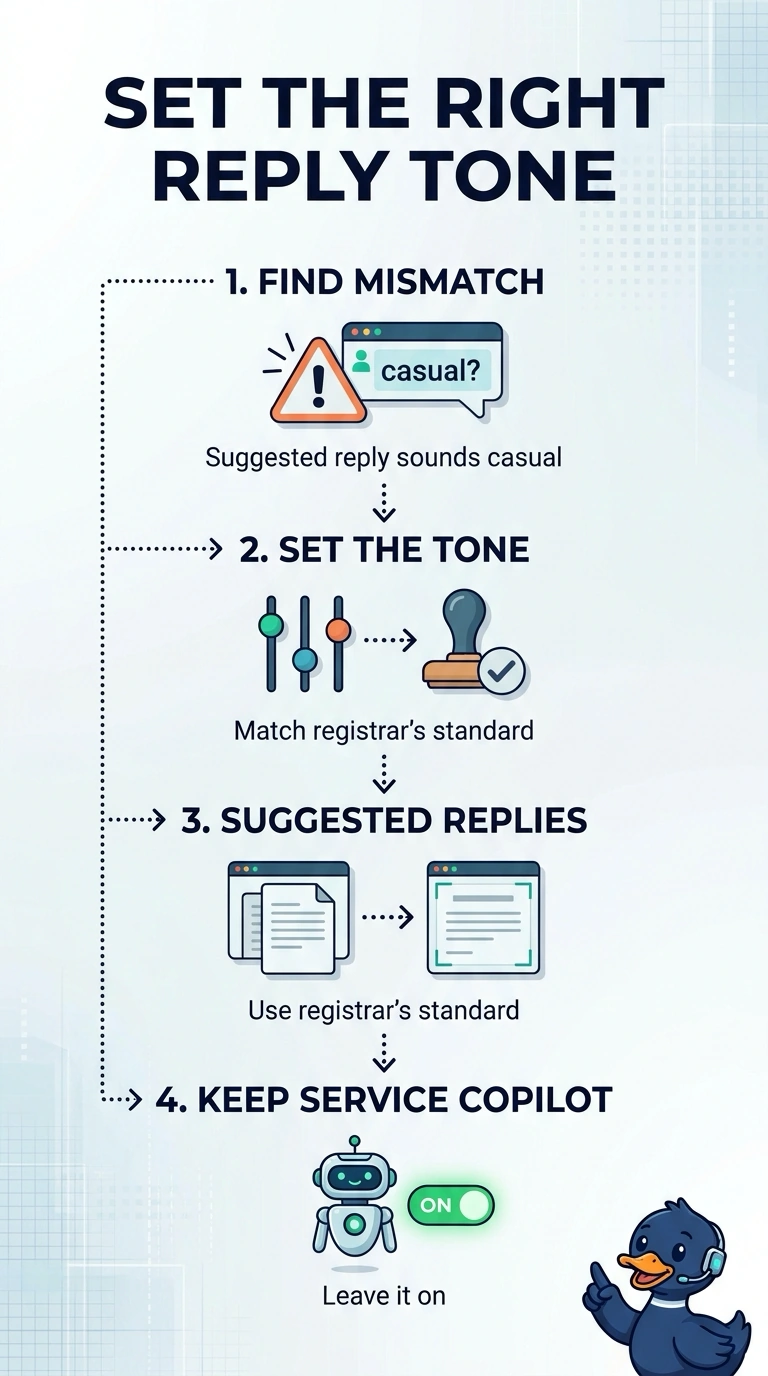
A dress code is fixed by tailoring the uniform, not by sending the staff home. You customize the suggested-reply tone to the registrar's standard and leave the service copilot on. Switching it off removes help the desk still needs.
Full Explanation
The customer-service copilot is already drafting the reply the registrar wants to sound formal. The gap is tone, so the architect customizes the suggested-reply tone to the registrar's standard and leaves the copilot on for the desk. Disabling the customer-service copilot so staff no longer get a suggested reply removes the draft entirely, including the parts of the reply that were fine, and it does not teach a formal tone. Replacing the suggested reply with a custom model that writes a joke pushes the tone further from the registrar's standard and swaps a customization for a new model. Adopting the casual tone as the new standard reverses the policy the registrar stated, so the copilot would be conforming to the wrong rule. Exam caveat: a tone customization changes how the draft is phrased. It does not make an incorrect policy statement acceptable because it sounds formal. Operational check: generate a suggested reply on a test case and confirm the wording matches the registrar's standard while the copilot is still available on the form.