
Passengers call an airline's Dynamics 365 Contact Center voice line about missed connections, and almost none of them open the website chat. Where should the agent be designed to meet them?
Select an answer to reveal the explanation.
Short Explanation
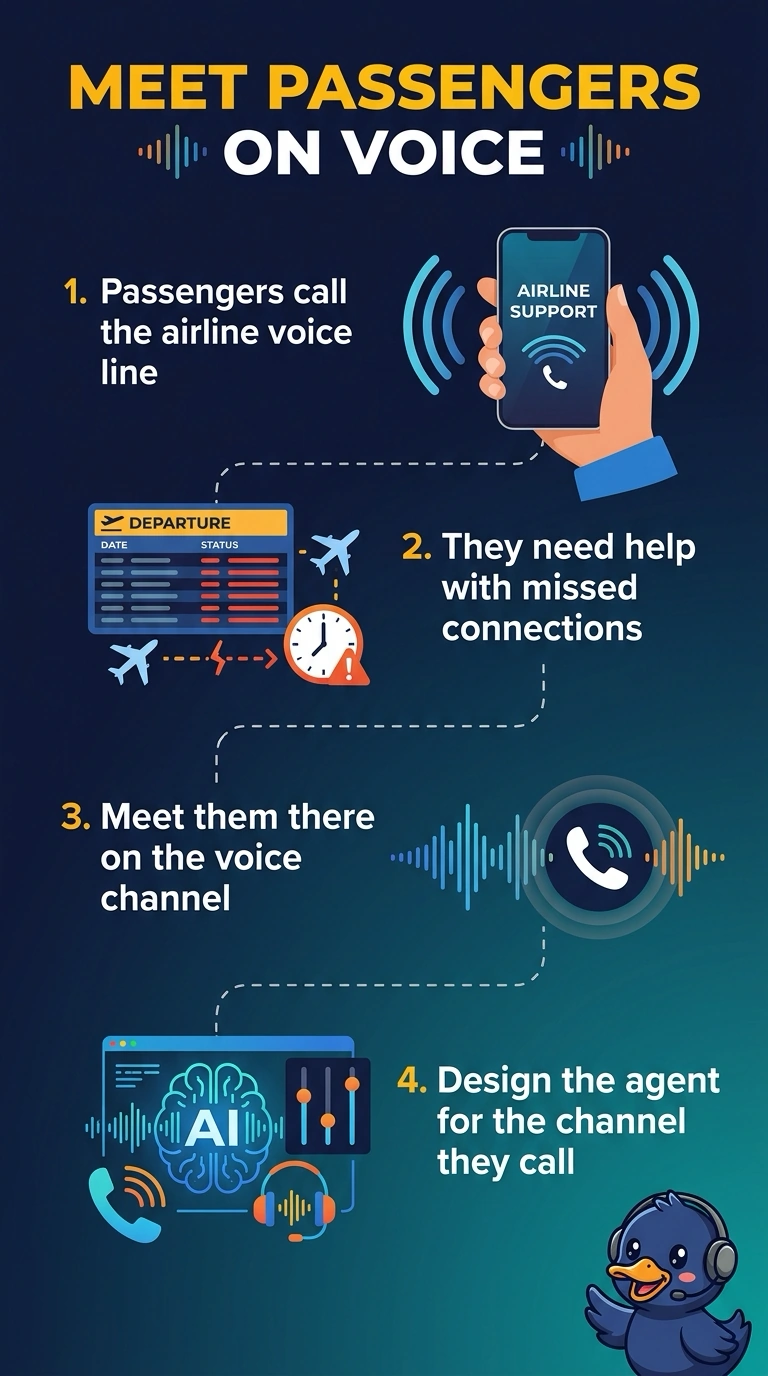
Answer the phone that is ringing, not the chat window nobody opened. You put the contact-center agent on the voice line these passengers are already using, and you keep chat only as a side door. A note that tells them to hang up and type asks them to leave the channel they chose.
Full Explanation
A Dynamics 365 Contact Center agent has to sit on the channel the customer is actually using. These passengers are on the voice line about a missed connection, and almost none of them open the website chat, so an agent that exists only in chat waits in an empty room while the calls queue. The design puts the agent on that voice channel, and chat can stay available for the few people who use it. Website chat plus a recorded note that tells callers to hang up and type sends the passenger off the channel they already picked. An email queue read the next morning misses the live connection problem, which is over by the time someone opens the mailbox. A social channel the airline has not opened is a later project, and it does not answer the line that is ringing now. Exam caveat: building voice first does not mean every other channel is forbidden later; it means the channel that holds the traffic is the one this design has to cover. Operational check: count a day's contacts by channel and confirm the agent is offered on voice before the team spends the build on chat-only scripts.