
A retailer wants the service copilot's reply to include the customer's loyalty id. A proposal builds a new agent and hides the in-app copilot so staff must use the new one. Which design fits?
Select an answer to reveal the explanation.
Short Explanation
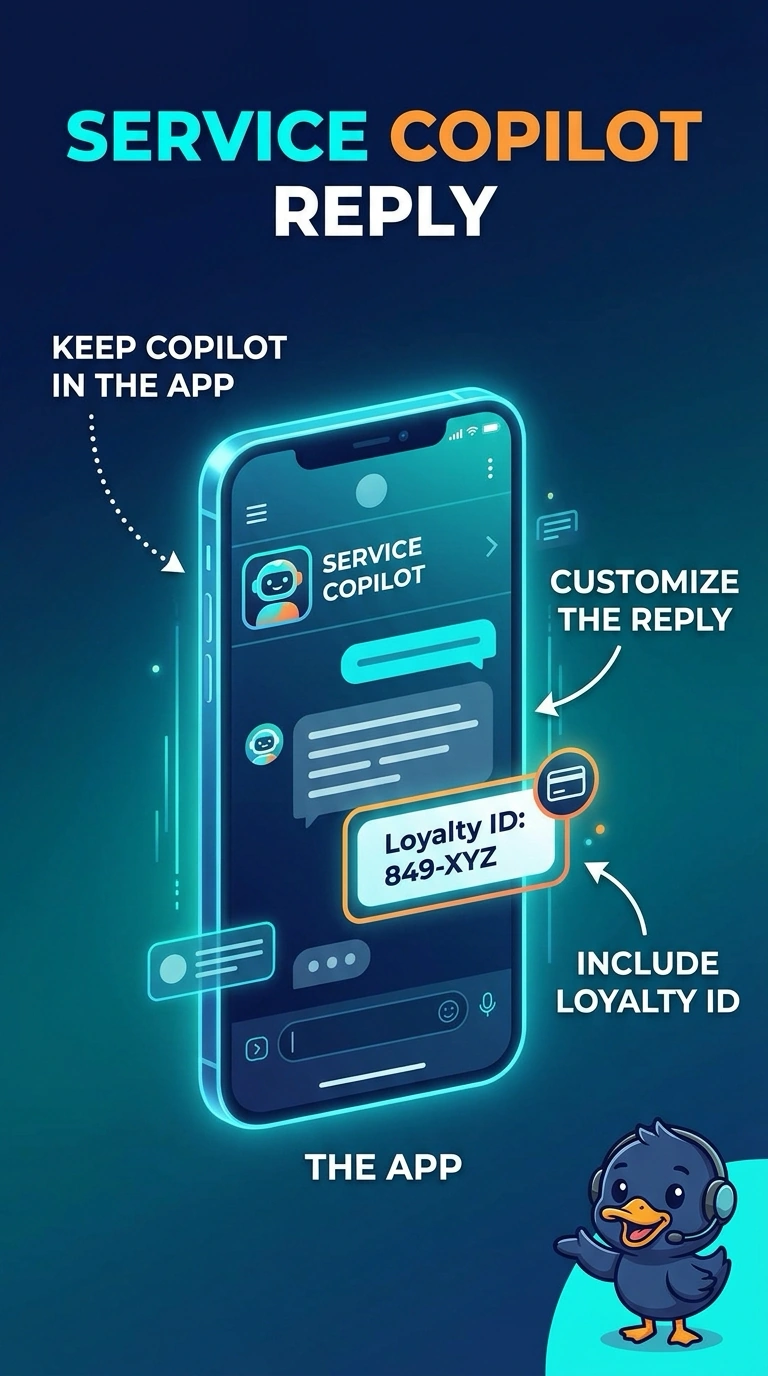
You can keep the in-app service copilot staff already use and customize its reply to include the loyalty id. Hiding it and routing replies through a new agent replaces the tool instead of adjusting it. Customization fits the request without removing the identifier or exposing it in a public article.
Full Explanation
Customizing the service copilot changes the reply staff already receive inside the app. Because the retailer wants the loyalty id in that reply, the design should customize the service copilot to include the id and keep the in-app copilot in place. Hiding the in-app service copilot and sending every service reply through a new agent abandons the copilot the requirement was meant to adjust, making staff use a second tool for one field. Removing loyalty ids from the customer record deletes the identifier the reply is supposed to show. Pasting each loyalty id into a public article exposes customer identifiers to shoppers who should not have them, and still does not put the id in the service reply for the agent handling the case. Exam caveat: including the loyalty id in a staff reply is not the same as printing it on a customer-facing page; the customization should stay in the service context. Practical check: open one service case, ask the in-app copilot for a reply, and confirm the loyalty id appears while the in-app copilot remains the tool on the form.