
A ward already has a flow that files the handoff note in the chart. Nurses want their shorthand turned into that structured note. Which component should do the rewriting?
Select an answer to reveal the explanation.
Short Explanation
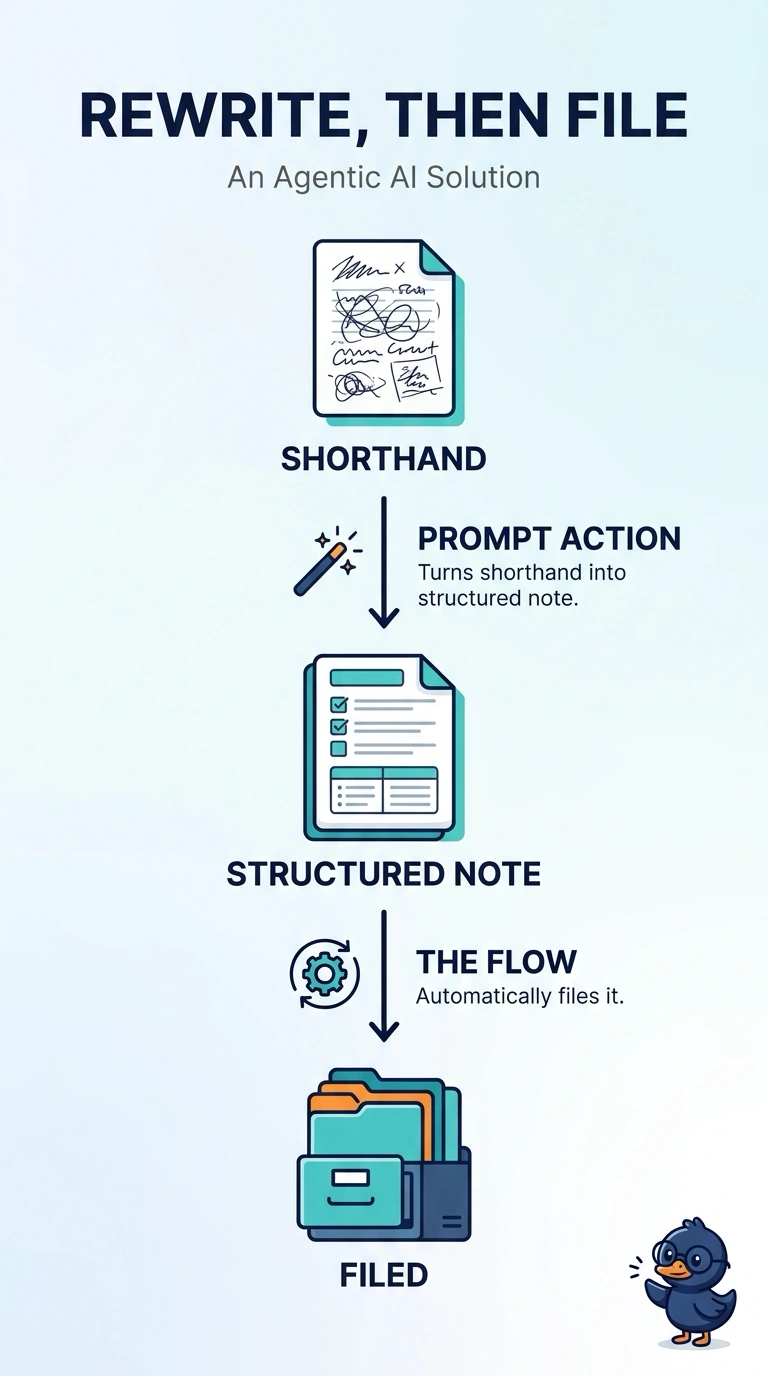
The interpreter at the bedside is not the clerk who files the chart. You use a prompt action to turn the shorthand into the structured note, and you let the existing flow file it. A second writer into the chart is how two copies appear.
Full Explanation
Turning varied shorthand into a structured note is a model judgment guided by the note's shape, which is a prompt action. The ward already has a flow that files the handoff note, so the prompt action should return the structured note and stop, and the flow should remain the writer. A prompt action that rewrites the shorthand and also files the finished note into the chart adds a write the flow already owns and can double-file or bypass the flow's checks. An agent flow that turns free shorthand into structured fields without using a model step pretends a fixed path can interpret language that does not follow a fixed pattern. A custom Foundry model trained on past handoff notes and granted its own write path into the chart is a new model for a rewrite a prompt can do, and the write path repeats the filing problem. Exam caveat: the flow can require the structured note as an input before it files. That handoff is not the prompt action filing the chart. Operational check: run a shorthand sample and confirm the prompt action returns the structured fields while the chart row changes only when the existing flow runs.